
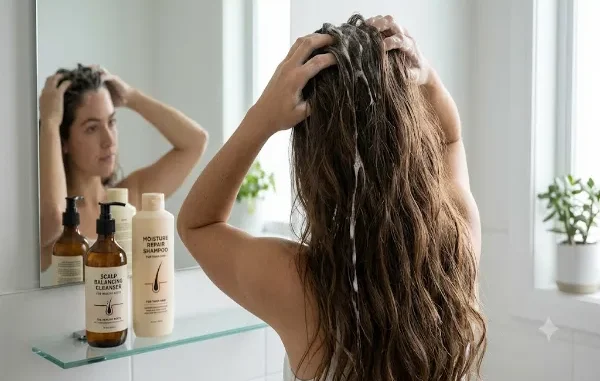
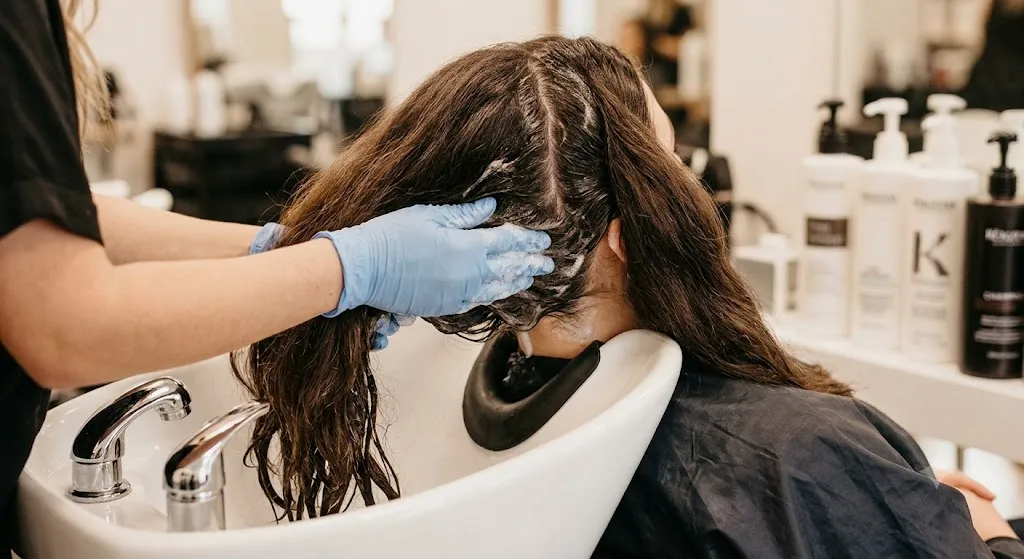
Nobody talks about this, and it’s genuinely strange that they don’t. Your scalp is skin. Your strands are protein. Those are two different materials with two different needs, and you’ve been washing both with the same product your entire life like that’s a perfectly reasonable thing to do.
For most hair types, this disconnect is manageable. For thick hair, it becomes a real problem because the gap between what thick strands demand and what the scalp underneath requires is wider than people realize. A shampoo for thick hair that focuses entirely on strands neglects the scalp. One that prioritizes scalp health leaves thick strands feeling like they barely got touched.
Your Scalp and Your Strands Are Basically in Different Zip Codes
The scalp is living tissue. It produces oil, regulates moisture, hosts a microbiome that keeps things balanced or causes chaos depending on treatment. Your strands are dead protein. They can’t repair themselves. They don’t produce oil. They’re entirely dependent on what you give them.
Here’s where this becomes a thick hair problem specifically:
| Factor | What the Scalp Needs | What Thick Strands Need |
| Cleansing | Thorough oil removal from the skin surface | Gentle cleansing preserving moisture in a wider shaft |
| Moisture | Balanced hydration, nothing blocking pores | Deep delivery penetrating thicker cuticle layers |
| Protein | Irrelevant, scalp is skin not protein | Structural reinforcement for a larger cortex |
| Product weight | Lightweight, nothing clogging follicles | Can tolerate heavier formulas fine hair would collapse under |
A shampoo for thick hair optimized for strands might be too heavy or occlusive for the scalp. One optimized for scalp health might clean too aggressively for strands needing gentle handling and moisture retention.
Why Thick Hair Makes This Conflict Worse
Fine hair and its scalp have relatively aligned needs because the strand is small and lightweight formulas serve both reasonably well.
Thick hair creates a dramatic split. The strand is wider, has a thicker cuticle layer, and contains more internal structure needing both protein and moisture in quantities fine hair would never tolerate. A shampoo for thick hair needs heavier conditioning to properly serve those strands. But the scalp hasn’t changed. It still needs a clean surface, balanced oil production, and nothing blocking follicle function.
People with thick hair who complain about oily roots and dry ends simultaneously are experiencing this exact mismatch. The shampoo is either doing right by the scalp and neglecting the strands or doing right by the strands and suffocating the scalp. Nobody told them the product was being asked to do two conflicting jobs at the same time.
The Practical Fix That Actually Works
The honest answer isn’t one magical shampoo. It’s technique.
A shampoo for thick hair should be applied differently to the scalp than to the strands:
- Concentrate shampoo directly on the scalp, massaging with fingertips to break up oil and build-up at the skin level where cleansing actually matters
- Let the lather run down through strands during rinsing rather than scrubbing the lengths, which causes unnecessary friction and cuticle damage
- Follow with conditioner only on mid-lengths and ends, never on the scalp, delivering moisture where strands need it without overloading the skin
This sounds basic. It isn’t. Most people scrub shampoo through their entire head uniformly, treating scalp and strands as one unit when they’re functionally two different patients needing different treatments during the same appointment.
A shampoo for thick hair with gentle sulfate-free surfactants handles both parts better than aggressive formulas. Sodium cocoyl isethionate and decyl glucoside hit the middle ground well, effective enough for scalp cleansing and gentle enough that thick strands keep their moisture during the same wash.
When Two Products Genuinely Make More Sense
Some people with thick hair land on a two-product approach, and it’s not overkill.
A lightweight scalp-focused shampoo for thick hair used once a week handles deep cleaning that conditioning formulas can’t manage without creating build-up. A gentler, more moisturizing formula for remaining wash days handles the strands without the scalp taking unnecessary damage from aggressive surfactants it doesn’t need that frequently.
Not complicated. Just acknowledging that one product serving two different materials with different needs is always a compromise.
Conclusion
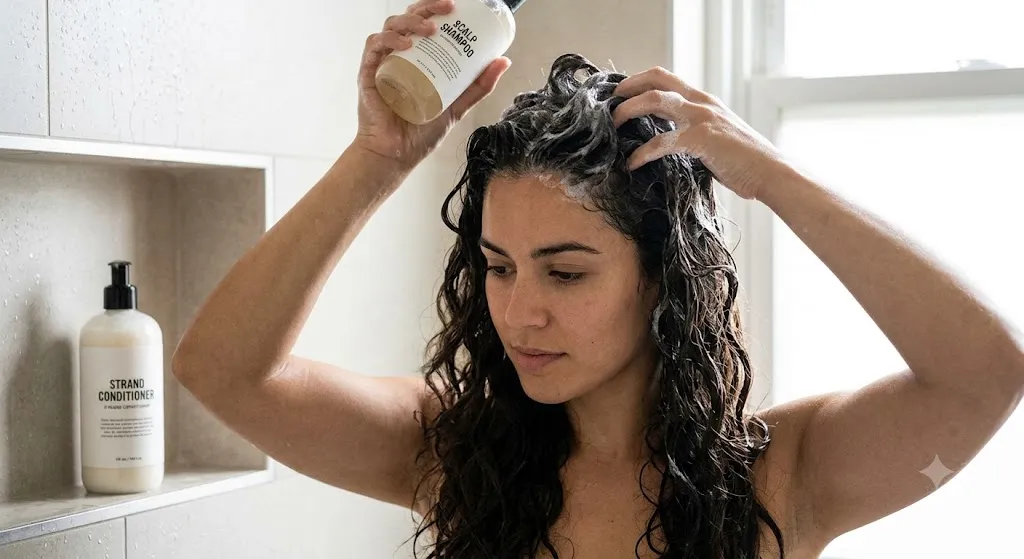
Your scalp is skin. Your strands are protein. A shampoo for thick hair treating them identically is making a compromise that thick hair, with its wider strands and higher product demands, exposes more than any other texture.
The fix is part product selection, part application technique, and part willingness to accept that one bottle handling everything perfectly is a marketing promise more than a formulation reality.
Wash the scalp. Condition the strands. Stop treating them like they live in the same neighborhood. They don’t.





Leave a Reply