
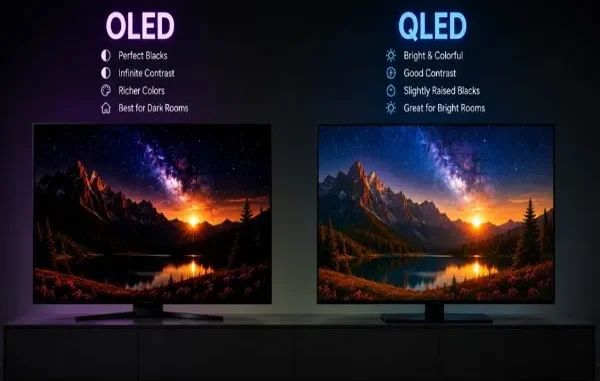
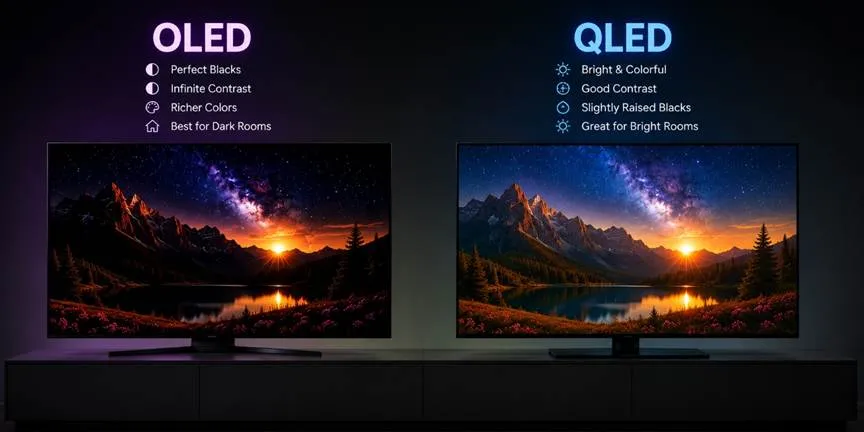
Choosing a new television can feel overwhelming, especially when comparing different display technologies. Some of the most popular ones available today are QLED or OLED, which both provide great picture quality and have smart features. If you are shopping for Samsung smart TVs, understanding the differences between these technologies can help you choose the smart TV that best suits your viewing habits, room environment, and budget.
Both types of displays offer a great entertainment experience, with each type having its own advantages for different scenarios.
QLED Technology
QLED is a Quantum Dot Light Emitting Diode. Samsung technology is based on Quantum Dots that improve colour accuracy and brightness and an LED backlight to illuminate the display.
The goal of QLED televisions is to generate
Bright, vivid colours
Excellent brightness levels
Strong colour volume
Use well-lit rooms for clear images
Long-lasting performance
The QLED models are especially effective in living rooms that feature large windows or lots of natural light.
OLED Technology
OLED is an acronym for Organic Light Emitting Diode. OLED displays don’t need a separate backlight, unlike QLED displays. Each pixel emits light and can be turned off to create black colours.
This enables OLED TVs to provide
Deep black levels
Outstanding contrast
Excellent viewing angles
Extensive shadows of high detail
Smooth and cinematic picture quality
OLED technology is popular among movie lovers due to its high contrast and true colours.
Picture Quality Comparison
Both technologies create fantastic visuals, but in different ways.
QLED
The advantage of QLED displays is that they are able to
High brightness
Vibrant colours
Daytime viewing
HDR performance
OLED
OLED displays are great for:
Perfect black levels
Exceptional contrast
Dark room viewing
Fine image detail
If you watch a lot of TV during the day, you are in luck, as QLED could offer a better viewing experience. OLED is likely to provide a more film-like look if you are someone who tends to have your movies played in low light intensity.
Brightness Matters
The most significant benefit of Samsung QLED TVs is brightness.
The brighter the image, the longer the image will stay vibrant when there is sunlight in the room. This can be used for sports, daytime television, and family entertainment.
OLED televisions tend not to hit as high a level of brightness as conventional TVs, but they make up for it with outstanding contrast and black level performance.
Colour Performance
The result is rich colours from both technologies.
Samsung’s QLED technology creates, from Quantum dots, millions of colours with great colour accuracy.
OLED televisions also produce highly accurate colours while blending them with superior contrast to produce extremely realistic images.
Both technologies deliver a good colour performance when used for day-to-day viewing.
Viewing Angles
When more than one family member is watching TV from a different area of the room, viewing angles are important.
OLED displays retain a consistent picture quality even when viewed from a greater distance.
Modern QLED televisions have also improved significantly, although some models may show slight reductions in brightness or colour when viewed from extreme angles.
Gaming Performance
Many modern Samsung smart TVs include gaming features that appeal to console and PC gamers.
Features include (may vary by model)
Low input lag
Variable refresh rate (VRR)
High refresh rates
HDMI 2.1 connectivity
Auto Low Latency Mode (ALLM)
Whether you are playing with a QLED or OLED, both can be a fun experience.
Smart Features
No matter which you select, Samsung has an outstanding smart TV platform that provides you easy access to entertainment.
Many models include:
Popular streaming apps
Voice assistant compatibility
Screen mirroring
Smart home integration
Multiple HDMI connections
Wireless connectivity
Such features make it easy to watch movies, TV, live sports and online content.
Which is the best option for your house?
The decision will depend on, among other things, your viewing habits and location.
Choose QLED if you:
Watch TV in well-lit areas
Have fun watching sports during the day
Prefer higher brightness
Look for a pair of excellent colour performances
Choose OLED if you:
Spend time in darker rooms watching movies.
Prioritise contrast and black levels
Enjoy motion picture quality.
Desire broad viewing angles
Value High-End Display Capabilities
Budget Considerations
There are QLED televisions available in a variety of price ranges and are suitable for many different budgets.
The use of the advanced display technology makes OLED TVs generally considered premium products.
When shopping around, take these factors into account:
Screen size
Resolution
Smart features
Gaming capabilities
Audio performance
There is a balance between features and price when selecting a television.
Screen Size is Equally Important
Choosing a proper screen size is as crucial as the display technology to achieve a better viewing experience.
Consider:
Room size
Viewing distance
Wall space
Seating arrangement
A properly sized television often has just as much impact on enjoyment as the display technology itself.
Final thoughts
Both QLED and OLED offer exceptional picture quality, making either an excellent choice for modern home entertainment. Samsung QLED televisions stand out for their brightness, vibrant colours, and strong daytime performance, while OLED models deliver remarkable contrast and deep blacks that create an immersive movie experience.
When selecting a Samsung smart TV, take into account the ambient lighting of the room, the way you use the television, the price, and the size of the TV. With the right display technology, you can be sure to choose a smart TV that will give you years of entertainment with your family.
Related posts:
 Voyage Through Time: When will Time Travel be Possible
 The Complete Guide to Using Telegram for Secure and Smart Communication
 The Chemistry Behind Firefighting Foam: How Surfactants Make Fire Suppression Work
 Dell Latitude 5540 Performance Tested: Can It Handle Your Workflow?
 Best Traction Tools for Lifted Jeeps & SUVs on the Trail
Leave a Reply