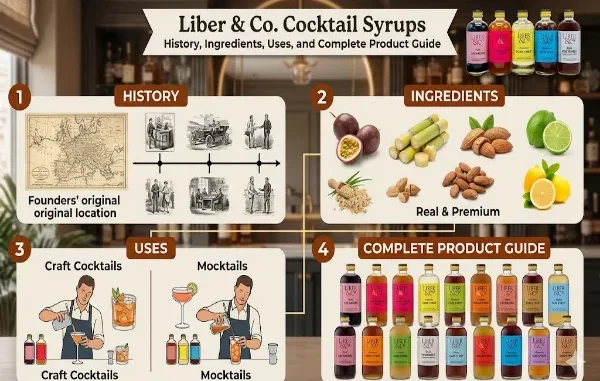
The quality of a cocktail depends on more than the spirit in the glass. While whiskey, rum, gin, and tequila often receive most of the attention, syrups play an equally important role in determining flavor, texture, balance, and consistency. Over the past decade, craft cocktail culture has encouraged bartenders and home enthusiasts to pay closer attention to ingredients that were once overlooked.
Among the companies helping drive this change is Liber & Co., a Texas-based producer of cocktail syrups known for using real fruit, natural ingredients, and traditional cocktail techniques. Since its founding in 2011, the company has expanded from a small startup into a recognized name among home bartenders, restaurants, and professional cocktail programs.
This guide explores the history of cocktail syrups, the development of Liber & Co., the ingredients used in its products, the role of gum arabic in cocktails, and how different syrup varieties can be incorporated into modern drinks.
The Evolution of Cocktail Syrups
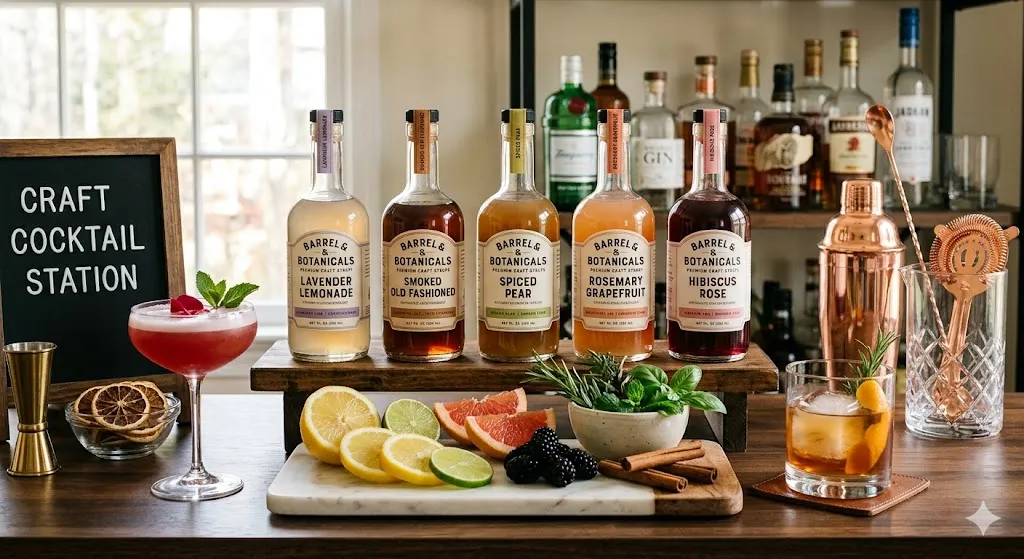
Cocktail syrups have been part of mixed drinks for more than a century. During the late nineteenth and early twentieth centuries, bartenders commonly prepared their own syrups using fresh fruit, sugar, herbs, spices, and botanical ingredients.
Classic cocktail books referenced ingredients such as:
- Gum syrup
- Orgeat
- Grenadine
- Raspberry syrup
- Pineapple syrup
- Lemon syrup
- Orange syrup
These syrups were considered essential components of cocktail preparation and were often produced in-house.
Following Prohibition in the United States, many traditional bartending techniques disappeared. As commercial beverage manufacturing expanded, artificial flavorings and high-fructose sweeteners became common. Over time, many cocktail syrups shifted away from fresh ingredients toward lower-cost formulations.
The modern craft cocktail movement has renewed interest in traditional recipes and historically accurate ingredients, leading to increased demand for premium cocktail syrups.
A Historical Timeline
Understanding modern craft syrups requires looking at the history of cocktail ingredients. During the late nineteenth century, bartenders routinely produced syrups in-house using fresh fruit, spices, nuts, and botanical ingredients. These syrups were considered essential components of cocktail preparation rather than optional mixers.
Key Moments in Cocktail Syrup History
1882 – The Golden Age of Bartending
Bartending manuals from the late nineteenth century documented a wide range of syrups including gum syrup, raspberry syrup, pineapple syrup, lemon syrup, and orgeat. These ingredients were prepared with techniques that emphasized freshness and texture.
1920–1933 – Prohibition
The Prohibition era disrupted much of America’s cocktail culture. Many bartenders left the country, while traditional preparation methods became less common. Commercial products gradually replaced many handmade ingredients.
1940s–1990s – Industrial Beverage Production
Large-scale beverage manufacturing led to the widespread use of artificial flavorings, colorings, and corn syrup-based products. During this period, many classic syrups lost their original formulations.
2000s – Craft Cocktail Revival
The craft cocktail movement sparked renewed interest in historic recipes, premium ingredients, and traditional preparation techniques. Bartenders began recreating forgotten syrups and cocktail components.
2011 – The Emergence of Modern Craft Syrup Brands
Companies such as Liber & Co. entered the market with a focus on authentic ingredients, traditional methods, and transparency in sourcing, helping bring premium syrups to home bartenders and professionals alike.
The Story Behind Liber & Co.
Liber & Co. was founded in Austin, Texas, in 2011 with the goal of producing cocktail syrups using real ingredients and traditional methods.
Rather than relying heavily on artificial flavorings, the company focused on:
- Real fruit juices
- Natural sweeteners
- Traditional cocktail ingredients
- Transparent sourcing
- Small-batch production
The company gradually expanded its lineup to include fruit syrups, gum syrups, cocktail mixers, tonic concentrates, and specialty products designed for both alcoholic and non-alcoholic beverages.
Today, Liber & Co. products are used by home bartenders, cocktail enthusiasts, restaurants, and bars across the United States.
Understanding Gum Syrup
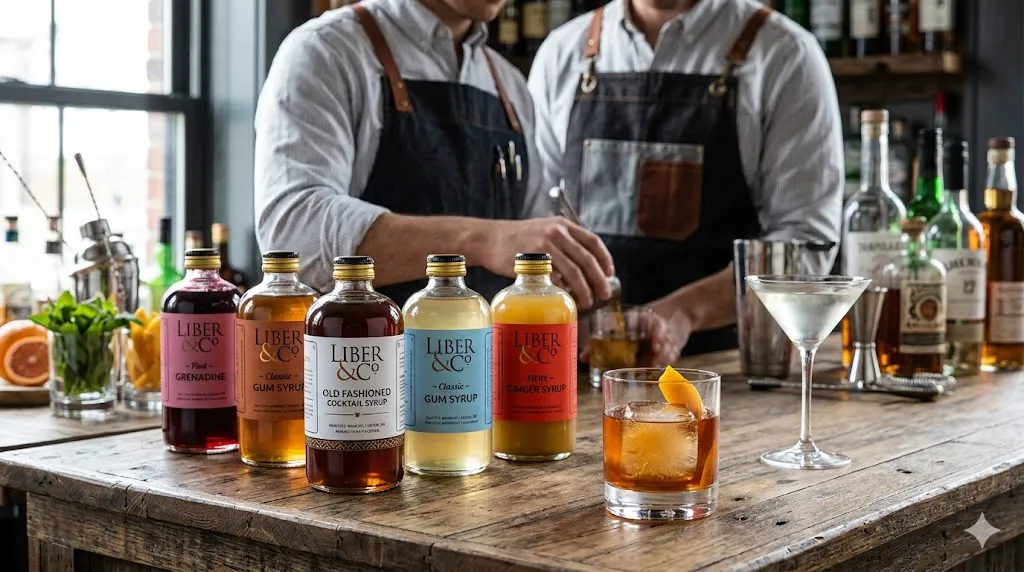
One of the products most associated with traditional cocktail preparation is gum syrup.
Unlike ordinary simple syrup, gum syrup contains gum arabic, a natural substance harvested from acacia trees.
Historically, gum syrup was widely used by professional bartenders because it provided:
- Improved texture
- Enhanced mouthfeel
- Better ingredient integration
- Increased stability in mixed drinks
Many classic cocktail recipes originally called for gum syrup rather than standard simple syrup.
In modern cocktails, gum syrup is often used in drinks such as:
- Old Fashioneds
- Sazeracs
- Whiskey Sours
- Daiquiris
- Gin cocktails
The additional texture helps create a smoother drinking experience while maintaining balance throughout the cocktail.
Real Fruit Ingredients and Flavor Development
A major trend within modern cocktail culture is the use of authentic fruit ingredients.
Premium syrup manufacturers increasingly rely on:
- Fruit juice concentrates
- Cold-pressed juices
- Natural extracts
- Whole-fruit ingredients
This approach can produce greater depth and complexity compared to products formulated primarily with artificial flavor compounds.
Examples of fruit varieties commonly used in craft cocktail syrups include:
- Passionfruit
- Pomegranate
- Strawberry
- Blackberry
- Blood orange
- Pineapple
Each ingredient contributes unique characteristics that influence acidity, sweetness, aroma, and overall balance within a drink.
Popular Syrup Categories
Gum Syrups
Gum syrups remain foundational ingredients in many classic cocktails.
Popular options include:
- Classic Gum Syrup
- Demerara Gum Syrup
- Rich Gum Syrup
These products are commonly used to add sweetness while enhancing texture.
Fruit Syrups
Fruit syrups are among the most versatile ingredients in modern cocktail creation.
Popular flavors include:
- Passionfruit
- Blackberry
- Strawberry
- Raspberry
- Blood Orange
- Pineapple
These syrups can be used in cocktails, mocktails, sodas, lemonades, and sparkling drinks.
Orgeat
Orgeat is an almond-based syrup traditionally used in tropical and tiki cocktails.
Typical ingredients include:
- Almonds
- Sugar
- Orange blossom water
- Natural oils
Classic cocktails featuring orgeat include the Mai Tai and Army & Navy.
Ginger Syrups
Ginger syrups provide both sweetness and spice.
They are commonly used in:
- Moscow Mules
- Dark ‘n Stormy variations
- Whiskey cocktails
- Sparkling beverages
Specialty Syrups
Specialty syrups allow bartenders to experiment with unique flavor combinations.
Examples include:
- Vanilla
- Fig
- Cinnamon
- Coconut
- Tonic concentrates
These ingredients help create distinctive seasonal and signature cocktails.
Why Gum Arabic Matters in Modern Cocktails
One of the most distinctive ingredients found in traditional gum syrups is gum arabic, a natural substance harvested from acacia trees. While it may sound unusual, gum arabic has been used in food and beverage production for centuries.
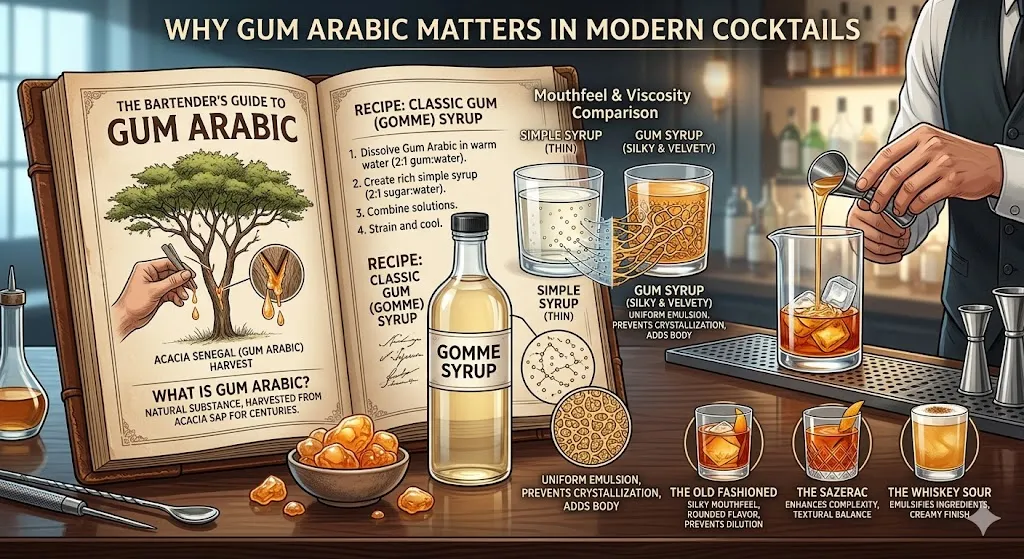
When added to syrup, gum arabic changes more than sweetness. It affects the overall texture and drinking experience.
Benefits of Gum Arabic in Syrups
Improved Mouthfeel
Gum arabic creates a richer, smoother texture that standard simple syrup cannot easily replicate. Many bartenders describe cocktails made with gum syrup as having a more polished and luxurious finish.
Better Ingredient Integration
The emulsifying properties of gum arabic help blend flavors together more effectively. Instead of tasting separate layers of spirit, sweetener, and citrus, the drink often feels more balanced and cohesive.
Enhanced Flavor Perception
A slightly thicker texture allows flavors to remain on the palate longer, which can increase the perception of complexity in spirit-forward cocktails such as the Old Fashioned or Sazerac.
These characteristics explain why gum syrup was widely used by bartenders during the nineteenth century and why it continues to attract attention among cocktail enthusiasts today.
Using Cocktail Syrups Beyond Alcohol
Modern cocktail syrups are increasingly used in non-alcoholic beverages.
Popular applications include:
- Sparkling water
- Lemonades
- Mocktails
- Coffee drinks
- Tea beverages
- Italian sodas
As demand for alcohol-free options continues to grow, premium syrups provide a simple way to create layered flavors without spirits.
How to Choose the Right Syrup
The best syrup depends on the drinks you prepare most often.
For classic cocktails:
- Gum Syrup
- Demerara Syrup
For tropical drinks:
- Orgeat
- Passionfruit
- Pineapple
For whiskey cocktails:
- Demerara
- Cinnamon
- Fig
For non-alcoholic beverages:
- Ginger
- Blood Orange
- Blackberry
- Passionfruit
Building a collection gradually allows users to explore different cocktail styles while avoiding unnecessary purchases.
Market Trends Driving Growth in Premium Cocktail Syrups
The cocktail syrup category has experienced significant growth over the past decade as consumers increasingly seek higher-quality ingredients for both alcoholic and non-alcoholic beverages.
Industry research estimates that the global cocktail syrup market $5.7 billion in 2025 annually, with steady growth expected throughout the remainder of the decade. One of the primary drivers behind this trend is changing consumer preferences.
Several factors are shaping the market:
- Growing interest in natural ingredients
- Increased popularity of home bartending
- Expansion of non-alcoholic beverage options
- Demand for premium cocktail experiences
- Greater awareness of ingredient sourcing
Consumer surveys consistently show that many drinkers prefer products made with recognizable ingredients rather than artificial flavorings or synthetic additives. As a result, brands emphasizing transparency, real fruit content, and traditional production methods have gained visibility among both casual consumers and cocktail enthusiasts.
The continued growth of online shopping has also helped specialty syrup producers reach customers who previously had limited access to premium cocktail ingredients through local retailers.
The Future of Craft Cocktail Syrups
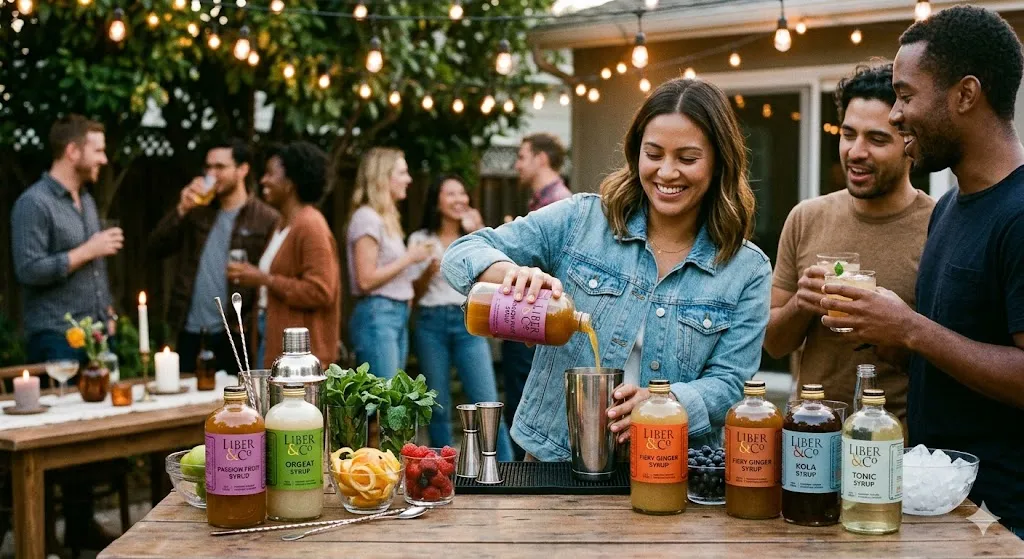
Consumer interest in premium ingredients continues to reshape the beverage industry. Home bartenders are increasingly seeking products that provide transparency, authentic flavors, and professional-level results.
As cocktail culture evolves, craft syrups are expected to remain a growing segment of the beverage market, serving both alcoholic and non-alcoholic consumers.
Whether used in a classic Old Fashioned, a tropical Mai Tai, or a simple sparkling-water refreshment, quality syrups continue to demonstrate how a small ingredient can have a significant impact on the final drink.
5 Original Cocktail Recipes Using Liber & Co. Syrups
Most cocktail recipes featuring Liber & Co. syrups follow predictable patterns — a Moscow Mule here, a Mai Tai there. The five recipes below were developed specifically to push each syrup into less obvious territory, highlighting flavor characteristics that standard recipes don’t fully explore. Each one has been tested and calibrated for home bartenders working without professional equipment.
1. The Copper Mile
A Moscow Mule that layers two Liber syrups for a drink that builds rather than flatlines.
The standard Moscow Mule is a one-note drink: ginger heat, lime, fizz. This version adds Marion Blackberry Syrup as a secondary layer, creating a color gradient in the glass and a flavor arc that moves from bright fruit at first sip through slow ginger heat on the finish. The blackberry doesn’t compete with the ginger — it introduces the drink before the ginger takes over.
Ingredients:
- 2 oz vodka
- ¾ oz Liber & Co. Fiery Ginger Syrup
- ¼ oz Liber & Co. Marion Blackberry Syrup
- ¾ oz fresh lime juice
- Sparkling water to top (approximately 3 oz)
- Blackberry and lime wheel to garnish
Method: Build in a copper mug over crushed ice. Add vodka, both syrups, and lime juice. Stir once gently to combine without fully blending the colors. Top with sparkling water. Garnish and serve immediately. Do not over-stir — the visual gradient is part of the drink.
2. The Austin Flip
A whole-egg Flip that uses Madagascar Vanilla and Demerara Gum to create something genuinely rich and complex.
Flip cocktails — built on whole eggs, spirit, and syrup — are one of the oldest drink categories in American bartending and one of the most neglected. The Flip format rewards a syrup with real depth, because the egg amplifies rather than masks subtle flavors. Liber’s Madagascar Vanilla oleoresin is distinct enough to hold up through the egg and the rum, delivering a vanilla character that reads as genuinely complex rather than sweet and flat. The Demerara Gum adds body and a molasses undertone that connects the rum and vanilla without overpowering either.
Ingredients:
- 2 oz aged rum (Barbadian preferred — Plantation or Mount Gay)
- ½ oz Liber & Co. Madagascar Vanilla Syrup
- ¼ oz Liber & Co. Demerara Gum Syrup
- 1 whole egg
- 2 dashes Angostura bitters
- Freshly grated nutmeg to garnish
Method: Combine all ingredients in a shaker without ice. Dry shake vigorously for a full 20 seconds to emulsify the egg. Add ice and shake hard for another 15 seconds. Double strain through a fine mesh strainer into a chilled coupe. Grate nutmeg directly over the surface. The vanilla should be clearly present in the aroma before the first sip.
3. The Fig & Smoke Old Fashioned
Caramelized Fig Syrup meets mezcal — an unexpected pairing that works better than it has any right to.
The Caramelized Fig Syrup is the most underused product in the Liber lineup, largely because most people default to bourbon with it. Mezcal is the more interesting pairing. The earthy smokiness of espadin mezcal and the jammy sweetness of caramelized fig create a push-pull that keeps the drink interesting through the entire glass. A split base of mezcal and reposado tequila softens the smoke slightly without eliminating it — the fig needs the smoke present to show its full complexity.
Ingredients:
- 1½ oz mezcal (espadin, medium smoke — Del Maguey Vida or similar)
- ½ oz reposado tequila
- ¼ oz Liber & Co. Caramelized Fig Syrup
- 2 dashes mole bitters
- 1 dash Angostura bitters
- Large ice cube, orange twist to garnish
Method: Combine all ingredients in a mixing glass over ice. Stir 45 rotations — this drink needs full dilution to open up. Strain over a single large ice cube in a rocks glass. Express the orange peel over the surface, run it around the rim, and rest it on the ice. Do not squeeze the peel into the drink — the orange note should be aromatic rather than added flavor.
4. The Tiki Restoration
A Mai Tai variant using three Liber syrups simultaneously — the clearest demonstration of what the lineup can do when the products work together.
The classic Mai Tai is one of the most frequently ruined cocktails in existence, primarily because the orgeat is almost always wrong. This version uses Liber’s Almond Orgeat as the backbone, adds Tropical Passionfruit for brightness and color, and uses Demerara Gum to add body without additional sweetness. The passionfruit addition is a deliberate departure from Trader Vic’s original — it gives the drink a tropical brightness that makes it more accessible while the orgeat and Demerara maintain the depth that makes a proper Mai Tai worth drinking slowly.
Ingredients:
- 1 oz aged Jamaican rum (Appleton 12 or Smith & Cross)
- 1 oz rhum agricole blanc (Rhum J.M. or Neisson)
- ¾ oz Liber & Co. Almond Orgeat
- ½ oz Liber & Co. Tropical Passionfruit Syrup
- ¼ oz Liber & Co. Demerara Gum Syrup
- ¾ oz fresh lime juice
- ½ oz orange curaçao
Method: Combine all ingredients in a shaker with plenty of crushed ice. Shake hard and pour unstrained into a double rocks glass or tiki mug, adding more crushed ice to fill. Garnish with a spent lime half, fresh mint, and a cherry. The drink should be served immediately — crushed ice dilutes quickly and the balance shifts if it sits.
5. The Zero-Proof Garden
A sophisticated non-alcoholic drink using three Liber syrups — proof that these products work as well without spirits as with them.
The most common failure in non-alcoholic cocktails is flatness: the drink is sweet and flavored but has no arc, no tension, nothing that changes as you drink it. This recipe solves that problem by layering three syrups with different flavor profiles — tropical fruit, citrus brightness, and slow ginger heat — so the drink moves. The ginger heat from Liber’s Fiery Ginger arrives last, which means the drink finishes warmer and more interesting than it starts. That progression is what separates a real non-alcoholic cocktail from a flavored soda.
Ingredients:
- ¾ oz Liber & Co. Tropical Passionfruit Syrup
- ¼ oz Liber & Co. Blood Orange Cordial
- ¼ oz Liber & Co. Fiery Ginger Syrup
- ¾ oz fresh lime juice
- 4–5 oz cold sparkling water
- Lime wheel and fresh basil to garnish
Method: Add syrups and lime juice to a tall glass over plenty of ice. Top slowly with sparkling water and stir once from the bottom to combine without losing carbonation. Garnish with lime and basil. Serve immediately. The drink reads as tropical upfront, citrus through the middle, and ginger at the finish — the three syrups are deliberately sequenced rather than blended.
How Long Do Cocktail Syrups Last?
One of the most practical questions about premium cocktail syrups — and one that most brands answer poorly — is how long a bottle actually stays usable after opening. The answer varies significantly depending on the type of syrup, how it’s stored, and what ingredients it contains. Understanding the basics protects both the investment and the quality of every drink made from it.
Refrigeration
The single most important thing you can do to extend the life of any opened cocktail syrup is refrigerate it immediately after first use. This applies to all Liber & Co. syrups without exception. Room-temperature storage after opening accelerates both oxidation and microbial activity, particularly in syrups with high fruit juice content. The high sugar concentration in quality syrups acts as a natural preservative, but it is not sufficient on its own to prevent degradation at room temperature over time.
Unopened bottles stored in a cool, dark place away from direct sunlight will last significantly longer — Liber & Co. bottles carry a 24-month shelf life from production when unopened and properly stored. Once the seal is broken, refrigeration becomes essential rather than optional.
Shelf Life After Opening
Shelf life after opening varies by syrup type, and knowing the differences helps you plan purchases more intelligently.
Gum syrups — Classic Gum Syrup, Demerara Gum Syrup, and similar base syrups — have the longest post-opening shelf life in the lineup. The high sugar concentration combined with gum arabic’s natural stabilizing properties means these syrups typically remain in excellent condition for six to eight weeks refrigerated. Liber’s Old Fashioned Syrup in its larger 750ml format is an exceptional case — the company estimates it retains full quality for up to twelve months after opening when kept refrigerated, making it one of the most economical options in the lineup on a per-use basis.
Fruit syrups — including Tropical Passionfruit, Pacific Strawberry, Marion Blackberry, and Real Grenadine — have shorter windows due to their real juice content. Expect four to six weeks of peak quality after opening when refrigerated consistently. These syrups are best purchased when you are actively using them rather than stocked in large quantities.
Specialty syrups — Fiery Ginger, Madagascar Vanilla, Toasted Coconut, Caramelized Fig, and Cinnamon — generally fall in the four to eight week range depending on their specific ingredient composition. The Fiery Ginger Syrup, with its 50% organic ginger juice content, is best used within six weeks of opening for full flavor intensity, as the aromatic heat compounds in fresh ginger juice are among the first things to degrade with time and exposure to air.
Tonic syrup sits at the longer end of the specialty range due to its quinine and citrus-based formulation — six to eight weeks refrigerated is a reasonable expectation.
Signs of Spoilage
Quality cocktail syrups made with real ingredients will eventually show signs of degradation, and knowing what to look for prevents a bad syrup from quietly ruining a good drink.
Color change is often the first visible indicator. A syrup that has darkened noticeably or developed cloudiness it didn’t have when first opened may be past its best, though some natural sedimentation in fruit syrups is normal and not a sign of spoilage on its own.
Aroma is the most reliable test. A fresh ginger syrup should smell sharp, floral, and spicy. A fresh passionfruit syrup should smell bright and tropical. If either smells flat, fermented, overly sweet without complexity, or simply wrong in a way that’s hard to define, trust that instinct. Syrups made with real fruit juice will develop off-notes before they become visually obvious.
Taste a small amount on its own before using a syrup you’re uncertain about. A fresh Liber syrup has clean, distinct flavor with balanced sweetness. A degraded syrup often tastes flat, sour in an unpleasant way, or simply lacks the brightness it had when the bottle was first opened. If the syrup doesn’t taste right on its own, it won’t taste right in a cocktail.
Mold or visible growth of any kind is an immediate discard. This is uncommon in properly refrigerated, high-sugar syrups but can occur if the bottle has been repeatedly contaminated by direct contact with other ingredients, dirty bar spoons, or repeated exposure to warm temperatures.
Storage Tips
A few straightforward habits significantly extend the life and quality of every syrup in your collection.
Always use a clean, dry pourer or spoon. Introducing water, fruit juice, or residue from other ingredients into a syrup bottle accelerates spoilage. Many bartenders decant syrups into smaller bottles with speed pourers to minimize contact with the main bottle.
Keep the cap sealed tightly between uses. Oxygen exposure degrades flavor compounds — particularly in fruit syrups — faster than temperature alone. A bottle left loosely capped for a week loses more quality than one refrigerated for a month with a properly sealed lid.
Label bottles with the date opened. This is a simple habit that prevents the common experience of finding a bottle of unknown age at the back of the fridge and having to guess whether it’s still good. A small piece of tape with the opening date takes five seconds and eliminates the uncertainty entirely.
Store bottles upright. Unlike wine, cocktail syrups do not benefit from cork contact and the cap seal is better maintained with the bottle standing rather than on its side.
Buy in quantities that match your usage pace. The best syrup is the freshest syrup. Buying six bottles of passionfruit syrup at once to save on shipping costs makes less sense than buying three bottles more frequently if your usage rate doesn’t support the larger quantity before quality degrades. The economics of the free shipping threshold are real, but not if half a bottle of passionfruit goes flat before you get to it.
Handled correctly, Liber & Co. syrups reward the modest effort of proper storage with consistent, bar-quality results across every bottle. Handled carelessly, even excellent syrups lose the qualities that make them worth buying in the first place.
Who Should Buy Liber & Co. Syrups
Many home bartenders find that upgrading syrups can noticeably improve cocktail quality. For enthusiasts who value ingredient quality, premium syrups may justify their higher price. Liber & Co. syrups are not for everyone, and being honest about that is more useful than a blanket recommendation. The price point — typically $12 to $15 per bottle — is a genuine consideration, and whether it makes sense depends almost entirely on how seriously you approach what’s in your glass.
Buy Liber & Co. if you make cocktails at home more than once or twice a month. At that frequency, the per-drink cost works out to less than a dollar of syrup per cocktail, which is a reasonable premium for an ingredient that visibly improves the result. If you only occasionally mix a drink, a cheaper syrup will serve you adequately and the difference may not justify the spend.
Buy Liber & Co. if you’ve already upgraded your spirits and bitters but still feel like something is missing. This is the most common profile among people who discover the brand — they’ve invested in good whiskey, sourced quality bitters, started using proper ice, and the drinks still don’t taste quite like what a good bar produces. The syrup is almost always what’s missing. Switching to Liber tends to close that gap more immediately than any other single change.
Buy Liber & Co. if you want to make serious tiki cocktails. A proper Mai Tai, Jungle Bird, or Painkiller requires orgeat and quality tropical syrups — there is no substitute that produces a comparable result at any price. This is the one category where the recommendation is essentially unconditional. If tiki drinking is part of what you enjoy, the Almond Orgeat and Tropical Passionfruit are non-negotiable purchases.
Buy Liber & Co. as a gift for a cocktail enthusiast. A trio of syrups paired with a relevant spirit — Fiery Ginger with good vodka, Almond Orgeat with aged rum, Old Fashioned Syrup with bourbon — is one of the most thoughtful and original cocktail gifts available at any price point. It works for both beginners and experienced home bartenders, and it’s the kind of gift that gets used rather than displayed.
Consider alternatives if you cocktail very casually and primarily want something to sweeten an occasional drink without much complexity. A quality homemade simple syrup or an entry-level commercial option will serve that purpose at lower cost. Liber & Co. is optimized for people who want results, not just sweetness.
Consider alternatives if your primary use case is flavored coffee drinks or high-volume bar service. Monin and Torani cover a wider flavor range at lower cost and are better suited to applications where consistency at scale matters more than the kind of flavor depth Liber delivers. For a coffee shop producing 200 drinks a day, Liber’s pricing and bottle size make less sense than it does for a home bartender making five cocktails a week.
The honest summary: Liber & Co. is for people who have decided that what goes into the glass matters. If that description fits you, the syrups will repay the investment quickly and obviously.
Conclusion
Liber & Co. represents a broader movement toward higher-quality cocktail ingredients and a renewed appreciation for traditional bartending techniques. By focusing on real fruit, classic syrup styles, and transparent sourcing, the company has become part of the modern craft cocktail conversation.
For anyone interested in building a home bar, experimenting with new drink recipes, or understanding the role of syrups in beverage preparation, learning about cocktail syrups is an excellent place to start.





Leave a Reply