
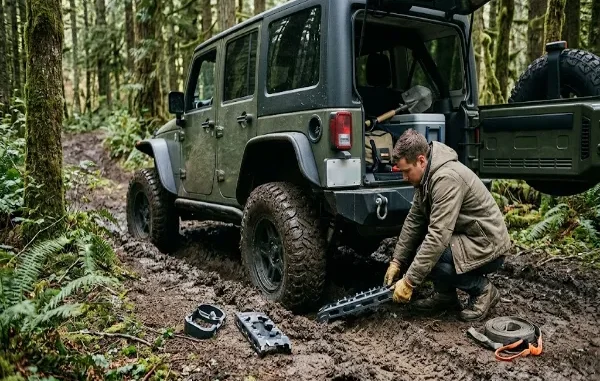
Most traction-gear articles are written with full-size pickups in mind. But Jeeps, 4Runners, Broncos, and lifted SUVs make up a large share of weekend trail traffic, and they get stuck in different ways than a heavy-duty truck does.
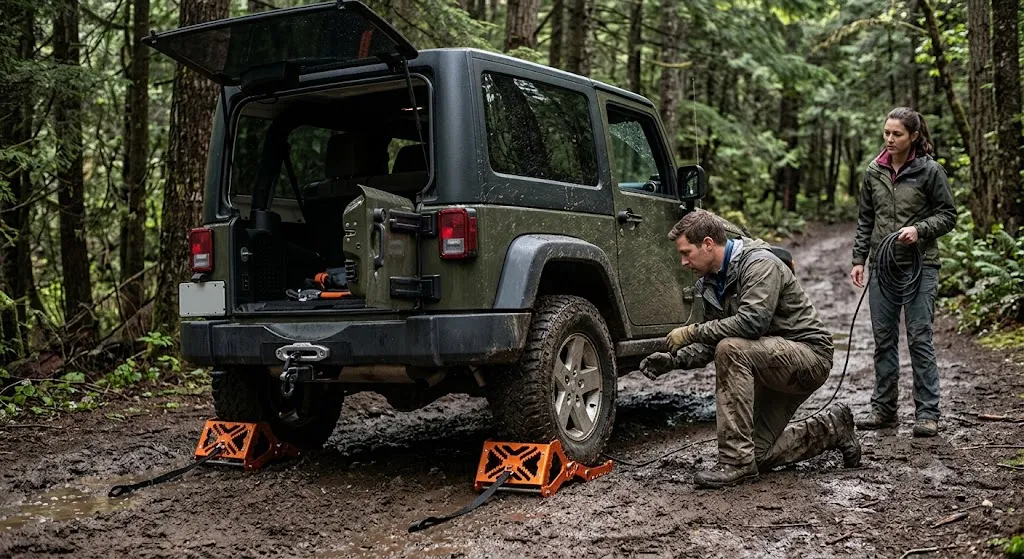
Why Jeeps and SUVs Get Stuck Differently?
A lifted Jeep or SUV usually weighs less than a full-size truck but runs a narrower wheel well and shorter wheelbase. That mix changes the problem:
- Faster wheel spin-up — less weight over the drive tires means grip breaks sooner
- Higher center of gravity — recovery angle matters more, and a device that shifts under load is a real risk
- Tighter cargo space — gear that fits fine in a truck bed can be awkward to store in a smaller SUV or Jeep
Advice built around truck-sized gear doesn’t always fit a lighter, smaller rig.
What to Look for in a Traction Device for a Jeep or SUV?
- Small footprint — needs to fit a smaller cargo area without eating the whole trunk
- Light material — aircraft-grade aluminum keeps a single device easy to carry and set solo
- Aggressive grip pattern — smaller vehicles need more mechanical bite since there’s less weight pressing the tire down
- A strap or tether — matters more on tight trails, where losing a device off the back of the vehicle is a bigger problem than on open desert ground
Trail Scenarios Where This Comes Up Most
- Mud-slick approaches on shaded forest trails, common after rain
- Soft shoulders at overlooks, where a Jeep pulled off-trail sinks into looser dirt than the packed trail
- Sand washes, a frequent stuck point on desert Jeep trails once momentum drops
- Snow-covered fire roads in early or late season, where all-terrain tires still can’t find grip on packed snow
Why a Claw Design Beats Sand Ladders for This Kind of Vehicle?
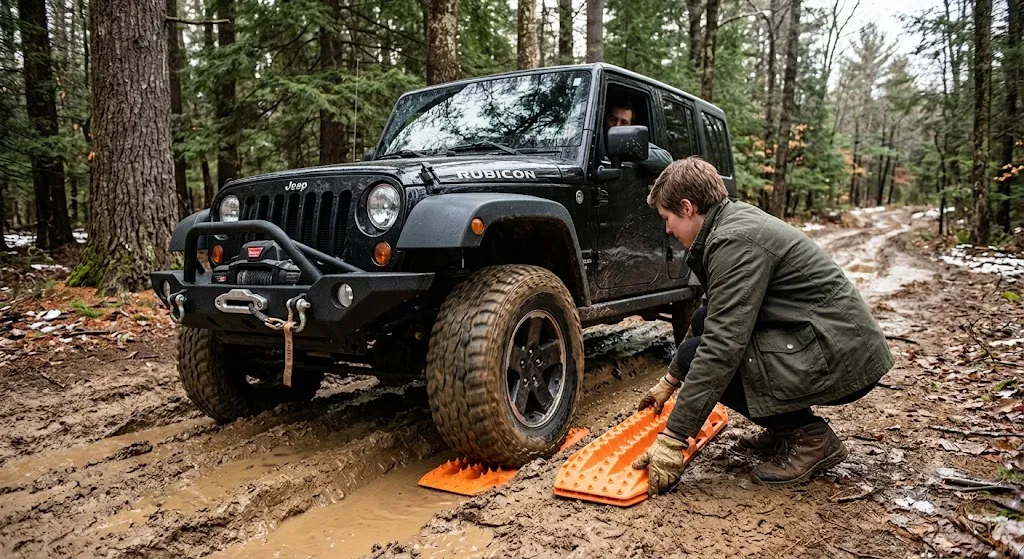
Long flat sand ladders were designed with heavier vehicles in mind and take up serious trunk space. A compact claw-style device delivers the same mechanical grip in a size that fits behind a rear seat or under a cargo mat, no roof rack needed.
For a Jeep or SUV built for trail use, the Light Truck Kit is sized for this exact class of vehicle — a good starting point before building out a full recovery kit around gear meant for something heavier.
FAQs
Two covers most recoveries — one per drive-side rear tire, or front, depending on the setup. Four is only needed if a full-time 4WD vehicle is stuck on all corners at once.
Yes. Compact devices store flat under a rear seat or in a small cargo bag, unlike bulkier sand ladders.
Not always. For sand washes, mud, and snow where the vehicle hasn’t bottomed out, a traction device handles it solo. A winch still makes sense for a vehicle that’s high-centered or buried past the frame.
Related posts:
 Voyage Through Time: When will Time Travel be Possible
 How Dechecker AI Checker Turns Awkward Drafts Into Human-Readable Content
 The Complete Guide to Using Telegram for Secure and Smart Communication
 The Chemistry Behind Firefighting Foam: How Surfactants Make Fire Suppression Work
 Dell Latitude 5540 Performance Tested: Can It Handle Your Workflow?
Leave a Reply