
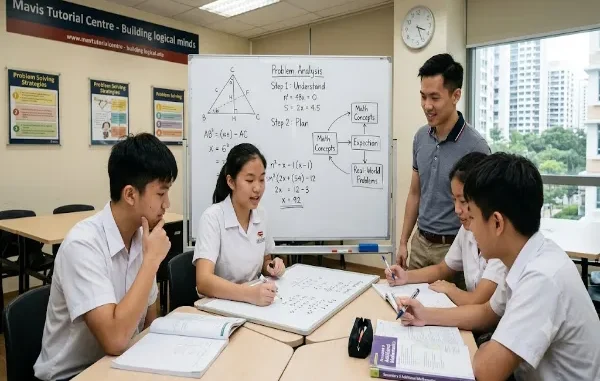
In Singapore’s competitive education landscape, students are expected to develop more than just the ability to solve equations and memorise formulas. Schools increasingly focus on critical thinking, reasoning, and problem-solving skills that prepare students for academic success and real-world challenges. Mathematics plays an important role in developing these abilities because it trains students to analyse information, identify patterns, and make logical decisions.
Secondary Math Tuition provides structured guidance that helps students strengthen logical thinking skills beyond mathematics itself. By learning how to approach problems systematically, students develop valuable habits that support academic performance, decision-making abilities, and confidence in different areas of life. These skills are especially important as students progress through secondary education and prepare for higher-level studies.
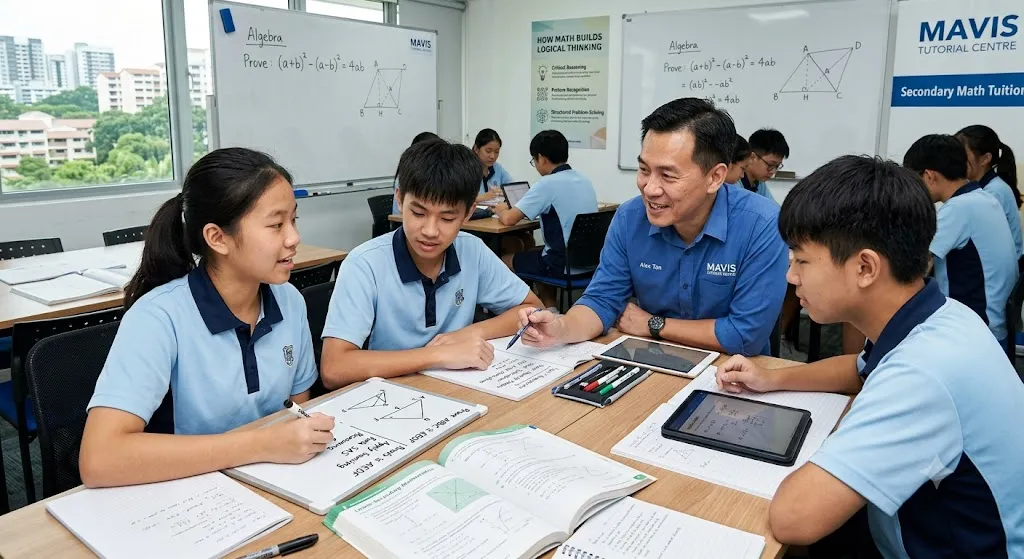
The Connection Between Mathematics and Logical Thinking
Mathematics is often viewed as a subject based on numbers, calculations, and formulas. However, the deeper purpose of learning mathematics is to develop a logical mindset. Every mathematical problem requires students to understand information, consider possible solutions, and choose the most effective approach.
For example, when solving an algebra question, a student must identify relationships between different values, follow a sequence of steps, and evaluate whether the final answer is reasonable. These processes train the brain to think carefully instead of making quick assumptions.
Logical thinking skills developed through mathematics include:
- Analysing information before reaching conclusions
- Identifying patterns and relationships
- Breaking complex problems into smaller steps
- Comparing different approaches to find solutions
- Evaluating mistakes and improving strategies
- Making decisions based on evidence and reasoning
These skills are useful not only for mathematics examinations but also for science, languages, technology, and everyday decision-making. A student who learns to think logically through mathematics often becomes better equipped to handle unfamiliar situations.
How Secondary Math Tuition Builds Problem-Solving Abilities
Many students in Singapore struggle with mathematics not because they lack ability, but because they find it challenging to understand how to approach unfamiliar questions. The Singapore mathematics curriculum places strong emphasis on application-based questions, where students need to apply concepts creatively rather than simply memorise methods.
Secondary Math Tuition helps students develop a stronger problem-solving process by encouraging them to understand the reasoning behind every solution. Instead of focusing only on getting the correct answer, students learn how to analyse questions and select suitable strategies.
A structured tuition environment allows students to:
Understand Concepts Instead of Memorising Methods
Memorising formulas may help students answer familiar questions, but it does not always prepare them for challenging problems. Effective mathematics learning focuses on understanding why a particular method works and when it should be applied.
When students understand the logic behind mathematical concepts, they become more adaptable when facing different question formats. This deeper understanding helps them approach examinations with greater confidence.
Develop Step-by-Step Thinking
Complex mathematics questions can appear overwhelming, especially when students are unsure where to begin. Tuition programmes teach students how to divide difficult problems into smaller and more manageable stages.
For example, a challenging geometry question may require students to:
- Identify important information from the question
- Recognise relevant mathematical concepts
- Select an appropriate formula or method
- Create a logical solution plan
- Check whether the final answer is accurate
This systematic approach strengthens reasoning skills and encourages students to remain calm when solving difficult questions.
Developing Analytical Skills Through Mathematics Practice
Regular mathematics practice does more than improve calculation speed. It trains students to observe details, compare information, and identify connections between different concepts.
For example, when working on word problems, students must first understand the situation before applying mathematical methods. They need to decide which information is important and which details are unnecessary. This process develops analytical thinking that can be applied to many other subjects.
Students who regularly practise problem-solving questions often improve their ability to:
- Understand complex information quickly
- Organise thoughts clearly
- Identify possible solutions
- Make logical conclusions
- Learn from previous mistakes
These abilities are valuable skills that can support lifelong learning.
Applying Logical Thinking Beyond the Classroom
The benefits of logical thinking extend far beyond mathematics examinations. Students who develop strong reasoning skills often become better at analysing situations in other subjects and daily activities.
| Area | How Logical Thinking Helps |
| Science | Understanding experiments, analysing results, and forming conclusions |
| Programming | Creating step-by-step instructions and solving technical problems |
| Writing | Organising ideas clearly and building stronger arguments |
| Financial Decisions | Comparing options and making informed choices |
| Daily Life | Planning activities and solving practical challenges |
For instance, logical thinking helps students organise their study schedules, manage time effectively, and make better choices when facing different situations.
The Role of Secondary Math Tuition in Singapore’s Education System
Singapore’s education system encourages students to develop independent learning skills and a deeper understanding. With examination questions becoming increasingly application-focused, students need more than basic calculation abilities.
A quality tuition programme supports students by providing additional practice, personalised feedback, and opportunities to explore different problem-solving techniques.
Centres such as Mavis Tutorial Centre focus on helping students build mathematical understanding while developing confidence in approaching challenging questions. Through structured lessons and guidance from experienced educators, students can improve their ability to think critically and apply mathematical concepts effectively.
The right learning environment allows students to develop stronger foundations while gaining the confidence needed to tackle more advanced mathematics topics.
Building Confidence Through Practice and Reflection
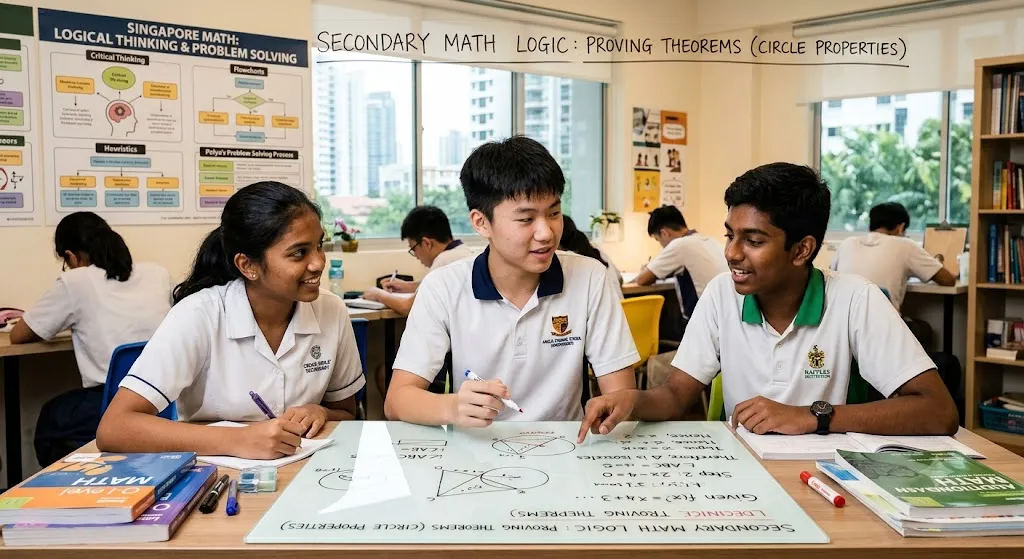
Logical thinking improves through consistent practice and reflection. Students become better problem solvers when they are encouraged to analyse their mistakes and understand where their reasoning went wrong.
Instead of viewing mistakes as failures, students should treat them as learning opportunities. Reviewing incorrect solutions allows them to identify gaps in understanding and develop better strategies for future problems.
Parents can support this learning process by encouraging students to:
- Explain their reasoning instead of only providing answers
- Ask questions when concepts are unclear
- Practise different types of mathematics problems
- Review mistakes carefully after assessments
- Focus on improvement rather than perfection
These habits help students become more independent learners and develop a positive attitude towards mathematics.
Choosing the Right Learning Support for Secondary Mathematics
Every student has different learning needs. Some students may require additional support with basic concepts, while others need guidance in solving advanced application questions.
When selecting Secondary Math Tuition, parents should consider several important factors, including:
- Teaching methods used by the centre
- Class size and level of individual attention
- Experience and teaching approach of educators
- Availability of quality learning materials
- Focus on understanding rather than memorisation
A supportive learning environment can encourage students to become more motivated and confident in mathematics.
How Students Can Strengthen Logical Thinking at Home
Tuition provides valuable academic support, but students can continue developing their reasoning skills through daily activities.
Some useful habits include:
- Solving puzzles and brain-training activities
- Explaining mathematical solutions in their own words
- Reading questions carefully before attempting answers
- Exploring multiple methods to solve the same problem
- Discussing concepts with teachers, friends, or family members
Students can also develop logical thinking by engaging in activities that require planning and strategy, such as coding exercises, strategy games, and analytical reading.
Small improvements made consistently can lead to stronger analytical abilities over time.
Final Thoughts
Mathematics is not only about achieving good examination results. It is a subject that teaches students how to think, analyse, and solve problems effectively. The logical thinking skills developed through Secondary Math Tuition can benefit students across different subjects and prepare them for future academic and professional challenges.
By learning to approach problems systematically and confidently, students can develop skills that remain valuable beyond the classroom. With the right support, mathematics can become a powerful tool for developing independent thinkers ready to face complex challenges.
For parents seeking structured mathematics support and skill development for their children, mavistutorial.com offers guidance that helps students strengthen their mathematical foundation, improve confidence, and develop essential reasoning skills for long-term success. A strong understanding of mathematics can create opportunities for students to perform better academically, think creatively, and approach future challenges with greater confidence.
Related posts:
 Longhornsurvey com The Online Survey Platform
 Decoding The Real Slim Shady Lyrics
 Embracing the Paradox: The Power of Being Consistently Inconsistent
 The Ultimate Guide to Creating a Cozy and Functional Living Space with Home Goods
 Why Siding Plays a Key Role in Reducing Exterior Maintenance Throughout the Year
Leave a Reply