
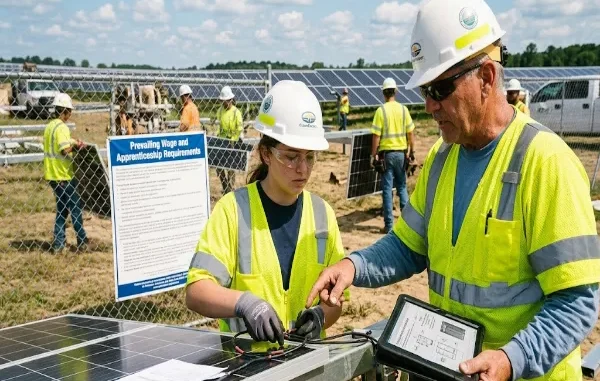
Nobody got into clean energy contracting because they love federal compliance paperwork. But here we are.
The Inflation Reduction Act changed the math on tax credits in ways that genuinely surprised even seasoned contractors. And buried inside that new math is a make-or-break condition: prevailing wage and apprenticeship requirements. Miss them, and you’re leaving enormous money on the table. Worse, you might owe penalties that make the whole project economics fall apart.

Why Meeting Prevailing Wage and Apprenticeship Requirements Matters
Let’s talk numbers, because this is where it gets real.
The initial investment tax credit, on the other hand, is just 6%. But once you meet the prevailing wage and apprenticeship requirements, it increases to 30% As for production credits, expect to receive 0.55 cents/kilowatt hour against 2.75 cents/kilowatt hour. That’s a whopping five times difference. That’s a significant difference in project economics.
And no, you can’t sort of comply. Partial doesn’t cut it. The IRS has been pretty explicit about this through proposed rules, final guidance, and enough regulatory language to keep your compliance team busy for weeks.
Here’s the part that should keep you up at night. If your project claims the bonus credit and later can’t prove compliance? You’re on the hook for correction payments: 150% of whatever you underpaid each worker, plus a $5,000 per-worker penalty if the IRS decides the failure was intentional. On a utility-scale solar project with eighty tradespeople? The financial impact can be substantial.
Prevailing Wage Is Trickier Than It Sounds
People hear “prevailing wage” and assume there’s one number. There isn’t. Not even close.
The Department of Labor sets rates county by county, trade by trade. A pipefitter in rural Arizona earns a different prevailing rate than one in downtown Phoenix. And we’re not just talking base pay. Fringe benefits count separately. You can’t bundle everything into one hourly figure and call yourself compliant. That’s a mistake I’ve seen contractors make more than once, usually when they’re trying to simplify payroll tracking.
Three things trip people up repeatedly. The wage determination has to match the exact geography and craft classification for your project. The base rate and fringe component have to be tracked independently (seriously, the DOL cares about this distinction). Smaller outfits feel this squeeze the hardest. They bid work based on market rates, not federal ones, and in plenty of regions those two numbers live in completely different zip codes. If you didn’t price the delta into your bid, you’re eating it.
The Apprenticeship Piece Is Where Projects Actually Blow Up
Most of the early anxiety around prevailing wage and apprenticeship requirements focused on the wage side. Makes sense. It’s the more familiar concept. But quietly, apprenticeship compliance is becoming the bigger headache.
The rule itself reads simply enough. Starting in 2024, at least 15% of total labor hours on a qualifying project need to come from registered apprentices. “Registered” meaning enrolled in programs recognized by the DOL or a state apprenticeship agency. Not informal mentorships. Not on-the-job training you branded as an apprenticeship last Tuesday.
Now try finding those apprentices.
Registered programs in clean energy trades haven’t kept pace with how fast projects are breaking ground. Some contractors discover halfway through a build that the apprentices they onboarded weren’t actually registered properly. Others just couldn’t find enough bodies and didn’t bother documenting why. Both scenarios create exposure.
The IRS does offer a good faith effort exception, but you need receipts. Literal ones. Written requests to registered programs, documented denials or non-responses, timestamped records showing you actually tried. A handshake agreement with a local union hall won’t survive an audit.
Start Compliance Planning Before You Break Ground, Not After
I cannot stress this enough. If you’re retrofitting your compliance approach after construction starts, you’re already behind. The contractors who capture the full prevailing wage and apprenticeship requirements benefit are the ones building this into pre-construction workflows. Period.
That means pulling wage determinations during the bid phase. Writing apprenticeship sourcing obligations directly into subcontractor agreements. Running payroll systems that map to DOL classifications in real time, not reconciled in a spreadsheet three months after the fact. For a closer look at structuring these compliance workflows end to end, the specific recordkeeping standards are worth understanding before your next bid goes out.
Conclusion
The upside in clean energy tax credits right now is legitimately unprecedented. But the prevailing wage and apprenticeship requirements that unlock that upside aren’t suggestions. They carry real penalties, real audit risk, and real consequences for firms that wing it.
Build the compliance muscle now. Your competitors who don’t will spend the next few years learning expensive lessons.



Leave a Reply