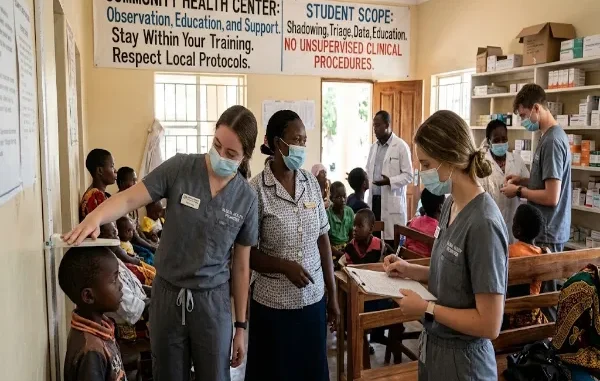
For pre-med, nursing and public health students, working in a clinic overseas can be an eye-opening experience. You see how care is delivered with limited resources, meet patients from very different backgrounds and learn what global health really looks like. But medical volunteering also comes with real ethical limits. Understanding them before you go is what separates a valuable placement from a harmful one.
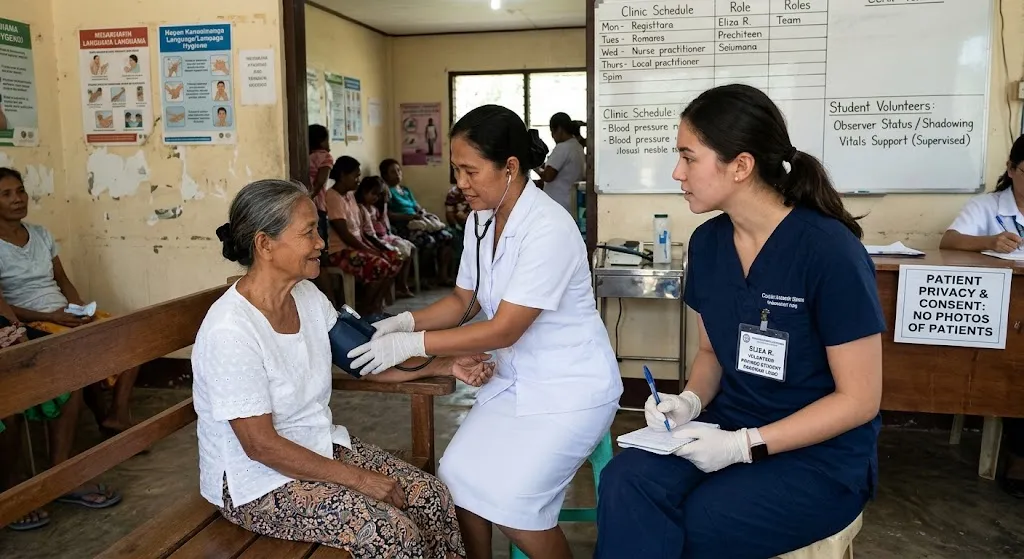
The Golden Rule: Stay Within Your Training
In your home country, you would never be allowed to stitch a wound, give an injection or deliver a baby as a student without qualifications and supervision. The same rule should apply abroad. Patients in low-income communities deserve the same standard of care as anyone else.
Reputable programs make this clear from day one. If a provider promises “hands-on” procedures for students with no license, treat it as a serious warning sign.
What Students Can Usefully Do
There is still plenty of meaningful work within safe limits. Depending on the placement, students often:
- Shadow doctors, nurses and midwives during consultations and rounds.
- Take basic measurements such as height, weight, temperature and blood pressure after training.
- Help with patient registration, records and clinic organization.
- Support health education sessions on topics like hygiene, nutrition and family planning.
- Join community outreach days, such as screening camps in rural areas, under supervision.
- Assist with data collection for public health projects.
These tasks free up local professionals to focus on clinical work while giving you an honest view of the health system.
What Qualified Professionals Can Offer
Licensed doctors, nurses and therapists may be able to practice, but only after the host country registers their credentials and only within their specialty. Good programs handle this paperwork in advance and match professionals to places where their skills fill a real gap. Even then, the best contributions often involve teaching and training local staff, which lasts long after the volunteer leaves.
How to Choose a Responsible Program
When you research medical volunteering abroad, ask each provider these questions:
- Who supervises volunteers at the clinic, and what are their qualifications?
- What exactly will I be allowed to do, based on my level of training?
- How does the program protect patient privacy and consent?
- What is the clinic’s relationship with the program, and how long has it lasted?
- What health and safety training and insurance are included?
Clear, specific answers are a good sign. Vague promises about “making a difference” are not.
Preparing for Your Placement
Medical placements are demanding, so prepare carefully:
- Get all recommended vaccines and ask your doctor about malaria prevention.
- Learn key medical phrases in the local language.
- Read about the most common health issues in the region.
- Pack scrubs, closed shoes and any personal protective equipment the program advises.
- Think about how you will cope emotionally with seeing serious illness and limited resources.
Choosing a Destination and Length of Stay
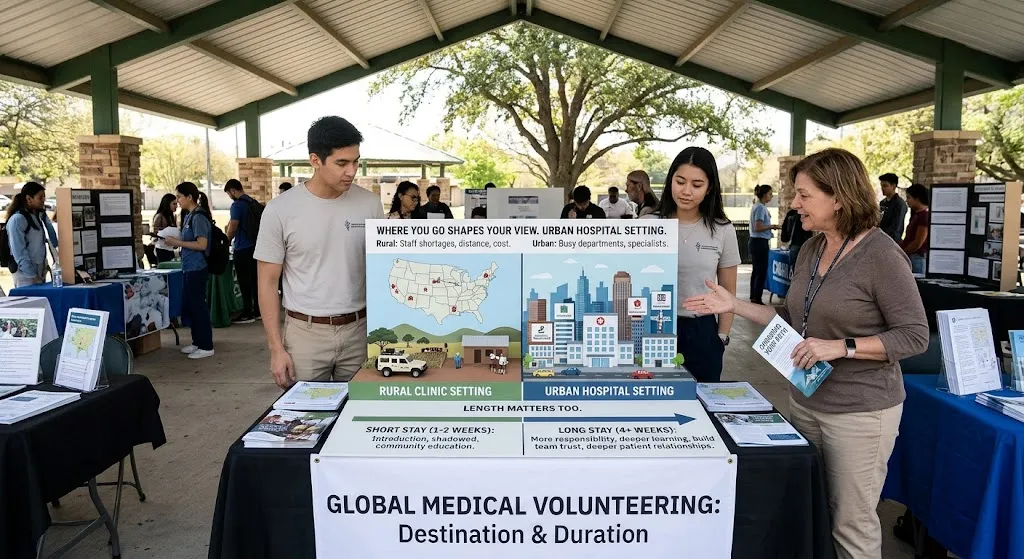
Where you go shapes what you see. Rural clinics often show the effects of distance, cost and staff shortages, while urban hospitals may give you a view of busier departments and specialist care. Think about which setting fits your interests and your level of training.
Length matters too. Short stays of one or two weeks give a useful introduction, but staff need time to trust a new face. Placements of four weeks or more usually allow you to see more, take on more responsibility within your limits and build real relationships with the team. If you can only go for a short time, choose a program that combines clinic shadowing with community health education, where short-term help is easier to use well.
Language and Communication
You will learn far more if you can follow conversations. Even basic Spanish, French or Swahili, depending on the region, helps you understand patient histories and connect with staff. Ask whether the program offers language lessons, and practice medical vocabulary before you leave.
Ethics Beyond the Clinic
Respect extends to photography and social media. Never post images of patients, even if they agree in the moment. Consent can be complicated when there is a power gap between a foreign visitor and a patient who needs care. Share stories about the system and your learning, not about individual patients.
Turning the Experience into Growth
Keep a daily journal during your placement. Note what surprised you, which health problems you saw most often and how staff adapted to shortages. These reflections become powerful material for medical school interviews and personal statements, especially when you can show what you learned about ethics and the limits of your role. A recognized volunteering certificate from your program can also help you document the experience for applications.
The Bottom Line
Medical volunteering abroad is most valuable when it is honest about its limits. Go to observe, support and learn, not to practice beyond your training. Choose a program with strong supervision and long-term local partners, and you will come home with a deeper understanding of global health and a clearer sense of the kind of clinician you want to become.
Related posts:
 Regaining Control on the Road to Recovery: What You Need to Know
 🦷 Emax vs Zirconia: Which Dental Veneer Is Better for Your Smile?
 Medical Malpractice in Florida: What Every Healthcare Provider Should Understand
 Why Migraine and Motion Sickness Often Travel Together
 How PRP Therapy Is Being Used for TMJ and Jaw Pain in Florida Clinics
Leave a Reply