

A few years ago, most people assumed real mental health treatment had to happen in an office. Then remote care went from niche to normal almost overnight. Today, many people attend therapy, group sessions, and even intensive outpatient programs from their own homes.
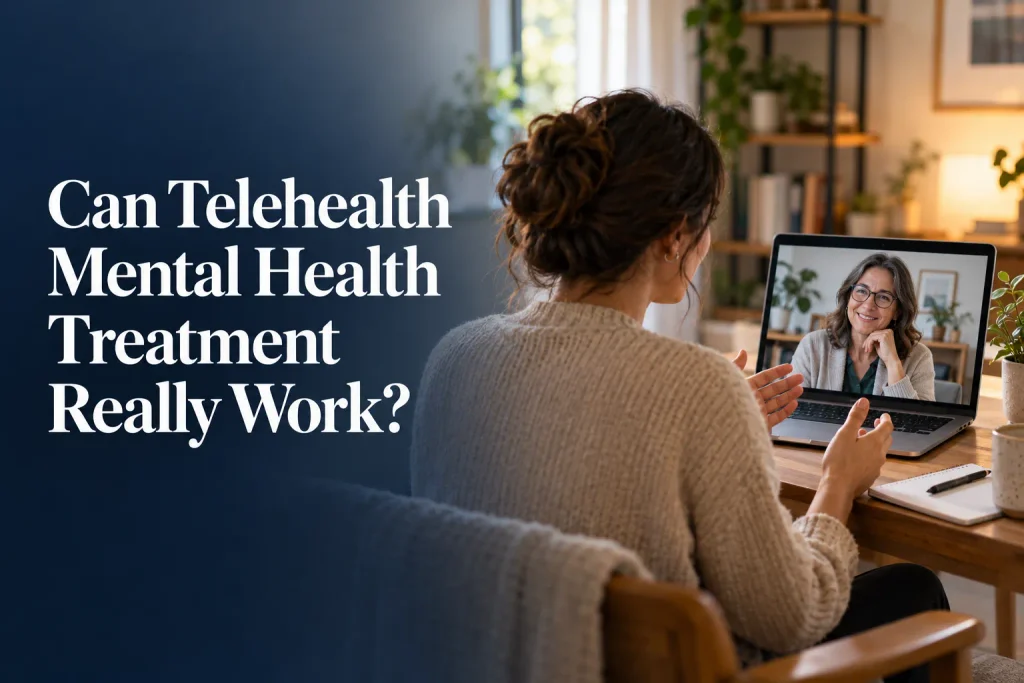
That shift raises a fair question: does it actually work as well? Programs like Triony, a behavioral health provider in Nashville, now offer virtual treatment alongside in-person care, and the experience of providers and patients over the past several years has given us a much clearer answer. Here is what to know.
What Telehealth Mental Health Treatment Includes
Telehealth is not just a video call with a therapist. It can include several levels of care:
- Individual therapy: one-on-one sessions by secure video
- Group therapy: small groups meeting virtually, often with structured skills training
- Psychiatric care: evaluations and medication management delivered remotely when appropriate
- Virtual intensive outpatient programs (IOP): several sessions per week combining group and individual therapy, delivered online
Virtual IOP has become especially valuable because it offers more structure than weekly therapy without requiring daily travel.
What the Research Says
A growing body of research suggests that for many common conditions, including depression, anxiety, and PTSD, therapy delivered by video can produce results comparable to in-person care. Evidence-based approaches such as cognitive behavioral therapy (CBT) and dialectical behavior therapy (DBT) translate well to a virtual format because they rely on structured conversation, skills practice, and between-session work.
That does not mean telehealth is identical to in-person care for everyone. Outcomes depend on the person, the condition, the quality of the program, and how engaged someone is in the process.
Who Telehealth Tends to Fit Best
Virtual treatment can be a strong option for people who:
- Live far from specialized programs or lack reliable transportation
- Have work, school, or caregiving schedules that make travel difficult
- Feel more comfortable opening up from a familiar environment
- Are stepping down from a more intensive program and want continued support
- Have mild to moderate symptoms and a stable, safe home setting
It can also lower the barrier for people who have avoided treatment because of stigma. Logging in from home can feel less intimidating than walking into a clinic for the first time. That is part of why programs such as Triony Behavioral Health offer a telehealth IOP alongside in-person care.
When In-Person Care May Be Better
Telehealth is not the right starting point for everyone. In-person care may be a better fit if someone:
- Is in crisis or at risk of harming themselves
- Needs close medical monitoring, such as during withdrawal
- Lacks a private, safe space to talk
- Has significant difficulty staying engaged through a screen
- Would benefit from the structure of physically leaving home for treatment
At Triony Behavioral Health, clients can choose among partial hospitalization (PHP), in-person intensive outpatient, outpatient care, and a telehealth IOP, which makes it possible to match the format to what each person needs and switch if things change.
Making Virtual Treatment Work
The format adds a few practical considerations. These habits help:
- Create a private space. A closed door, headphones, or even a parked car can make it easier to speak openly.
- Treat it like an appointment. Log in on time, minimize distractions, and silence notifications.
- Keep your camera on when possible. Facial expressions and body language help build connection, especially in groups.
- Check your technology ahead of time. A stable internet connection and a charged device prevent frustrating interruptions.
- Use the time between sessions. Practice skills and complete any assignments, since much of the progress happens outside the session.
- Have a safety plan. Know who to contact and what to do if symptoms get worse between sessions.
Questions to Ask a Telehealth Program
- Are your clinicians licensed in the state where I live?
- Is your video platform secure and private?
- How many hours per week does the program involve?
- Do you combine group and individual therapy?
- What happens if I need a higher level of care?
- Does my insurance cover virtual treatment?
Most telehealth providers can only treat people who are physically located in a state where their clinicians are licensed, so it is worth confirming this early.
What a Week in Virtual IOP Can Look Like
Schedules vary by program, but a virtual intensive outpatient program often meets three to five days a week for a few hours at a time. A typical week might include several group sessions focused on skills like managing anxious thoughts, regulating emotions, and handling stress, along with at least one individual therapy session. Some programs add psychiatric check-ins or family sessions. Many people attend before or after work, or during a reduced work schedule, which lets them practice new skills in their everyday environment right away.
The Real Advantage: Access
Perhaps the biggest benefit of telehealth is that it gets more people into treatment. For someone who would otherwise go without care because of distance, schedules, or nerves, a well-run virtual program can be life-changing. The best format is the one you will actually show up for consistently.
If you are in crisis or having thoughts of suicide, call or text 988, or call 911 in an emergency.
Related posts:
 Regaining Control on the Road to Recovery: What You Need to Know
 🦷 Emax vs Zirconia: Which Dental Veneer Is Better for Your Smile?
 Medical Malpractice in Florida: What Every Healthcare Provider Should Understand
 Why Migraine and Motion Sickness Often Travel Together
 How PRP Therapy Is Being Used for TMJ and Jaw Pain in Florida Clinics
Leave a Reply