
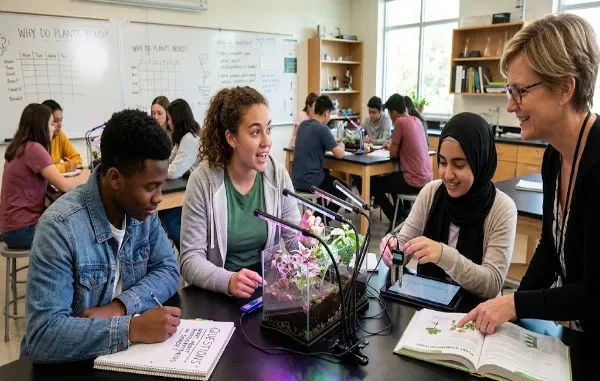
What happens when students move beyond simply memorizing facts and instead ask their own questions about what they are learning? Curiosity-driven learning represents a fundamental shift in how educational environments can shape student development. Rather than treating education as a process of transferring information from teacher to student, this approach recognizes that learners thrive when they pursue questions that genuinely interest them. When students engage with material through their own natural curiosity, they develop cognitive abilities that extend far beyond the classroom walls. This type of learning cultivates habits of mind that serve them throughout their academic careers and professional lives. Understanding how curiosity-driven learning functions and why it produces such durable thinking skills can help educators, parents, and administrators make more informed decisions about learning environments.
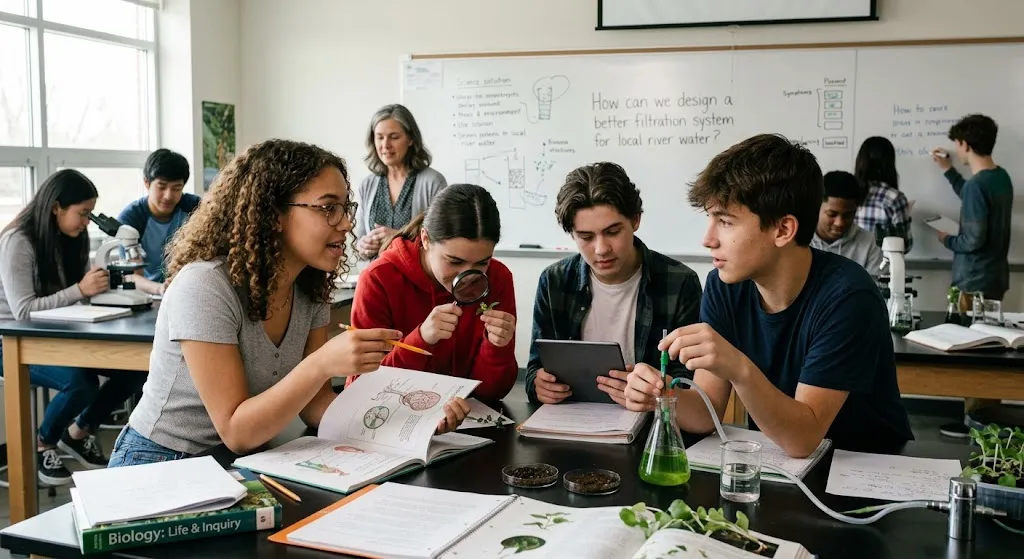
Creating an Environment Where Questions Drive Instruction
Building a classroom that supports curiosity requires intentional design choices about how information is presented and how students are encouraged to interact with it. Teachers who embrace this approach often start by identifying topics that naturally spark student interest rather than imposing a predetermined sequence of lessons. When students encounter problems or phenomena that confuse them or intrigue them, their brains become more actively engaged in constructing understanding. For example, a student might wonder why plants grow toward light, which then opens pathways to learning about photosynthesis, energy transfer, and biological processes in ways that feel connected to their own experience. The teacher’s role shifts from delivering information to facilitating investigation and helping students refine their questions into researchable inquiries. This structural change means students spend less time passively receiving content and more time actively engaged in the cognitive work of learning.
How Curiosity Strengthens Memory and Knowledge Retention
The human brain appears to be naturally wired to remember information that answers questions the learner genuinely wanted answered. When you are curious about something, your brain increases activity in regions associated with reward and motivation, which strengthens the neural pathways formed during learning. This biological reality means that curiosity-driven learning is not simply more enjoyable, but actually more effective at creating lasting memories. A student who investigates a topic because they want to understand it will retain that knowledge more reliably than a student who memorizes the same information because it will appear on a test. The difference becomes especially apparent over time, when retention tests show that curiosity-driven learners continue to recall material long after traditional learners have forgotten it. Additionally, when knowledge is learned in response to authentic questions, it becomes integrated with other related knowledge in ways that make it easier to access and apply in new contexts.
Building Metacognitive Skills Through Self-Directed Inquiry
Curiosity-driven learning naturally develops a learner’s ability to think about their own thinking, a skill known as metacognition. When students pursue their own questions, they must constantly evaluate whether they understand something, identify gaps in their knowledge, and decide what information they need to seek out. These processes build awareness of how learning actually happens and what strategies work best for different types of problems. For example, the OpenSciEd High School science curriculum encourages students to ask questions and investigate real-world problems, supporting the development of self-directed learning habits. Over time, students become more skilled at recognizing when they are confused, asking more precise questions, and evaluating the quality of their own thinking. This metacognitive development means that by the time students leave a curiosity-driven learning environment, they have internalized strategies for approaching unfamiliar problems independently. The ability to learn on your own, to recognize what you do not understand, and to adjust your approach when something is not working are thinking skills that remain valuable throughout life, regardless of how specific knowledge changes or becomes outdated.
Fostering Persistence and Tolerance for Uncertainty
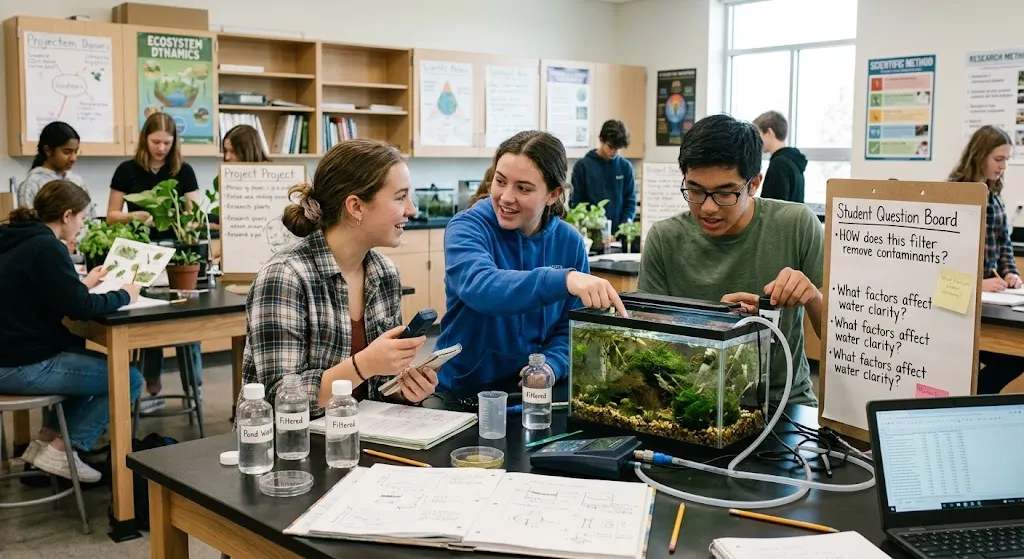
Learning that originates from genuine curiosity often involves encountering dead ends, contradictions, and problems that do not have straightforward solutions. When students are pursuing answers to questions that genuinely matter to them, they are more likely to persist through difficulty rather than giving up quickly. This willingness to sit with uncertainty and work through complexity is a thinking skill that distinguishes effective problem solvers and innovators from those who struggle with unfamiliar challenges. A student investigating how water pollution affects aquatic ecosystems might discover conflicting information from different sources, requiring them to evaluate credibility and reconcile different perspectives. Rather than being discouraged by this complexity, curiosity-driven learners treat it as part of the authentic process of understanding.
Research published by the George Lucas Educational Foundation supports the view that curiosity is a foundational driver of deeper engagement and longer-lasting comprehension in educational settings. This comfort with uncertainty and the ability to work through complex problems without immediate answers becomes a foundation for success in any field that requires creative thinking or adaptation to changing circumstances.
Conclusion
Curiosity-driven learning operates as a powerful mechanism for developing thinking skills that endure well beyond formal education. By shifting classroom focus from information transmission to student-initiated inquiry, educators create conditions where deep learning, strong memory formation, and self-aware thinking can flourish. The metacognitive abilities and persistence that emerge from pursuing genuine questions become portable thinking skills that students carry into higher education, careers, and lifelong learning. While implementing curiosity-driven approaches requires changes to how classrooms are structured and how teachers facilitate learning, the return on that investment appears in students who can think independently, learn continuously, and approach novel problems with both creativity and resilience. When learning flows from authentic curiosity rather than external requirements, the thinking skills that develop have the remarkable quality of staying with learners and continuing to serve them throughout their lives.
Related posts:
 Longhornsurvey com The Online Survey Platform
 Why Siding Plays a Key Role in Reducing Exterior Maintenance Throughout the Year
 The Ultimate Guide to Building Your Signature Personal Style
 Zach Bryan Merch and the Art of Building a Concert-Ready Wardrobe
 Smart Landscaping in Victoria BC: Irrigation, Drainage Planning and Low-Maintenance Yards
Leave a Reply