
Introduction
Academic achievement alone no longer suffices to prepare students for complex, rapidly changing futures. Social-emotional learning (SEL) has emerged as essential to comprehensive education, addressing students’ emotional wellbeing, interpersonal skills, and character development. Research consistently demonstrates that SEL programming improves academic outcomes, reduces behavioral problems, and enhances long-term life success. Effective SEL integration requires systemic commitment rather than isolated lessons, permeating school culture and instructional practices. As teachers increasingly recognize the interconnection between emotional and academic development, SEL has moved from peripheral concern to central educational priority. Modern tech tools offer innovative approaches to SEL instruction while human connection remains fundamental to emotional growth.
Understanding the Five SEL Competencies
The Collaborative for Academic, Social, and Emotional Learning identifies five core competencies: self-awareness, self-management, social awareness, relationship skills, and responsible decision-making. Self-awareness involves recognizing one’s emotions, values, and strengths. Self-management includes regulating emotions, setting goals, and demonstrating self-discipline. Social awareness encompasses empathy, perspective-taking, and appreciating diversity. Relationship skills involve communication, cooperation, and conflict resolution. Responsible decision-making requires ethical reasoning and considering consequences. These competencies develop progressively throughout childhood and adolescence, requiring age-appropriate instruction and practice. Teachers can integrate SEL across curriculum areas rather than treating it as separate subject matter. Literature discussions explore characters’ emotions and decisions, science projects require collaboration and persistence, and history lessons examine diverse perspectives and ethical dilemmas.
Creating Emotionally Safe Learning Environments
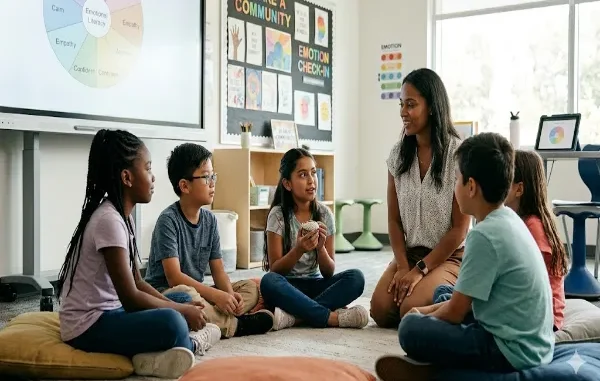
SEL flourishes in environments where students feel physically and emotionally safe. Establishing clear behavioral expectations and consistent consequences provides structure that reduces anxiety. Restorative practices address conflicts by repairing harm rather than simply punishing offenders, maintaining relationships while promoting accountability. Morning meetings or community circles build connections and provide opportunities to share feelings and experiences. Displaying emotion vocabulary and regulation strategies gives students language and tools for managing feelings. Trauma-informed practices recognize that challenging behaviors often reflect underlying pain or stress, responding with compassion rather than punishment. When educators model emotional regulation, empathy, and respectful communication, they demonstrate SEL competencies in action. Safe environments enable students to take risks, make mistakes, and grow without fear of ridicule or rejection.
Explicit SEL Instruction and Practice
While embedding SEL throughout school culture proves essential, explicit instruction ensures all students develop core competencies. Structured curricula provide age-appropriate lessons teaching specific skills through discussion, role-play, and reflection. Teaching emotional literacy helps students identify and name feelings, the first step toward regulation. Mindfulness practices develop present-moment awareness and stress management. Conflict resolution protocols give students frameworks for navigating disagreements constructively. Perspective-taking activities build empathy and reduce prejudice. Digital tech resources including apps, videos, and interactive games supplement traditional instruction with engaging formats. However, authentic practice through real classroom interactions and challenges provides the most powerful learning. Debriefing difficult situations helps students extract lessons and develop more effective strategies for future encounters.
Measuring SEL Development and Outcomes
Assessing social-emotional competencies presents challenges distinct from academic evaluation. Standardized tests poorly capture emotional intelligence or character development. Observation-based assessments, where teachers document student behaviors and interactions, provide richer information but require significant time. Student self-reports offer insights into internal experiences but may reflect social desirability bias. Multi-method approaches combining observations, self-reports, and behavioral indicators yield most comprehensive understanding. Important outcomes include reduced disciplinary incidents, improved attendance, stronger peer relationships, and increased student wellbeing. Long-term studies demonstrate that SEL programming produces lasting benefits including higher graduation rates, better employment outcomes, and reduced involvement with criminal justice systems. These outcomes justify SEL investment even when immediate academic gains may be modest.
Conclusion
Social-emotional learning represents a fundamental shift in education’s purpose and practice, recognizing that developing capable, caring, responsible citizens requires attention to emotional and social development alongside academic achievement. By understanding core competencies, creating safe environments, providing explicit instruction, and measuring outcomes, schools can implement effective SEL programming. This work demands sustained commitment and cultural transformation but yields profound benefits for individual students and society. As education continues evolving, integrating social-emotional and academic learning will remain essential to preparing students for meaningful, successful, connected lives.




Leave a Reply