
The 2026 U.S. Houzz & Home Study, which surveyed more than 20,000 Houzz users on the projects they finished in 2025, put a hard number on something contractors have been complaining about for years. Median renovation spend held at $20,000. About 37% of homeowners ended the year over budget, up from 34% in 2021. When Houzz asked why, the top answer was not surprise construction damage or hidden mold. It was simpler than that: 52% said the products and services they picked ended up costing more than they expected.
That is a decision-quality problem, not a construction problem. And it is the reason a set of tools that used to sit on the fringe of the renovation workflow is quietly moving to the front of it.
Shift 1: The Preview Layer Is Moving Upstream of the Quote
For most of the past decade, the sequence went like this. A homeowner picked a rough direction from Pinterest or a shelter magazine, called two or three contractors, took the least painful quote, then made the real design decisions during the build. Change orders piled up. So did the overruns.
The photo-upload preview layer flips that order. Instead of committing to a direction and then discovering the cost, homeowners are now running four or five versions of a room through an AI preview before anyone quotes anything. The versions that read badly on screen get killed early. The one or two that survive become the brief a contractor gets. That is a much cheaper place to be wrong.
Grand View Research pegged the AI in interior design market at $3.28 billion in 2025 and projects it to hit $15 billion by 2033, growing at a 20.9% compound rate. Residential is the fastest-growing end-use segment inside that number. Commercial and professional design uses remain a major share of the market, but the residential growth aligns with the pattern of homeowners running a private preview round before they invite anyone else into the decision.
Shift 2: Photo-Upload Is Replacing 3D Rendering Skills
Ten years ago, a homeowner who wanted a real preview of a redesign had two options. Pay a designer for a rendered board. Or learn SketchUp, Chief Architect, or one of the other CAD-flavored consumer tools that assume the user is willing to build a room in 3D from scratch. Most people picked neither and just guessed.
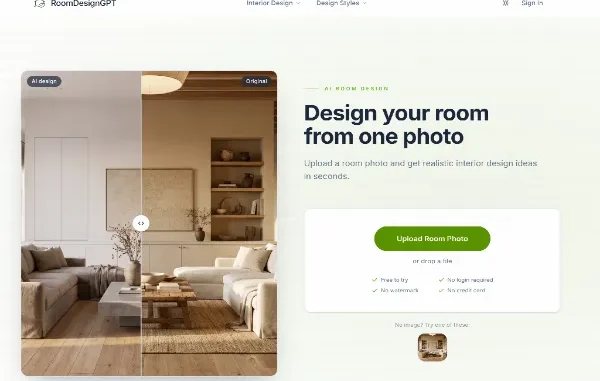
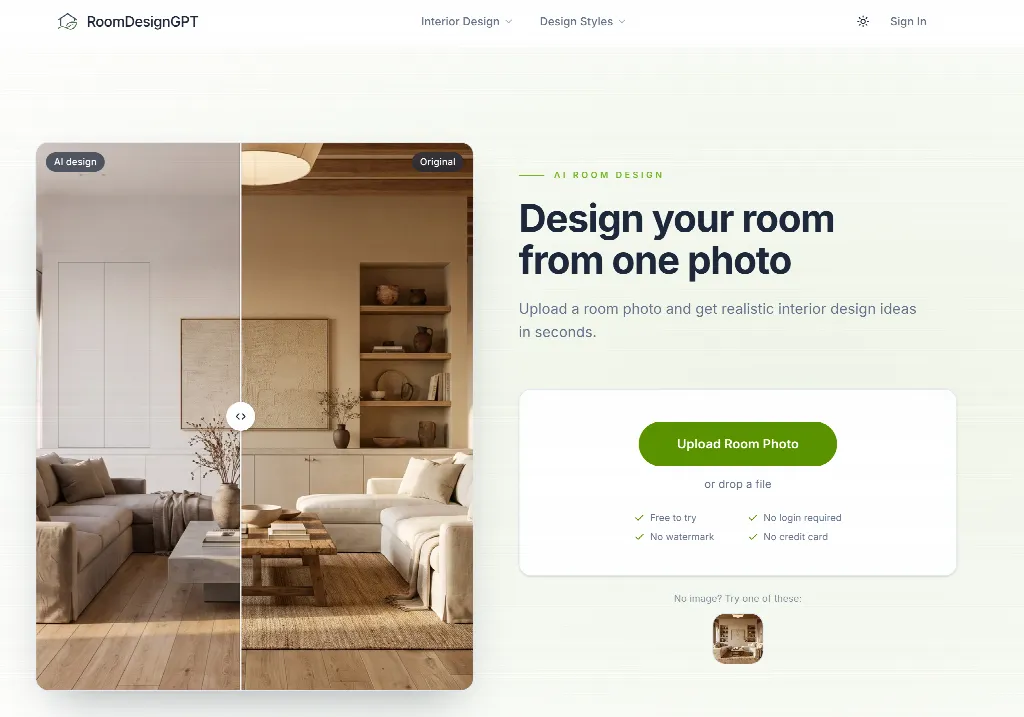
The photo-upload workflow removes both the fee and the learning curve. A homeowner points a phone at the room, uploads the image, picks a style, and gets back a version of the same room in that style. No polygons, no scale settings, no camera rigs. A photo-upload product such as RoomDesignGPT — an ai room design tool — shows the pattern in concrete form: the input is a phone photo and a style choice, and the output is a version of the actual room the homeowner is standing in. That framing matters. When the preview shows this living room instead of a generic staged one, the person looking at it can judge whether they still want it after the novelty wears off. That is a different quality of decision than the one you get from a mood board.
The interesting side effect is who is now in the conversation. Renters, first-time buyers, and people managing renovations for aging parents rarely learned rendering software. They are natural new candidates for photo-upload tools, because for them the cost of not previewing was accepting whatever the property already looked like.
Shift 3: The Decision Conversation Now Includes Renters and Landlords
The old renovation research skipped renters almost entirely. It made sense at the time. If you cannot repaint a wall without asking permission, the return on doing a full room preview is close to zero. The premise has quietly changed. Long-term renters in high-rent metros are staying in units for years, and landlords are more willing to green-light cosmetic changes when the tenant can show what the finished room will look like before any paint hits the wall.
That is where the preview layer earns its keep for a different audience. A renter can generate three versions of their bedroom with different accent walls, share the images with the landlord over email, and get a yes or no in a day instead of guessing. The same shift is showing up on the landlord side. Short-term rental hosts, especially the ones running two or three units in the same building, are experimenting with AI previews to test styling variations before committing to furniture orders — a way to reduce some of the uncertainty that comes with buying home goods sight-unseen online.
None of this replaces a designer for a serious remodel. It changes who gets a preview at all.
What Smart Homeowners Are Doing Now
Three practical moves follow from the cost-overrun data in the Houzz 2026 study:
- Preview before quote. Run four to six versions of the target room through a photo-upload tool before calling contractors. Bring the two survivors to the estimate meeting so quotes are priced against a real image, not a vague description.
- Test the surprise line items. The 52% who blew their budget on costlier-than-expected products often did so on finishes: cabinetry, tile, lighting. Previewing three or four finish combinations, even at rough fidelity, exposes the ones that read cheap on screen and would have been regretted in the room.
- Loop in the people who share the space. Housemates and family members are the source of most mid-project scope changes. Sending them two AI previews before the demo starts is faster than showing them fabric swatches after the drywall is open.
What Is Worth Watching Next
Two things are worth tracking through 2027. The first is whether contractors themselves start integrating photo-upload previews into their estimating workflow. If the estimator can generate the preview live during a walkthrough, the homeowner and the pro end up looking at the same image before the quote is written. That would change how change orders happen. The second is whether the landlord side of the rental market formalizes AI previews as part of the approval process for cosmetic changes. If it does, a large group of people who previously had no reason to use a room design tool will have one.
Neither shift requires the market to grow at the 20.9% rate Grand View is projecting. Both shifts are happening at the current rate, quietly, in individual households making individual calls. The overrun rate for 2026 will tell whether the preview layer is actually changing decisions or just adding a step to them. That is the number to watch.
Related posts:
 How Dechecker AI Checker Turns Awkward Drafts Into Human-Readable Content
 The Complete Guide to Using Telegram for Secure and Smart Communication
 The Chemistry Behind Firefighting Foam: How Surfactants Make Fire Suppression Work
 Dell Latitude 5540 Performance Tested: Can It Handle Your Workflow?
 Best Traction Tools for Lifted Jeeps & SUVs on the Trail
Leave a Reply