
There’s a particular kind of travel fatigue that sets in after one too many packaged holidays. The itinerary that leaves no room for detours. The hotel that’s comfortable but forgettable. The sense that you moved through a place without ever really being in it. For a growing number of Australians, the response to that fatigue has been to swap the package for a set of keys and a road that goes wherever they want it to.
Campervan travel has been growing steadily in Australia, and the reasons behind it are less about trend-chasing and more about something genuinely shifting in how people want to experience time away. Understanding what’s driving that shift helps explain why so many people who try it once tend to keep coming back.
The Problem With Packaged Travel
Packaged holidays work on the assumption that you know in advance where you want to be, for how long, and what you want to do when you get there. For short breaks to familiar destinations, that works fine. For travel that’s meant to feel like a genuine escape, it creates a particular kind of pressure that can follow you through the entire trip.
Every decision is made before you leave. The hotel is booked, the flights are fixed, and the itinerary is set. If you arrive somewhere and want to stay longer, you can’t. If you find something unexpected along the way, you don’t have time to follow it. The holiday unfolds roughly as planned, which means it unfolds roughly like the last one.
What people are looking for, increasingly, is the opposite of that. Not chaos, but genuine flexibility. The ability to wake up somewhere beautiful and decide to stay another night. The freedom to take a road simply because it looks interesting. The option to cook dinner with something bought at a local market rather than ordering from a hotel menu. None of those things are available in a packaged itinerary, and all of them are available in a campervan.
What the Campervan Actually Offers
The appeal of campervan travel isn’t really about the vehicle. It’s about what the vehicle makes possible. A campervan is, at its most basic, a way of taking your home with you, which changes the entire logic of how a trip works.
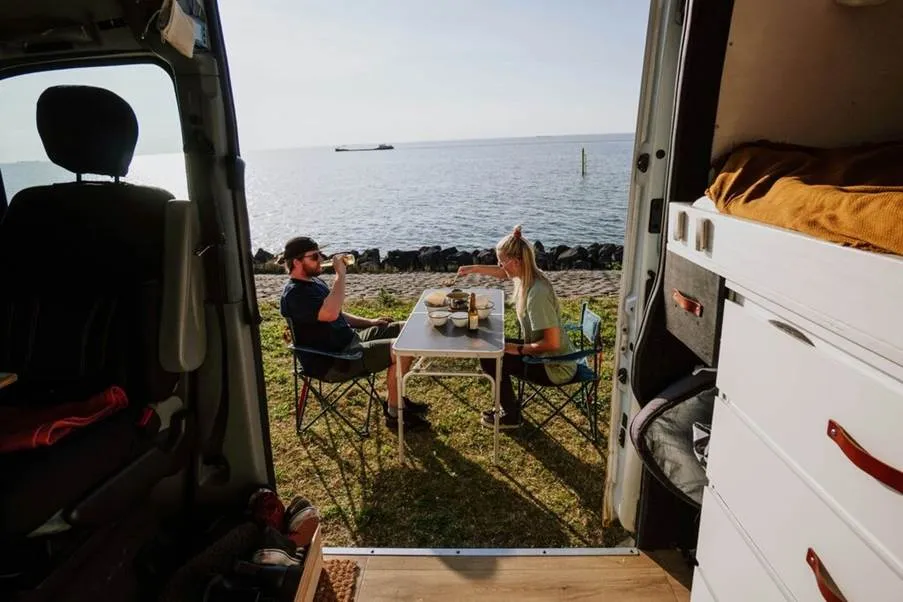
There’s no check-in time to arrive by, no checkout deadline to pack around, and no minimum stay attached to wherever you decide to stop. If a place feels right, you stay. If it doesn’t, you move on. The accommodation is always ready, always familiar, and always in exactly the location you chose for that particular night.
For anyone considering Avida campervans in Sydney, the range available reflects how much the category has evolved. These aren’t basic converted vans with a mattress in the back. Modern campervans are built for genuine comfort on the road, with considered layouts, proper sleeping arrangements, kitchen facilities that make cooking genuinely practical, and storage designed around how people actually travel. The durability built into Australian-made campervans in particular reflects the reality of the roads they’re designed for, which are sometimes sealed and smooth, and sometimes distinctly not.
Self-sufficiency is the other dimension that appeals strongly to people who’ve tried both ways of travelling. Not needing to find a restaurant for every meal, not depending on hotel laundry, not having to pack and unpack every time you move. The campervan absorbs all of those logistics into the travel itself, which frees up the trip to be about the places and the experiences rather than the management of the journey.
Why Australia Is Particularly Well Suited to This
If you were designing a country for campervan travel, you’d probably arrive at something fairly close to Australia. The distances are significant, which makes the campervan’s combination of transport and accommodation particularly practical. The camping infrastructure, from national park sites through to well-equipped caravan parks, is well developed across most of the country. And the landscapes are varied enough that no two stretches of road feel the same.
Coastal routes that take days to drive properly. Mountain ranges with camping spots that feel genuinely remote. Outback stretches where the scale of the country becomes viscerally real. These are experiences that a packaged holiday, by definition, can’t replicate, because they depend entirely on your ability to go at your own pace and stop whenever something is worth stopping for.
The growing network of travellers doing exactly this also creates a kind of informal community on the road, people sharing information about good spots, unexpected finds, and roads worth taking, that doesn’t exist in conventional tourism in the same way.
What People Are Looking for in a Campervan
For people making the move from occasional campervan rental to ownership, or considering it for the first time, the practical questions tend to centre on a few key areas. Size and layout matter more than people expect when they first start looking. A layout that works for two people travelling together is very different from one that needs to accommodate a family, and the day-to-day livability of the interior, how the kitchen is positioned, where things are stored, how easily the sleeping area is set up, has a direct bearing on how enjoyable an extended trip actually is.
Build quality is the other consideration that tends to become clearer after the first trip. A campervan that holds up well on rough roads, whose fixtures stay fixed and whose seals keep out the weather, produces a very different experience from one that requires ongoing attention to small problems. Australian-made campervans are built with Australian road conditions in mind, which is a practical advantage that becomes increasingly obvious the further off the main routes a trip goes.
Motorhomes offer a step up in space and facilities, and suit people who are planning longer trips or who want the full range of home comforts on the road. Campervans suit those who want the flexibility and maneuverability of something smaller, particularly for routes that pass through smaller towns or areas where a larger vehicle would be impractical.
Why It’s About More Than How You Travel
The shift toward campervan travel is, at some level, a shift in what people want from time away. Not just a change of location, but a genuine change of pace. The ability to be somewhere properly, rather than passing through it on a schedule, is something that resonates differently after a period of life that has been densely scheduled in other respects.
A campervan doesn’t solve that by doing more. It solves it by doing less, removing the logistics and the timelines and the decisions that were already made, and replacing them with a simpler question: where do you want to go today?




Leave a Reply