
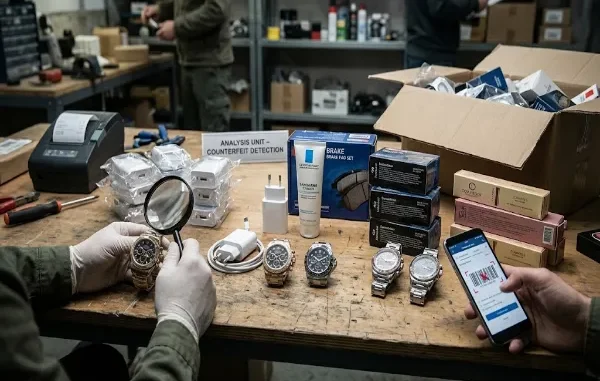
Counterfeiters do not regard all goods as equally promising. In most cases, they seek goods that offer decent profit with minimal effort. A brand name, steady demand, a high price, or a simple production process can make a product especially tempting.
This is one reason certain goods become targets for counterfeiting. Some popular skincare products, luxury handbags, phone accessories, automotive parts, and packaged food attract counterfeiters more than less-in-demand, low-cost goods.
Understanding what appeals to counterfeiters helps companies identify their vulnerabilities. They can also select appropriate anti counterfeit solutions before it becomes a greater challenge.
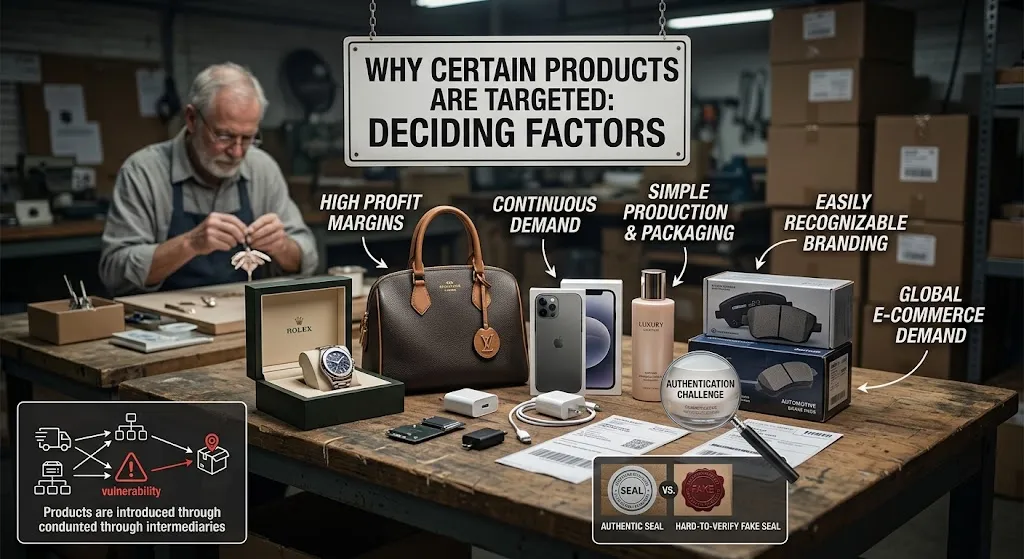
High Price Means High Profit Margin
Price also plays a significant role. When the real product sells at a high price, the counterfeiter stands to gain more from each fake item manufactured.
Take the case of luxury watches. The real watch could cost several thousand dollars, while the counterfeit could cost much less to manufacture. Once the consumer is convinced the item is real, the profit margin can become substantial.
This also holds for electronics, luxury cosmetics, specialized tools, and auto parts. Counterfeiters target products where customers expect to pay more.
Even low-cost products can fall prey to counterfeiters, particularly when businesses deal in huge quantities. High-value products ensure that every sale becomes profitable for counterfeiters.
Brands with strong brand awareness need anti-counterfeiting products that authenticate their goods rather than relying on consumer awareness alone.
Products With Continuous Demand Are Attractive Targets
Continuous demand gives counterfeiters another incentive to focus on a specific product. Customers’ continuous searches for a product give businesses an immediate customer base.
Such products may seem especially desirable because consumers must replace them regularly. Examples include phone chargers, batteries, cosmetics, clothes, shoes, and auto parts.
In addition, a counterfeiter may join an existing market instead of generating demand for unknown products. It only involves imitation of already desirable goods.
Moreover, counterfeiters may exploit seasonal demand. This can refer to goods associated with holidays, festivals, major sporting events, and newly launched products. Counterfeit sellers can try to take advantage of these short periods when customers actively search for specific items.
Simple Products Can Be Easier to Copy
Not all products require a complicated manufacturing process. Some products require simple physical designs. Counterfeiters can produce these products without using the same technology or materials as the legitimate manufacturer.
Product packaging can make counterfeiting easier or harder. When a product depends mainly on its box, label, bottle, or simple tag for identification, the counterfeiter can try to duplicate them.
This is not to say that simple products are more susceptible to risk. Manufacturers can add security features that make the product harder to replicate. Anti-counterfeiting technology adds another layer of difficulty for counterfeiters trying to duplicate the design through simple replication.
Products With Easily Recognizable Packaging
Product packaging becomes the first visual representation of the product. Consumers see a certain bottle, box, wrapper, or label before they even look at the product.
The counterfeiters know this consumer behavior. They can copy colors, fonts, logos, images, and even packaging shapes.
The problem worsens when buyers purchase products quickly. The buyer sees the packaging and believes it is a real product without checking anything else.
Brands can solve this by incorporating security features into their packaging. Anti-counterfeit packaging should be hard to replicate yet easy to produce and transport.
Products Sold Through Complex Distribution Networks
Counterfeiting can also happen with products that pass through several intermediaries. For example, a product may be sold from the manufacturer to the distributor, to the warehouse, to the wholesaler, to the retailer, and then to the consumer.
With each new stage added, unauthorized products have another opportunity to enter the chain.
However, this does not necessarily mean all distributors pose such a threat, since most businesses engaged in legitimate distribution adhere to strict standards.
Organizations can therefore integrate supply chain management with anti-counterfeiting systems that authenticate products at critical stages.
Products That Are Hard to Authenticate by Consumers
Some products have features that are hard for consumers to verify. Consumers may struggle to verify whether a spare part, chemical product, cosmetic product, or electronic part is genuine just by looking at it.
A consumer could compare the two packages and see no visible difference between them. The counterfeit item may bear the same logo and utilize identical materials. There would not be any way to authenticate the source without a proper mechanism of authentication.
Covert authentication becomes essential here. Rather than relying on visible features, a company can use hidden features.
Products With Strong Resale Markets
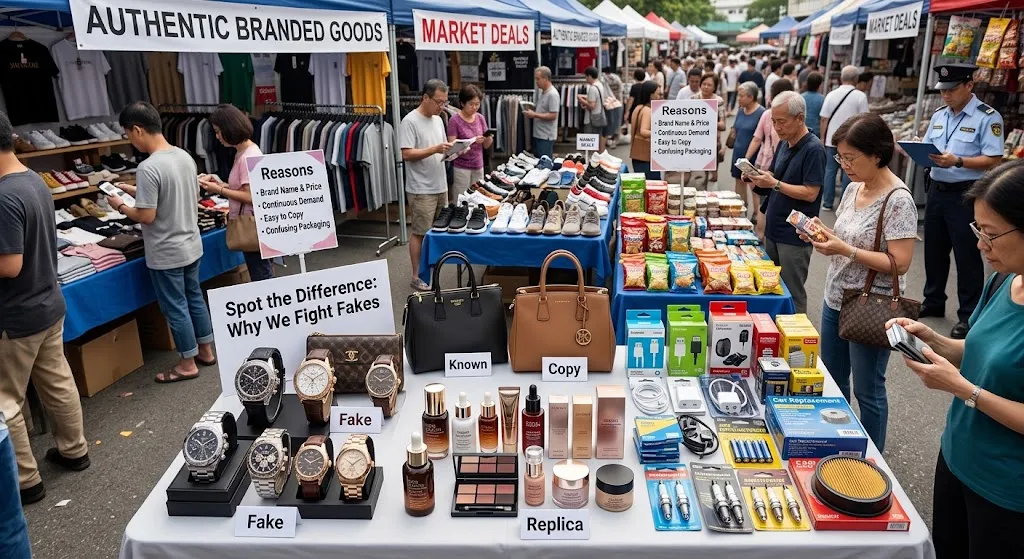
A robust second-hand market also opens another avenue. If a product retains its value after first use, it may invite counterfeits as consumers seek cheaper alternatives.
There are many examples of such products – designer bags, watches, sneakers, gadgets, and collectibles. Counterfeit goods can pass through several hands, thus obscuring their origin.
Online resale platforms can also exacerbate this problem. The seller may not know much about the product’s history, while the buyer assumes detailed photos prove its legitimacy.
Businesses can support resale verification by offering ways to confirm whether a product still retains its original identity.
Products With Expensive Replacement Parts
Counterfeiters are also attracted to the replacement market. Customers often need replacement parts urgently, and they may compare prices before buying.
Automotive parts are a common example of replacement parts. When a vehicle owner needs a replacement filter, brake parts, bearings, or lighting parts, they have to search for them.
Counterfeiters can use a well-known manufacturer’s brand name to sell a cheaper item. If the customer cannot distinguish the authentic part from the counterfeit, price becomes the deciding factor.
Protecting each component and its packaging, rather than the whole automobile, helps manufacturers prevent this threat.
Products With Global Demand
A product with global demand lets counterfeiters reach many more customers. They can reach customers in multiple countries without setting up physical outlets in each one.
The global e-commerce system makes this possible. A seller can market products to customers in one country while manufacturing or shipping from another.
Thus, businesses that operate internationally require global security measures. Ideally, authentication should be feasible regardless of where the manufacturer, distributor, retailer, or customer is located.
How AlpVision Can Support Product Authentication
Brands can also use specialized providers like AlpVision to add authentication capabilities without altering the look of their products.
AlpVision’s cryptoglyph technology uses invisible patterns in the printed varnish layer. The company also offers AlpVision Fingerprint, which uses natural microscopic differences in plastic elements to create a unique identity for each product.
This method, along with others, could be considered by businesses looking for ways to secure vulnerable products. The most appropriate solution may depend on several factors related to the product and the processes involved.



Leave a Reply