
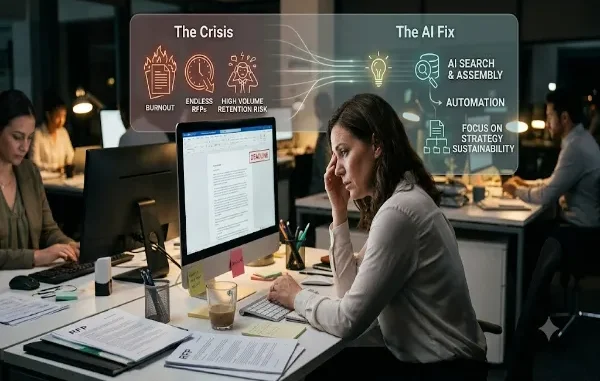
Ask a proposal manager how they’re doing during Q4 crunch, and you’ll usually get a tired laugh before an honest answer. Bid and proposal teams are among the most consistently overworked functions in B2B organizations, yet they rarely get discussed in conversations about employee burnout or retention. That’s starting to change, and the reason is unexpected: the same wave of automation reshaping proposal response is also reshaping how sustainable this job actually is to do.
This is a story that doesn’t get told often enough. Most articles about proposal automation focus on speed and win rates. Fewer talk about what constant RFP pressure does to the people responsible for it – and why solving that human problem might be the most underrated benefit of bringing AI into the proposal function.
The Job Nobody Designed On Purpose
Proposal management is one of those roles that companies back into rather than build intentionally. A company starts responding to a handful of RFPs a year, someone on the sales or marketing team picks up the slack, and before long that person owns a function that never had proper headcount planning, tooling, or process behind it. As the business grows, RFP volume grows faster than the team supporting it.
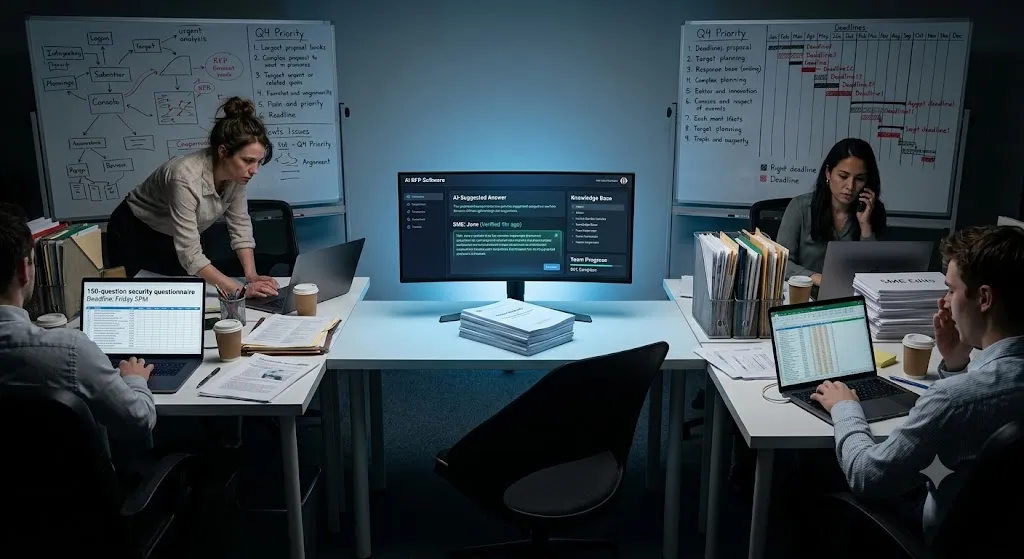
The result is a job defined by unpredictable, high-stakes deadlines. A 150-question security questionnaire can land on a Tuesday with a Friday deadline, on top of three other active proposals already in motion. There’s no way to plan around this kind of volatility with headcount alone – hiring for peak demand means idle capacity the rest of the quarter, and hiring for average demand means teams are perpetually underwater during peak season.
Layer onto that the fact that proposal work is high-visibility and high-consequence. A missed deadline can eliminate a company from a deal worth millions. An inaccurate compliance answer can create legal exposure. There’s little room for error, constant time pressure, and often limited recognition when a proposal wins – because by the time the deal closes, sales gets the credit and the bid team has already moved on to the next RFP.
It’s a formula for burnout, and it shows up in the data every team lead already knows anecdotally: high turnover, difficulty hiring experienced proposal writers, and a persistent sense that the function is one bad quarter away from falling apart.
Where the Actual Time Goes
If you shadow a proposal writer for a week, the surprising thing isn’t how much time they spend writing. It’s how much time they spend searching – hunting for the right past answer, chasing a subject matter expert for an update, reformatting content pulled from three different source documents into one coherent voice. Studies of proposal team workflows consistently find that the majority of hours on a typical RFP go toward information gathering and formatting rather than original composition.
This is the part of the job that grinds people down. Writing a thoughtful answer to a genuinely novel question is engaging work. Copy-pasting the same boilerplate answer for the fortieth time, then manually reformatting it to match a new RFP template, is not. It’s repetitive, low-leverage labour that happens to require high-stakes accuracy – a uniquely draining combination.
This is exactly the layer of the job that AI is best positioned to absorb. Not the judgment calls, not the strategic positioning of a proposal, not the relationship context that only a human on the deal team understands – but the repetitive retrieval and first-draft assembly that eats the bulk of the week.
What Actually Changes for the Team
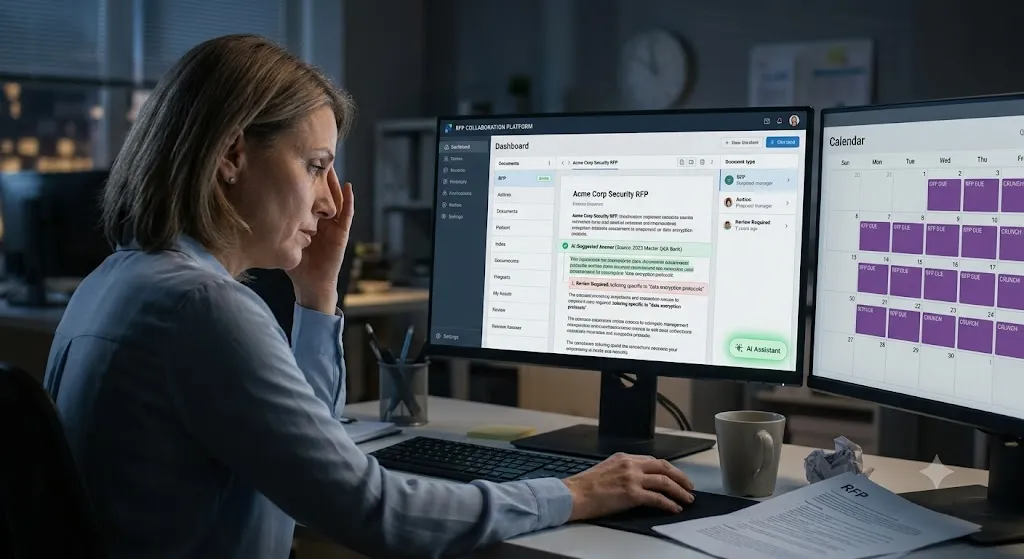
When organizations adopt AI RFP Software, the framing usually starts with efficiency metrics – turnaround time, number of RFPs completed per quarter, win rate improvements. Those numbers matter for the business case. But talk to the proposal teams themselves after a few months of use, and a different theme tends to surface: the job feels less like triage and more like actual work.
Automating the search-and-assemble portion of a response means a proposal writer’s day shifts from constant firefighting to more deliberate review and refinement. Instead of racing to locate content before a deadline, they’re evaluating whether an AI-suggested answer is the strongest possible response, tailoring language to the specific buyer, and spending more time on the sections that genuinely require strategic thinking – win themes, differentiation, executive summaries.
This shift matters for retention in a very concrete way. Experienced proposal professionals are hard to hire and expensive to replace, and the professionals most likely to leave are often the strongest ones – the people with enough experience to get frustrated by spending their days on low-value repetitive work instead of the strategic writing they were actually hired to do. Reducing the drudgery of the job doesn’t just save time; it changes whether skilled people stick around.
There’s also a quieter benefit around onboarding. New proposal hires traditionally take months to become fully productive, largely because so much of the job depends on tribal knowledge – knowing where past answers live, which SME to ask about which topic, which phrasing legal prefers for a given clause. When that knowledge is captured and searchable inside a shared system, new team members ramp up faster because they’re not dependent on institutional memory that only exists in a few people’s heads.
Reducing the Bus Factor
Every proposal team has at least one person whose departure would be genuinely disruptive – the one who remembers where the good answers are, who has the security certifications memorized, who can be trusted to review anything before it goes out the door. That concentration of knowledge is a business risk as much as a people risk. If that person leaves, gets sick, or takes a well-earned vacation during a critical RFP window, the team is exposed.
Platforms built as AI RFP Software address this indirectly but meaningfully by centralizing verified answers into a searchable knowledge base that doesn’t depend on any single person’s memory or availability. That doesn’t replace the expertise of a strong proposal lead – it protects the organization from being entirely dependent on it, and it gives that lead room to actually take a vacation without the team grinding to a halt.
The Business Case Beyond Speed
None of this is meant to suggest that speed and win rate improvements don’t matter – they’re usually the headline numbers that justify the investment in the first place. But framing AI-assisted proposal tools purely as a productivity play undersells the full picture. A proposal team that isn’t perpetually burned out produces better work. Fatigued writers make more errors, miss nuance in buyer requirements, and default to generic boilerplate because there’s no time to do better. A team with breathing room produces sharper, more tailored responses – which is, not coincidentally, also what drives higher win rates.
Organizations evaluating AI RFP Software should weigh this dimension alongside the efficiency metrics: what does this do to the sustainability of the team responsible for running it? A tool that shaves hours off a response but still leaves the team drowning in unpredictable volume hasn’t solved the underlying problem. The platforms delivering the most durable value are the ones that meaningfully change the day-to-day experience of the people doing the work – not just the numbers on a dashboard.
A Function Worth Investing In Properly
Proposal and bid teams have quietly become one of the highest-leverage functions in B2B organizations, directly influencing which deals get won and which get lost. Yet they’ve historically been under-resourced and under-tooled relative to their impact. The rise of AI-assisted proposal platforms is, in a sense, overdue recognition that this function deserves the same investment in tooling and process that sales and marketing teams have had for years.
The organizations getting this right aren’t just chasing faster turnaround times. They’re building a sustainable proposal function – one where experienced people want to stay, where institutional knowledge survives turnover, and where the team has enough capacity to do their best strategic work instead of just keeping up. That’s a harder outcome to put on a slide, but it’s the one that compounds over time, and it’s quickly becoming the real differentiator between proposal teams that scale gracefully and the ones that quietly burn through their best people every renewal cycle.



Leave a Reply