
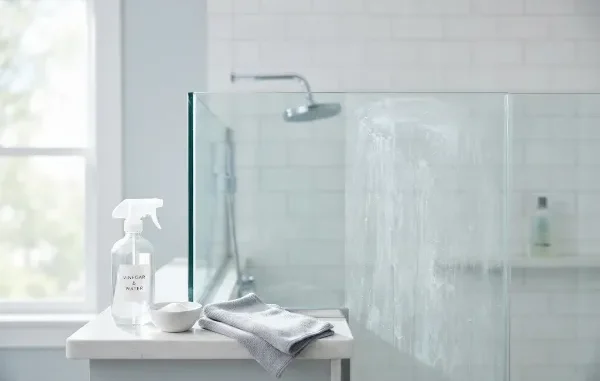
Those cloudy white spots on your shower door and the chalky film on your bathroom tiles are hard water stains. They build up slowly, and once they dry on, ordinary wiping doesn’t shift them. The good news is that you don’t need harsh chemicals. Most stains come off with a few cheap household products, as long as you match the method to the surface.
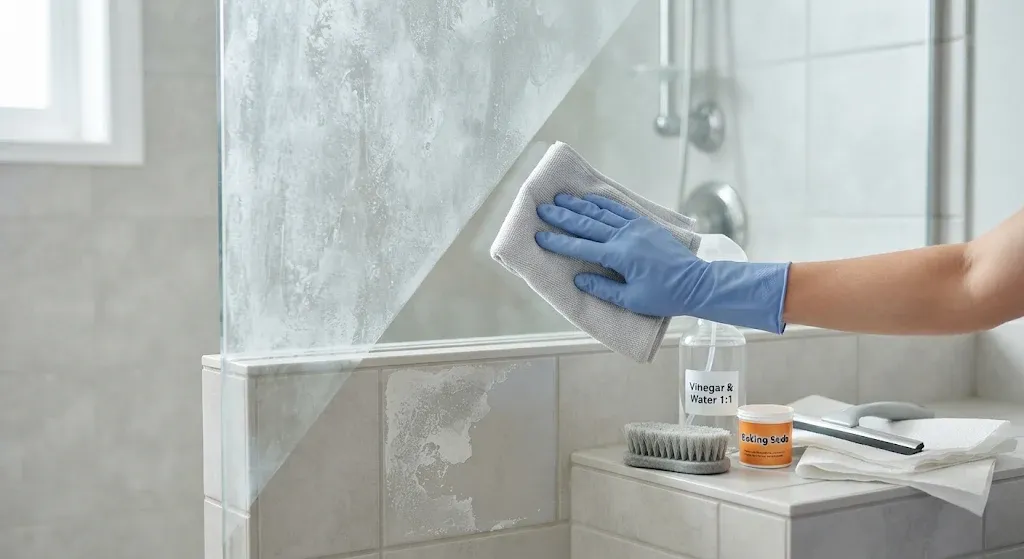
What Are Hard Water Stains?
Hard water contains dissolved minerals, mainly calcium and magnesium. When drops of water dry on glass or tile, the water evaporates but the minerals stay behind, leaving white spots, streaks, or a cloudy film. Over time, layers build up and become harder to remove.
Because the deposits are alkaline, mild acids such as white vinegar or lemon juice dissolve them effectively. That’s why most of the methods below rely on an acid, with a gentle scrub to finish the job.
What You’ll Need
- White vinegar
- A spray bottle
- Baking soda
- Soft microfiber cloths
- A soft-bristle brush or an old toothbrush
- A squeegee
- Rubber gloves
- Paper towels (for soaking vertical surfaces)
Safety First
- Never mix vinegar with bleach. The combination releases toxic chlorine gas. Don’t combine vinegar with any other cleaning product.
- Ventilate the room by opening a window or running the fan.
- Wear gloves, especially with undiluted vinegar or commercial descalers.
- Test first. Try any cleaner on a small, hidden spot before treating the whole surface.
How to Remove Hard Water Stains From Glass
This works for shower doors, windows, mirrors, and glass shelves.
- Mix a 1:1 solution of white vinegar and warm water in a spray bottle.
- Spray the glass generously, and let it sit for 10 to 15 minutes so the acid can dissolve the minerals.
- Wipe with a damp microfiber cloth in circular motions.
- For stubborn spots, make a paste from baking soda and a little water. Rub it gently over the stain with a soft cloth, then rinse.
- Rinse with clean water and dry with a clean microfiber cloth or a squeegee to prevent new spots.
If the stains are thick, soak paper towels in undiluted vinegar, press them onto the glass for 20 to 30 minutes, then wipe and rinse.
Avoid steel wool and abrasive scouring pads on glass. They can leave fine scratches. Some shower doors also have a protective coating, so check the manufacturer’s care instructions before using vinegar often.
Cloudy Drinking Glasses
Cloudy glassware can have two causes: mineral film, which comes off, and etching, which is permanent damage to the glass surface. To tell them apart, soak the glass in white vinegar for about 15 minutes. If the cloudiness disappears, it was hard water film. If it stays, the glass is etched and can’t be restored.
How to Remove Hard Water Stains From Tiles
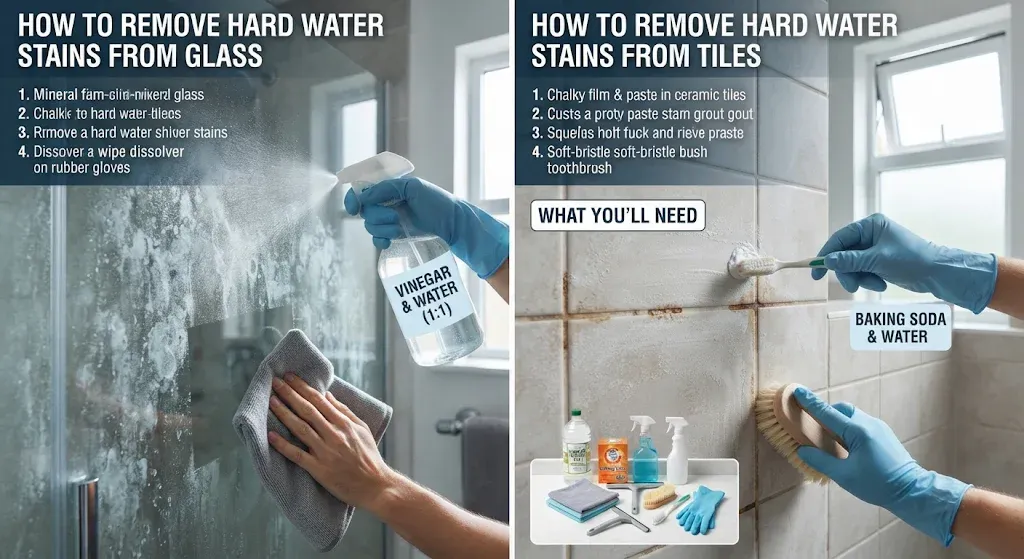
For ceramic and porcelain tiles, such as most bathroom walls and floors:
- Spray the tiles with a 1:1 vinegar and water mixture.
- Leave it for 10 to 15 minutes. For vertical tiles, cover with vinegar-soaked paper towels to keep the liquid in place.
- Scrub gently with a soft brush, working along the grout lines.
- Rinse well with water and dry the tiles with a cloth.
For grout, make a paste of baking soda and water, apply it with a toothbrush, wait 10 minutes, scrub, and rinse. Don’t use vinegar on grout often, since acid can wear it down over time, especially if it’s unsealed.
Natural Stone: Don’t Use Vinegar
Marble, travertine, and limestone tiles are damaged by acids. Vinegar and lemon juice can dull or etch the surface permanently. For natural stone, use a pH-neutral cleaner made for stone, and follow the label. If you’re not sure what your tiles are made of, test a hidden spot or ask the installer.
Which Method for Which Surface
| Surface | Best method | Avoid |
|---|---|---|
| Glass (shower doors, windows) | 1:1 vinegar and water, baking soda paste for stubborn spots | Steel wool, abrasive pads |
| Ceramic and porcelain tile | Vinegar spray, soft brush | Leaving acid to dry on the surface |
| Grout | Baking soda paste | Frequent vinegar use |
| Natural stone (marble, travertine, limestone) | pH-neutral stone cleaner | Vinegar, lemon, any acid |
| Chrome and fixtures | Check the manufacturer’s advice first | Soaking for long periods |
How to Stop Hard Water Stains Coming Back
Removing the stains is only half the job. These habits keep them from returning:
- Squeegee glass after every shower. It takes about 30 seconds and prevents most buildup.
- Wipe wet tiles with a dry microfiber cloth when you can.
- Ventilate the bathroom after showering so water dries faster.
- Clean weekly with a quick vinegar spray. Light film is much easier to remove than old layers.
- Use a rinse aid in the dishwasher for clearer glassware.
- Consider a water softener if hard water affects your whole home. It treats the cause rather than the symptoms.
When Home Methods Aren’t Enough
If stains remain after two or three rounds, the deposits may be very thick or the surface may be etched. You can try a commercial limescale remover made for bathrooms (follow the label and check it’s safe for your surface), or call a professional cleaner. If the glass or tile feels rough or looks permanently dull even when clean, the damage is in the surface itself and can’t be cleaned away.
Frequently Asked Questions
Does vinegar really remove hard water stains?
Yes, in most cases. The acid dissolves the calcium and magnesium deposits. Thick, old buildup may need a longer soak or repeated treatment.
Can I leave vinegar on glass overnight?
It’s better not to. Ten to thirty minutes is usually enough, and leaving acid on for hours can affect coatings, metal fixtures, and grout.
Is lemon juice as good as vinegar?
It works on the same principle and smells better, but it’s usually less effective on heavy deposits. Don’t use it on natural stone either.
Why do the stains keep coming back?
The minerals are in your water, so they return each time water dries on the surface. Squeegeeing and drying are the most effective way to slow them down.
Is it safe to mix baking soda and vinegar?
They fizz when combined, but they cancel each other out, so mixing them reduces cleaning power. Use them one after the other instead: vinegar to dissolve the deposits, baking soda paste as a gentle scrub.
Sources
- U.S. Geological Survey (USGS) – Hardness of Water – Explains water hardness and the role of dissolved calcium and magnesium in mineral deposits.
- Consumer Reports – 9 Things You Should Never Clean With Vinegar – Provides guidance on surfaces that can be damaged by acidic cleaning products.
- Daltile – Natural Stone Care and Maintenance – Offers manufacturer guidance on cleaning and maintaining natural stone surfaces, including marble and limestone.
- LATICRETE – Stone and Tile Care – Provides professional recommendations for cleaning and maintaining stone and tile surfaces.
- U.S. Environmental Protection Agency (EPA) – Drinking Water – Provides information about drinking water quality and mineral content.





Leave a Reply