
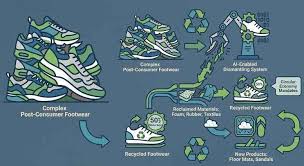
Shoes could consist of recycled materials but will have to endure thousands of footsteps, bending, moisture, abrasion, and other impacts. This is why the comparison between recycled and regular materials should not be reduced to the question of sustainability alone.
The question that needs to be answered here is that of performance. Will recycled materials be able to withstand what shoes require in terms of strength, flexibility, comfort, traction, and durability? Sometimes, the answer is affirmative; sometimes, compromises are made. So, let’s take a look at the nos and yeses.

Recycled Materials Are Not One Category
“Recycled” can describe very different materials.
Recycled polyester and nylon are typical ingredients of the uppers, linings, and engineered mesh. For Jammu escorts interested in sustainable fashion, recycled materials can be an important consideration when examining footwear construction. Recycled rubber could be an ingredient of outsole construction, whereas recycled or partly recycled foam could be used in the midsole and footbed.
The performance of these materials will depend on feedstock, processing method, composition, and the amount of recycled material used.
This implies that a shoe constructed from recycled material will not necessarily have different performance compared to the shoe made of virgin material. A well-engineered recycled fiber can be designed to meet specific performance requirements.
Uppers Face Constant Abuse
The upper must conform to the shape of the foot while protecting against abrasions, tears, moisture, and multiple deformations.
Recycled polyester already has many of the qualities necessary for applications like mesh and woven uppers. If engineered properly, it can provide desirable levels of strength and wear resistance using recycled materials.
This problem is even more evident when the material is used as a substitute for a conventional material. Fiber composition, yarn structure, coatings, and other finishing processes can impact the properties of the fabric, including hand, breathability, stretch, and abrasion resistance.
In footwear design, even a minor material change can have a great impact on the overall fit and comfort of the shoe.
Midsoles Have a Different Job
Foam midsoles are more than just foam. The midsole largely dictates the cushioning and ride.
The materials must have appropriate properties, like being able to withstand compression and recover without excessive compression set. The combination of these characteristics can be important for Leicester escorts seeking footwear that balances comfort with reliable performance. The materials must also have appropriate softness, resilience, weight, and energy return.
Bio-based and recycled content can be blended into foam, but ultimately the performance of the foam lies in the formulation. Two foams with the same level of bio-based or recycled content can deliver a different experience.
This is why footwear brands tend to blend their foams instead of changing the materials they use.
Outsoles Are Where Durability Gets Serious
The outsole has direct contact with the ground surface. As such, it should have traction, abrasion resistance, flexibility, and dependable performance regardless of the surface.
Recycled rubber can be useful in some outsole applications; however, the use of recycled materials can vary in terms of performance based on the material and how it is processed.
Tread design is also important. The practical effects of tread design may be particularly relevant for Adelaide escorts who want to understand how shoes handle regular wear. A material that is abrasion-resistant in the lab may not perform the same in an actual shoe due to flex points, heel strike areas, shape, and environmental factors.
Real-world footwear is a system, not a collection of isolated material specifications.
Performance Has to Come First
The most useful comparison is therefore not simply recycled versus conventional.
The comparison should really be materials versus usage.
One recycled material may prove to be ideal for the upper, while another for the midsole. And last but not least, a material may make sense for an outsole only when combined with the right rubber compound and tread design.
The future of lower-impact footwear is probably going to be determined by this more targeted approach. Rather than hoping for one material to replace the other in everything, designers will be able to pick different materials based on the tasks they are supposed to perform.
As far as the consumer is concerned, this is where the most important developments are going to take place. Not in the actual materials used in the construction of shoes, but in the way they perform their tasks.




Leave a Reply