
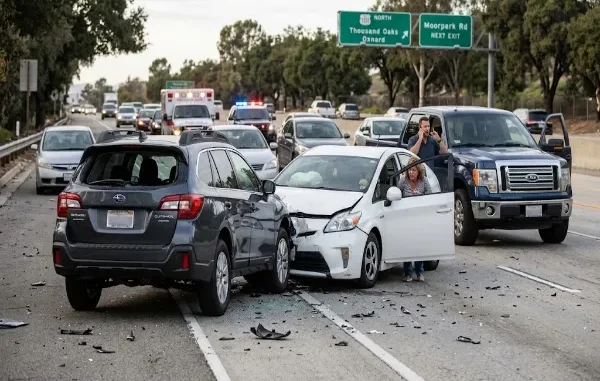
Rear-end collisions are often treated as some of the easiest car accident claims to resolve. One vehicle hits another from behind, so the trailing driver must be responsible. In many cases, that conclusion is correct. But it is not a rule that determines fault in every rear-end accident.
A sudden lane change, unsafe merge, brake-check, mechanical problem, or chain-reaction collision can completely change the liability analysis. For someone injured in Thousand Oaks, understanding how the crash actually happened can be just as important as showing where the vehicles were damaged.
An experienced rear end accident lawyer can investigate the events leading up to the collision, determine whether one or several parties were negligent, and challenge an insurance company that assigns fault before considering all of the evidence.
Why Rear-End Accidents Happen in Thousand Oaks
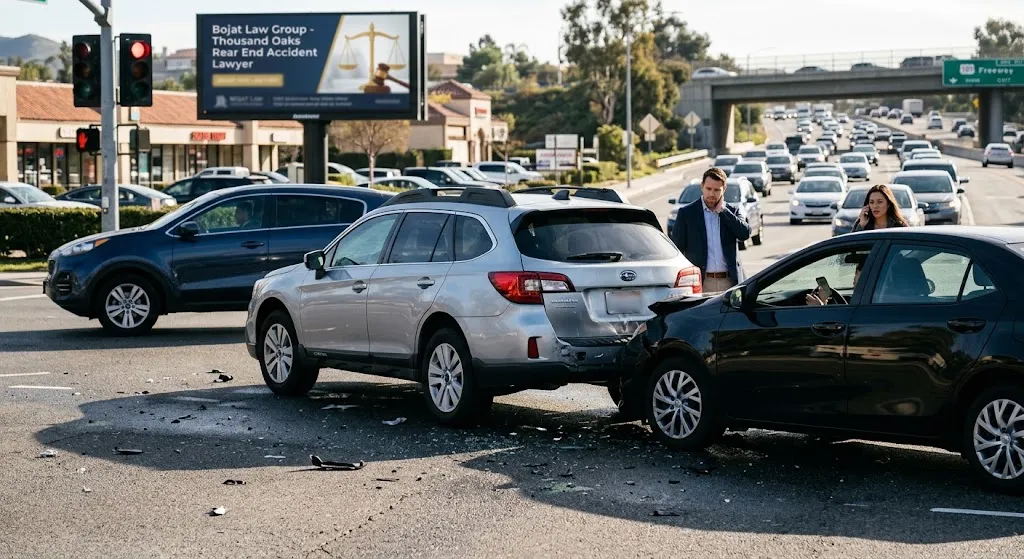
Thousand Oaks drivers encounter very different traffic conditions depending on where and when they are traveling. Highway 101 carries fast-moving commuter traffic, while local roads such as Thousand Oaks Boulevard, Moorpark Road, Lynn Road, and Westlake Boulevard can quickly become congested around intersections and commercial areas.
Rear-end crashes frequently happen when drivers fail to adjust to those changing conditions. Someone following too closely may have no room to stop when traffic slows. A distracted driver may look at a phone long enough to miss brake lights ahead. Speeding can turn an otherwise manageable slowdown into a serious collision.
Other common factors include fatigue, impaired driving, aggressive driving, poor visibility, and failing to leave additional stopping distance during rain or other unfavorable road conditions.
Is the Rear Driver Always Responsible?
No. California law generally requires drivers to maintain a reasonable and prudent following distance, which is why the trailing motorist is frequently responsible for a rear-end collision. But liability ultimately depends on negligence, not simply which vehicle was in front.
Consider a driver who suddenly moves into another lane and immediately brakes. The vehicle behind may have had a safe following distance before that maneuver occurred. Similarly, a driver who intentionally brake-checks another vehicle can contribute significantly to the resulting crash.
Mechanical failures can complicate matters as well. Defective brake lights may prevent the trailing driver from receiving normal warning that the vehicle ahead is stopping. In a multi-car collision, a driver who was already stopped may be pushed into another vehicle by the force of a subsequent impact.
A Thousand Oaks rear end accident attorney can examine these circumstances instead of relying on the assumption that the last vehicle in the line must be responsible.
How California’s Comparative Fault Rules Affect a Claim
Some rear-end collisions are caused by more than one person’s actions. California’s comparative negligence system allows responsibility to be divided among the parties involved.
Suppose a driver was following somewhat too closely, but the vehicle ahead abruptly changed lanes and stopped. Evidence might show that both drivers contributed to the collision. The percentage of responsibility assigned to each person can then affect the amount of compensation available.
This makes seemingly small details important. Insurers may try to increase an injured person’s share of fault because doing so can reduce what they have to pay. A rear end accident lawyer in Thousand Oaks can evaluate whether an insurer’s liability determination actually matches the available evidence.
Evidence That Can Establish What Happened
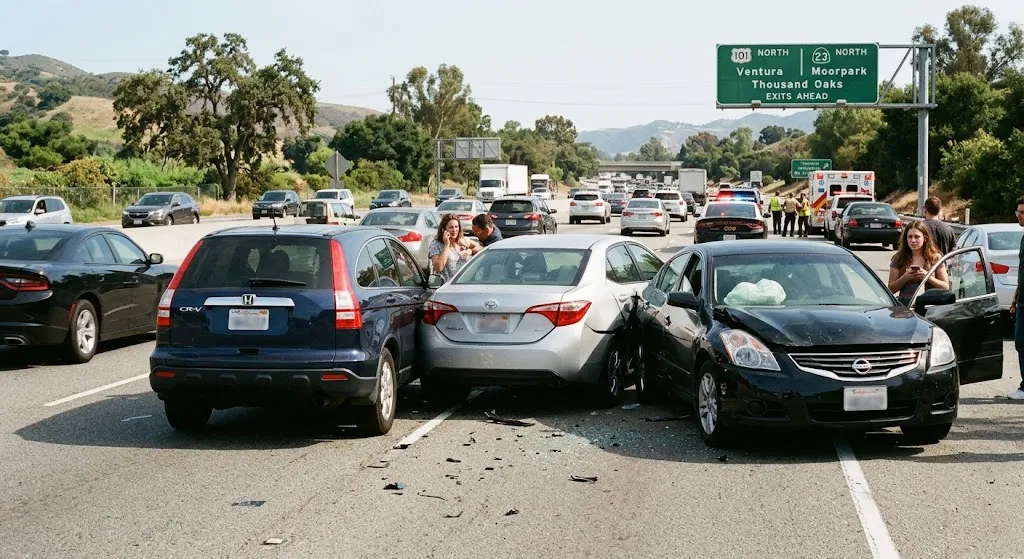
Rear-end cases sometimes become one driver’s account against another’s. Objective evidence can resolve many of those disputes.
Dashcam footage may show an unsafe merge or sudden stop. Surveillance cameras from nearby businesses can capture the seconds before an intersection collision. Witnesses may remember whether a driver was weaving through traffic, speeding, or using a phone.
Vehicle damage can also provide information about impact direction and sequence. In more serious or disputed cases, event data from the vehicles may help establish speed, braking, and other actions immediately before the crash.
For multi-vehicle accidents, determining the sequence of impacts is particularly important. A driver who was struck from behind and pushed into another car should not automatically be treated the same as someone who independently failed to stop.
Evidence can disappear quickly, which is one reason contacting a rear end collision lawyer in Thousand Oaks early may be helpful.
Rear-End Collisions Can Cause Serious Injuries
The appearance of the vehicles does not always tell the full story about what happened to the people inside them. Rear-end impacts subject the neck and spine to sudden acceleration and deceleration, and symptoms may not be obvious immediately after the crash.
Common injuries include whiplash, cervical and lumbar strains, disc injuries, concussions, shoulder injuries, knee trauma, and nerve-related symptoms such as numbness or radiating pain.
More severe crashes can result in fractures, traumatic brain injuries, spinal injuries, or conditions requiring surgery and long-term rehabilitation.
Seeking medical attention promptly is important when symptoms develop. It protects your health while also creating documentation connecting the symptoms and treatment to the accident.
What Compensation May Be Available After a Rear-End Crash?
When another person’s negligence causes an accident, an injured victim may be able to pursue compensation for the losses resulting from the collision.
That can include emergency treatment, diagnostic imaging, specialist visits, physical therapy, medication, and other medical expenses. If the injuries prevent someone from working, lost wages may also become part of the claim. Serious injuries can raise additional questions about future treatment and reduced earning capacity.
Compensation may also address pain, physical limitations, and the ways an injury interferes with normal activities and quality of life.
A knowledgeable Thousand Oaks rear end accident lawyer can evaluate both current losses and reasonably anticipated future consequences rather than focusing only on the bills available immediately after the accident.
Be Careful With an Early Insurance Settlement
An insurance company may make an early offer before you know how long your injuries will last. Receiving money quickly can be tempting when medical bills and vehicle expenses are accumulating, but settling generally means giving up the right to seek additional compensation for the same claim.
That can become a serious problem if neck or back pain persists, an MRI later reveals a significant injury, or a doctor recommends additional treatment.
Before signing a release or accepting a final offer, it can be useful to have a rear end accident attorney review the circumstances of the crash, your medical treatment, available coverage, and the proposed settlement.
Talk to a Rear End Accident Lawyer Serving Thousand Oaks
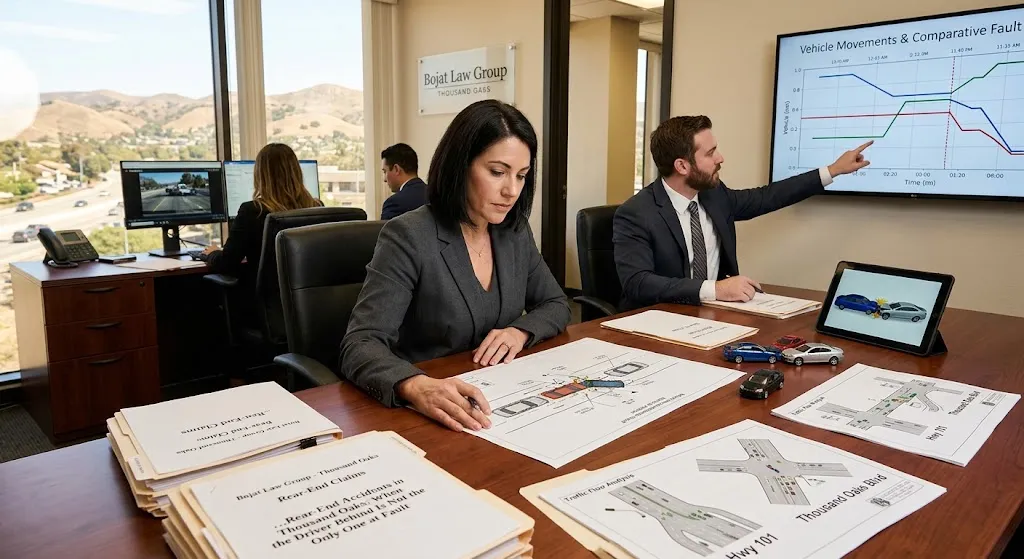
A rear-end collision may look straightforward at the scene and become considerably more complicated once insurance companies become involved. Disputed fault, delayed injuries, multiple vehicles, and disagreements over medical treatment can all affect the outcome of a claim.
Bojat Law Group represents people injured in rear-end collisions in Thousand Oaks and throughout Southern California. Our team investigates the circumstances surrounding the crash, preserves relevant evidence, handles insurance communications, and pursues compensation based on the full impact of the injuries.
If you were hurt in a rear-end collision, speak with a rear end accident lawyer at Bojat Law Group about your options. Consultations are free, and there are no attorney’s fees unless compensation is recovered for you.
Call (818) 877-4878 for a free, confidential consultation.
Related posts:
 Longhornsurvey com The Online Survey Platform
 Decoding The Real Slim Shady Lyrics
 Embracing the Paradox: The Power of Being Consistently Inconsistent
 The Ultimate Guide to Creating a Cozy and Functional Living Space with Home Goods
 Why Siding Plays a Key Role in Reducing Exterior Maintenance Throughout the Year
Leave a Reply