
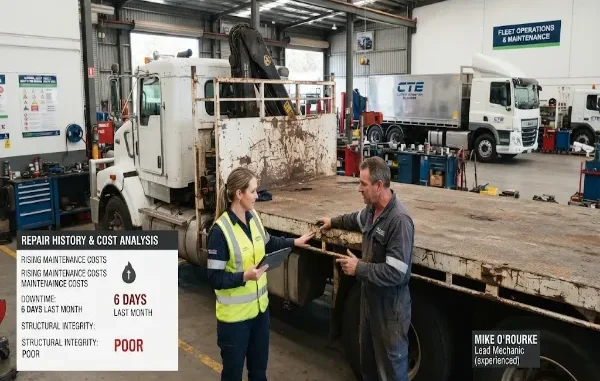
A truck’s performance is determined by more than just its engine, transmission, and running gear. The body fitted to the vehicle is equally significant in determining how efficiently it handles daily transportation needs. For fleet operators, knowing when to replace an ageing truck body can make a significant difference to operating costs, workplace safety and overall productivity.
While regular maintenance can help to extend the life of equipment, there comes a point when frequent repairs are less cost effective than purchasing a new one. Recognising this point necessitates going beyond the vehicle’s age and determining how its condition affects daily operations.
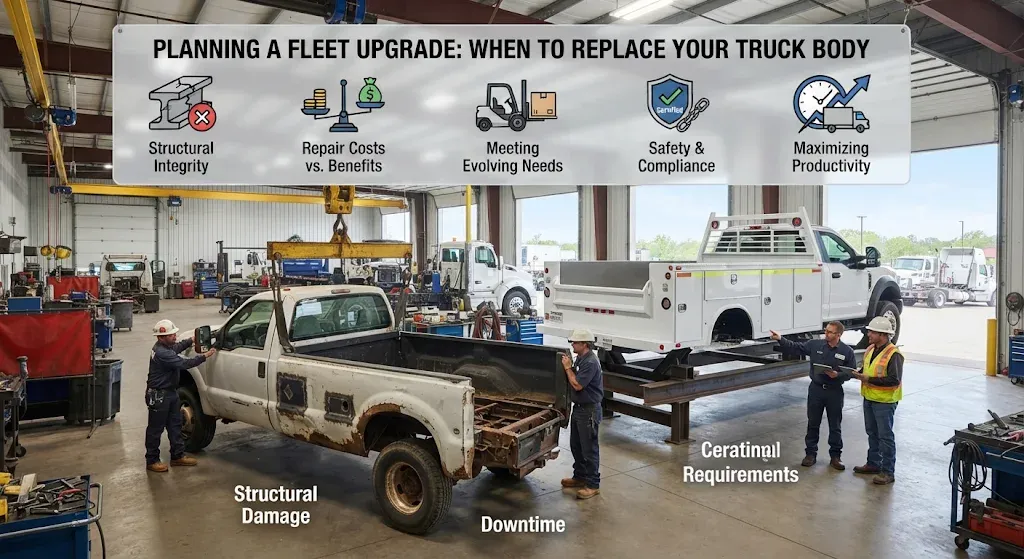
1. Structural Damage Is Becoming Difficult to Manage
One of the most obvious signs that a vehicle body need replacement is degradation in its structural condition. Years of transporting big loads, frequent loading and unloading, exposure to harsh weather, and regular road use can eventually wear out its components.
Pay special attention to:
- Cracks at mounting points, joints, and welds.
- Significant corrosion in load-bearing parts.
- Warped floors, damaged frames, or weak support structures.
- Repeated structural component failures due to loose fittings.
Not every dent or surface-level rust repair requires replacement. However, severe corrosion, distortion, or cracking can jeopardise the body’s ability to safely bear loads. The National Heavy Vehicle Inspection Manual highlights structural damage and corrosion as critical inspection issues, especially when the integrity of load-bearing components is affected.
When damage spreads beyond isolated components, a professional inspection can assist evaluate whether repairs would restore the necessary structural strength or if replacement is the better option.
2. Repair Costs Are Starting to Outweigh the Benefits
A repair price may appear modest on its own, but periodic maintenance can become costly when examined across an entire fleet.
Consider a vehicle body that frequently needs welding, floor repairs, replacement fittings, or corrosion treatment. Each repair costs more than just materials and effort. There is also vehicle downtime, scheduling disruption and the possibility of another failure shortly after the work is completed.
Fleet managers should compare the total cost of repairs against the investment necessary for a replacement. The assessment should include:
- Previous and anticipated repair costs.
- Lost operating hours due to maintenance.
- Remaining expected service life.
- The possibility of reoccurring structural issues.
- The cost of sustaining operational capacity during downtime.
If the same problems persist, replacing the body may provide more long-term benefit than continuing to invest in an aged structure.
3. Your Current Truck Body No Longer Meets Operational Requirements
Fleet requirements rarely remain constant. Businesses may take on different contracts, transport heavier machinery, expand into new industries or introduce new loading and unloading procedures.
An older truck body may simply not be configured to meet these evolving demands.
For example, a company that handles bigger machinery may require better load distribution, stronger support structures, or a different loading system. Similarly, operators that move specialised equipment may require additional storage, access points, or integrated lifting capabilities.
This is where custom truck bodies can help. Rather than adapting an inadequate existing structure through repetitive adjustments, operators may consider a configuration tailored to their individual uses, vehicle specs, and working conditions.
The goal is not to replace equipment only because newer alternatives exist. It is to ensure the vehicle remains suitable for the work it is expected to perform.
4. Safety and Compliance Require Greater Attention
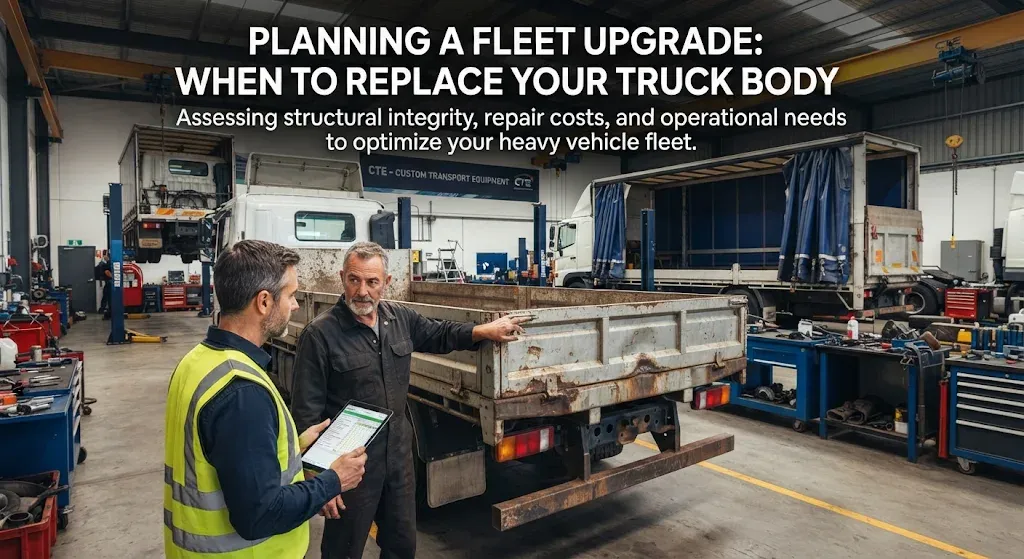
An ageing truck body can introduce safety concerns that extend beyond visible damage. Worn restraints, unreliable locking mechanisms, damaged access systems, and failing mounting points can all have an impact on the security of equipment and cargo movement.
These issues deserve particular attention in heavy transport operations, where load security and structural integrity are essential.
Regular inspections should include the body, mounting arrangements, load restraint equipment, access systems, and any integrated hydraulic components. Any defects affecting safe operation should be addressed promptly.
The NHVR’s National Heavy Vehicle Inspection Manual contains inspection guidelines for detecting damage, wear, and degradation in heavy vehicles. When analysing the state of equipment, fleet operators should consult relevant manufacturer standards and regulatory requirements.
5. Downtime Is Affecting Fleet Productivity
A truck that spends more time in the shop than on the road is hard to justify commercially. Even if individual repairs are minimal, frequent breakdowns can interrupt delivery schedules, restrict vehicle availability, and put additional strain on other fleet assets.
When speciality vehicles are involved, the impact is amplified. If a particular truck is essential for handling specific machinery or transport assignments, losing it temporarily can affect several parts of the operation.
When planning a fleet upgrade, assess how frequently each vehicle becomes unavailable due to body-related problems. If maintenance interruptions become more frequent, changing the body may assist restore operating consistency.
However, replacement planning should take into account installation time, vehicle compatibility, and any required certification or engineering assessments.
Making the Right Decision for Your Fleet
The choice to replace a vehicle body should not be based solely on age. Structural condition, repair history, increasing workloads, safety regulations, and operational expenses are all important factors to consider.
For organisations investing in heavy transport equipment, the ideal replacement should meet both present operations and expected future needs. Working with an experienced manufacturer can help you choose the best body configuration, materials, load requirements, and practical features.
CTE (Custom Transport Equipment), an Australian firm, specialises in purpose-built solutions for the heavy transport business, such as robust truck bodies, crane trucks, and flat tops. Their approach to custom manufacturing enables fleet managers to specify equipment based on real-world applications rather than a one-size-fits-all design.
Finally, a well-planned replacement is an investment in the fleet’s reliability, safety, and productivity. Identifying warning indicators early on offers operators more time to weigh their options, control expenses, and avoid making key equipment decisions under pressure.



Leave a Reply