
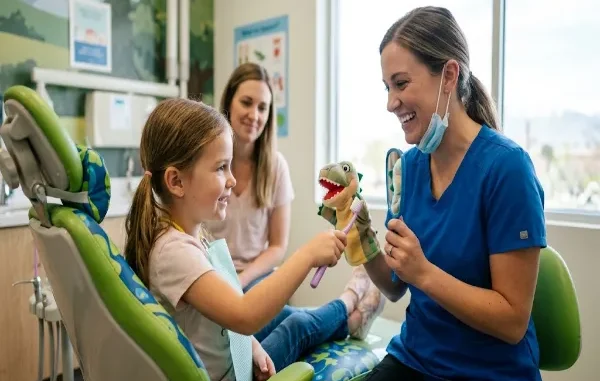
Children depend heavily on adults during their earliest years, including for brushing, flossing, food choices, and dental appointments. As they grow, however, they gradually become responsible for more of their personal care. Oral hygiene offers parents a practical opportunity to teach independence while still providing enough supervision to keep developing teeth properly cared for.
A Pediatric Dentist can support this transition by explaining oral care in language children can understand and apply at home. Instead of treating dental appointments as something controlled entirely by adults, families can use visits to help children learn why certain habits matter. Knowledge can make brushing and other routines feel more purposeful as children become increasingly responsible for themselves.
Independence should develop gradually rather than appearing at a particular birthday. A young child may begin by choosing a toothbrush or practicing brushing motions, while an older child may take greater responsibility for a complete routine. Kaleidoscope Kids Dentistry can support families through these changing stages by reinforcing practical habits while keeping parents involved in age-appropriate ways.
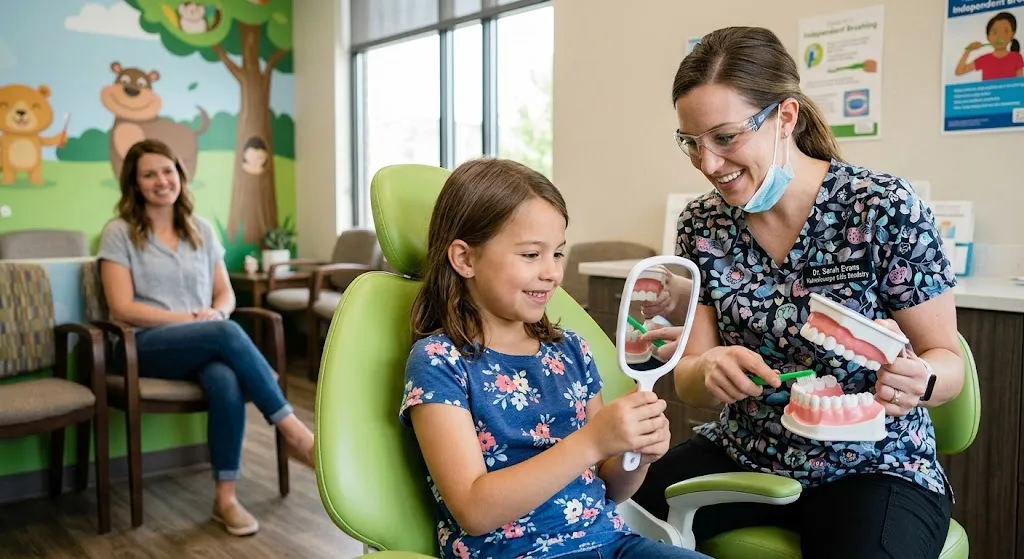
Give Children an Active Role During Dental Visits
Children often understand health routines better when they participate instead of simply receiving instructions. During an appointment, they can answer simple questions about brushing, describe areas they find difficult to clean, or discuss foods they commonly eat. These conversations encourage children to think about their own habits rather than relying entirely on a parent’s answers.
Participation can also make oral care feel more relevant. A child who understands why a particular area needs extra brushing has a clear reason to change a daily habit. Simple explanations connect what happens during an appointment with what the child does each morning and evening.
Parents can encourage this participation without expecting children to manage every conversation independently. Younger patients may need help remembering details, while older children can speak more directly about their routines. Gradually increasing participation creates useful practice in taking responsibility for personal health.
Match Oral Care Responsibilities to a Child’s Development
Independence does not mean removing parental supervision too early. Children’s coordination, attention, and understanding develop at different rates, so oral care responsibilities should reflect individual ability. A child who enthusiastically brushes alone may still miss areas that require an adult’s help.
Kaleidoscope Kids Dentistry can help families discuss how responsibilities may change as children mature. Parents can remain involved while allowing children to complete portions of their routines independently. This balance gives children room to practice without assuming that enthusiasm automatically equals effective cleaning.
Start With Small Choices Younger Children Can Manage
Simple decisions can create an early sense of ownership. Children might choose between appropriate toothbrush options, decide whether to brush before or after another bedtime task, or help place oral care supplies where they are easy to reach. Limited choices provide involvement without making the routine confusing.
Parents can still maintain the structure around those choices. Brushing should remain a consistent expectation even when a child gets some control over how the routine fits into the evening. Predictability helps turn oral hygiene into an ordinary part of the day.
Increase Responsibility as Skills Become Stronger
Older children can gradually take responsibility for remembering routines, managing supplies, and paying closer attention to thorough brushing. Parents can shift from completing tasks to checking results and offering reminders. This progression supports independence while preserving a useful safety net.
A Pediatric Dentist may also reinforce techniques during routine appointments as a child’s abilities change. Hearing practical guidance directly can help older children recognize that oral care is becoming their responsibility, not simply another household rule created by parents.
Teach the Reason Behind Everyday Brushing Habits
Instructions are easier to follow when children understand their purpose. Repeating “brush your teeth” may produce temporary compliance, but explaining what brushing removes gives the routine a clearer meaning. Children can begin connecting daily effort with keeping their teeth and gums clean.
Explanations should remain suitable for the child’s age. Younger children generally need short, concrete ideas, while older children can understand more detail about plaque, food residue, and difficult-to-reach areas. Overloading a child with complicated information may make a simple habit seem harder than necessary.
Parents can reinforce the same ideas at home after appointments. Consistent messages make oral care easier to understand because children are not receiving unrelated rules from different adults. Over time, repetition can turn instructions into knowledge that children use without constant prompting.
Make Morning and Evening Routines Easier to Remember
Children are more likely to remember oral care when it is connected to established daily activities. Morning brushing might happen after getting dressed, while evening brushing could follow pajamas and come before a bedtime story. A predictable sequence reduces the need for repeated negotiations.
Visual reminders can help younger children who are still learning the routine. Keeping supplies in a consistent location also removes small barriers that make habits easier to forget. The goal is to create a pattern that eventually feels automatic.
Parents should expect occasional missed reminders or rushed evenings. Independence develops through practice, and one imperfect routine does not erase progress. Calm correction is often more useful than turning brushing into a recurring source of conflict.
Help Children Notice Areas They Commonly Miss
Developing independence requires more than remembering to pick up a toothbrush. Children also need to learn that effective brushing involves reaching different surfaces throughout the mouth. Some may repeatedly focus on easy front teeth while giving less attention to back teeth or other harder-to-reach locations.
Dental appointments can provide useful feedback about these patterns. Instead of framing missed areas as failure, adults can treat them as information about where the child needs more practice. Specific guidance is easier to act on than a general instruction to brush better.
Kaleidoscope Kids Dentistry can reinforce this learning by helping families understand where daily routines may need more attention. Parents can then observe those areas at home until the child demonstrates greater consistency and control.
Let Children Ask Questions About Their Own Teeth
Curiosity can become a useful part of developing responsibility. Children may wonder why a tooth feels loose, why permanent teeth look different, or why certain areas are harder to brush. Allowing questions makes dental visits more interactive and gives children reliable explanations about changes they can actually observe.
Parents do not need to answer every dental question themselves. Writing down questions before an appointment can help children remember what they wanted to ask. Older children may even enjoy keeping their own short list as part of preparing for a visit.
This habit also teaches children that questions about health are appropriate. Understanding their changing teeth can make oral care less mysterious and encourage greater attention to daily habits as they mature.
Use Encouragement Without Making Perfection the Goal
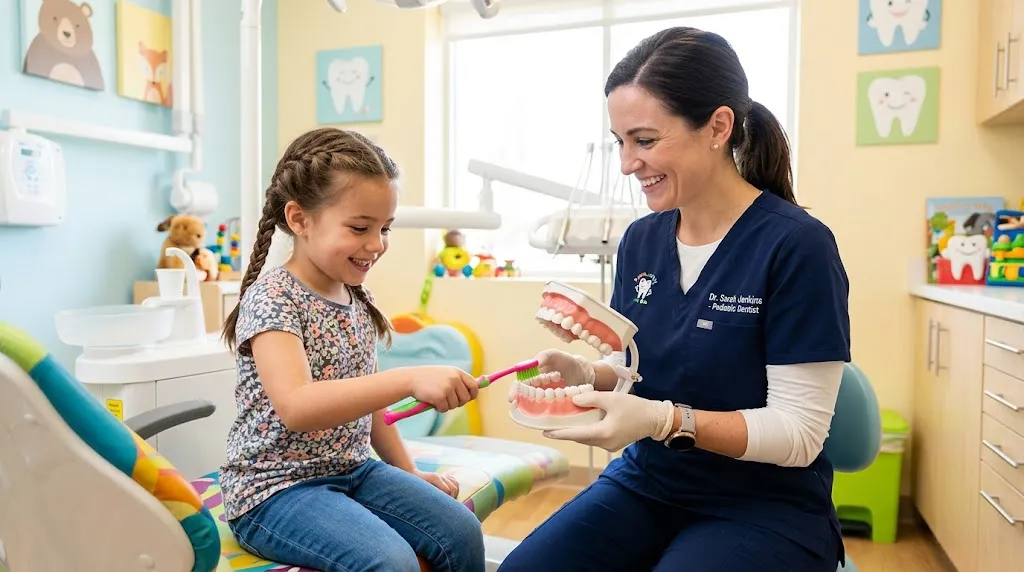
Children learning new responsibilities will make mistakes. They may forget a routine, rush through brushing, or need reminders after appearing independent for several weeks. These moments are normal opportunities to reinforce expectations rather than reasons to remove all responsibility.
Specific encouragement can be more meaningful than broad praise. Noticing that a child remembered without prompting or spent more time on a previously missed area identifies exactly what improved. Children can then understand which behaviors they should continue.
Parents can also model consistency through their own routines. When oral care is treated as an ordinary family habit rather than a task only children must complete, expectations become easier to understand. Everyday examples often reinforce lessons without requiring another lecture.
Adjust Support During Changes in a Child’s Smile
Childhood includes continuous dental changes. Baby teeth loosen, permanent teeth emerge, spaces shift, and previously familiar brushing patterns may need adjustment. A routine that worked well several months earlier may require renewed attention as the mouth develops.
These changes make ongoing supervision useful even for increasingly independent children. Parents can periodically observe brushing and ask whether any new areas feel difficult to reach. Small adjustments help independence develop alongside changing dental needs.
A pediatric dentist in Salt Lake CIty provides another opportunity to discuss these transitions during regular visits. Age-appropriate guidance can help families decide where children are ready for more responsibility and where adult support remains useful.
Build Independence That Can Continue Beyond Childhood
Teaching children to care for their teeth is ultimately about more than completing tonight’s brushing routine. The larger goal is helping them understand that oral health requires regular personal attention. Independence grows when children receive knowledge, practice, encouragement, and responsibility in amounts they can reasonably manage.
Parents remain important throughout this process, even as their role changes. Early hands-on help can gradually become observation, reminders, and conversations about changing needs. That steady transition allows children to practice useful skills without being expected to master them before they are ready.
Positive dental visits can strengthen the lessons children practice at home. By participating in conversations, asking questions, understanding the reasons behind routines, and taking on appropriate responsibilities, young patients can become more confident caretakers of their own smiles. Those skills create a foundation for personal oral care habits that can remain useful as childhood gives way to adolescence and adulthood.
Related posts:
 Regaining Control on the Road to Recovery: What You Need to Know
 🦷 Emax vs Zirconia: Which Dental Veneer Is Better for Your Smile?
 Medical Malpractice in Florida: What Every Healthcare Provider Should Understand
 Why Migraine and Motion Sickness Often Travel Together
 How PRP Therapy Is Being Used for TMJ and Jaw Pain in Florida Clinics
Leave a Reply