

For many people in Morris County, the biggest obstacle to getting help for addiction is not a lack of motivation. It is the fear of what treatment will mean for everything else: a job, children, a mortgage, aging parents, or a business that cannot run without them.
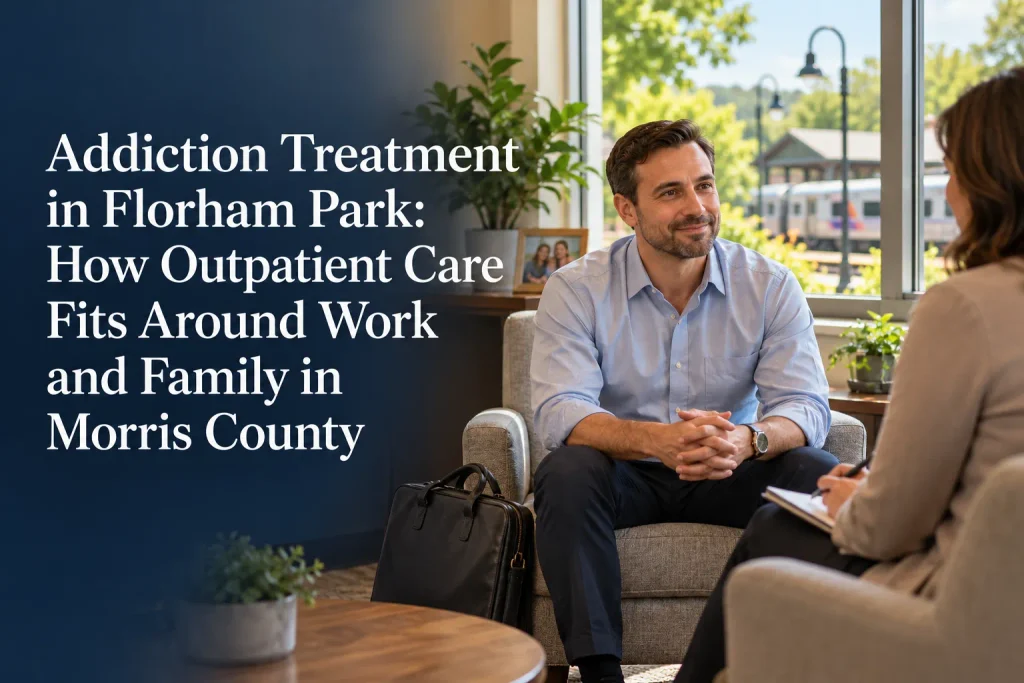
Outpatient addiction treatment in Florham Park is designed with those realities in mind. It provides structured, professional care while allowing people to return home each day and keep up with many of their responsibilities. Here is how it works and how to tell if it is the right fit.
What Outpatient Addiction Treatment Means
In outpatient treatment, you attend therapy and other services at a treatment center on a set schedule, then go home. There are several levels, each offering a different amount of support:
- Partial Care: the most structured outpatient level, with treatment for much of the day, several days a week
- Intensive Outpatient (IOP): several sessions per week for a few hours at a time, often scheduled to work around a job
- Outpatient: one or two sessions a week for people who are more stable or stepping down from a higher level of care
Many people start at a more intensive level and step down as they progress.
Why Outpatient Care Works for Busy Lives
You Stay Connected to Home
Being able to sleep in your own bed, see your children, and maintain relationships can make recovery feel more manageable. It also means you practice new skills in the same environment you will be living in long term.
Work Can Continue
IOP and standard outpatient schedules can often be arranged around a job. Partial Care may require a short leave, but it is time-limited and often followed by a step down to a schedule that fits around work.
Family Can Be Involved
Outpatient programs make it easier for family members to participate in counseling and learn how to support recovery.
At Better Life Recovery and Wellness, located on Hanover Road in Florham Park, clients can move between Partial Care, an intensive outpatient program, and standard outpatient care as their needs change, with medication-assisted treatment, dual diagnosis care, and family support available along the way.
What Treatment Typically Includes
A typical outpatient program combines several approaches:
- Individual therapy with a dedicated clinician
- Group therapy for connection and skill-building
- Psychiatric evaluation and medication management
- Medication-assisted treatment (MAT) for alcohol or opioid use disorders when appropriate
- Family support and counseling
- Holistic practices such as yoga
- Relapse prevention and aftercare planning
Substances Commonly Treated
Outpatient programs treat a wide range of substance use disorders, including alcohol, opioids such as heroin, fentanyl, and prescription painkillers, cocaine, methamphetamine, benzodiazepines like Xanax and Valium, and marijuana.
Is Outpatient Right for You?
Outpatient treatment tends to work well for people who:
- Have a stable, safe place to live
- Have some support from family or friends
- Do not need 24-hour medical monitoring
- Need to keep up with work, school, or family obligations
- Are stepping down from detox or residential care
If someone needs medical detox first, many outpatient programs can help arrange detox placement and then provide treatment afterward.
When a Higher Level of Care May Be Needed
Outpatient care may not be the safest starting point if someone is at risk of severe withdrawal, has serious medical or psychiatric symptoms, or lives in an environment where substances are present and recovery would be very difficult. A professional assessment can help determine the right level of care.
Making Treatment Fit Your Schedule
- Ask about scheduling options before you start, including morning, afternoon, or evening sessions
- Talk to your employer or HR about leave options or flexible hours if needed; laws such as the Family and Medical Leave Act may protect eligible employees
- Line up childcare for intensive phases
- Block treatment on your calendar like any other important appointment
- Plan for transportation, and ask whether the program offers help
Medication-Assisted Treatment in an Outpatient Setting
For alcohol and opioid use disorders, medication can be an important part of outpatient care. Medications such as naltrexone, acamprosate, or disulfiram for alcohol, and medications that reduce opioid cravings and withdrawal, can make it easier to stay engaged in treatment while living at home. In a good program, medication is coordinated with counseling and behavioral therapy so each part supports the other.
Aftercare Keeps Progress Going
Finishing a structured program is an important milestone, but recovery continues. Aftercare may include ongoing outpatient sessions, alumni or peer support, sober living referrals for those who need a stable living environment, and a written relapse prevention plan. Planning for aftercare from the beginning helps make the transition smoother.
Local Care Has Advantages
Staying close to home for treatment makes it easier to attend consistently, involve family, and transition smoothly into aftercare and local support groups. For people living in or near Florham Park, Livingston, East Hanover, Madison, Morristown, or Chatham, local outpatient care can remove many of the barriers that keep people from starting.
Taking the First Step
A first call usually involves a brief conversation about what you are experiencing, a review of insurance benefits, and a recommendation for the right level of care. You do not need to have everything figured out before reaching out.
If you or someone you love is in crisis, call or text 988, or call 911 in an emergency. New Jersey residents can also reach the ReachNJ addiction helpline at 1-844-732-2465.
Related posts:
 Regaining Control on the Road to Recovery: What You Need to Know
 🦷 Emax vs Zirconia: Which Dental Veneer Is Better for Your Smile?
 Medical Malpractice in Florida: What Every Healthcare Provider Should Understand
 Why Migraine and Motion Sickness Often Travel Together
 How PRP Therapy Is Being Used for TMJ and Jaw Pain in Florida Clinics
Leave a Reply