

It seems that 2026 has come quicker than anticipated. When I consider the technology around me now compared to the technology less than 5 years ago, I believe that technology is deserving of the word ‘differentiation.’ 2026 is the first year of total integration in the digital and physical worlds. Surely digital and physical worlds have been integrated before, but in 2026, integration is on a different level of immersion.
Almost as a point to prove, I ponder on the technocentric hypemachines, and I examine the marketing pages of ufabet from their previous version to their current multiple-market-psychology hypemachines. I smile as I consider the digital world and the physical world. Despite the rapid, remarkable, and modern fluidity and flexibility of current technology, I consider 2026 to have the less than perfection integrated glitches.
What Is Changing About Future Technology Trends 2026
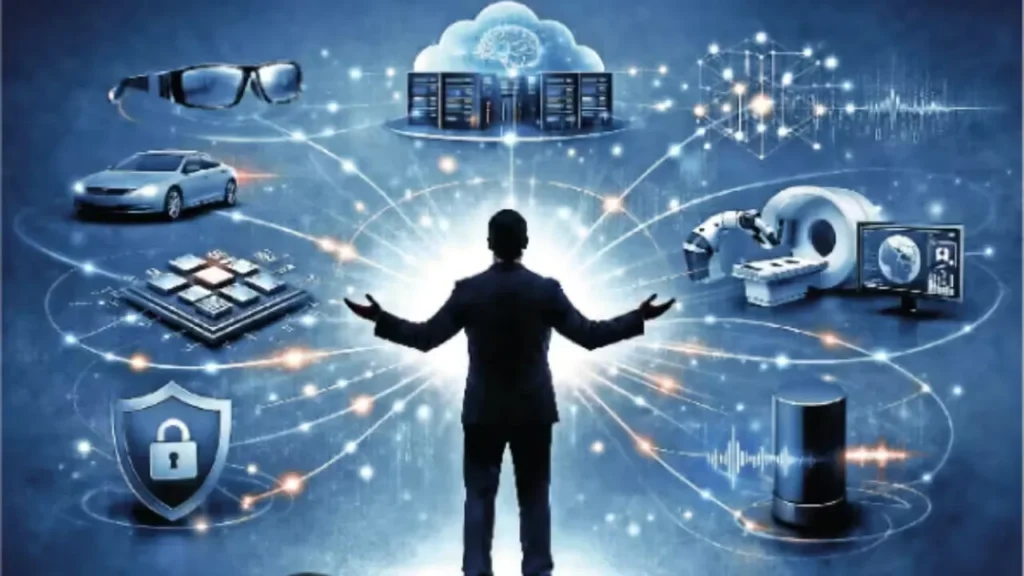
Looking at everything going on today, we can see that Future Technology Trends 2026 is not just a novel term that researchers throw around. It is the world we currently live in. The first big change we see is the development of technology that replaces hand-held devices with a new trend called ambient computing. We do not just ‘go’ on the internet, we live in the internet. The driving force behind this is the interconnectedness of the real world with the digital one.
When we all thought 5G was going to be the be all and end all, 2026 is showing us the first rollouts of 6G in the world’s core technology provinces. The new technology is going to expose us to new paradigms in the perception of latency. Picture real time holographic calls without a single frame drop. It is going to be overwhelming at first because that is just how the world is going to be.
The Role of AI in Future Technology Trends 2026
AI is no longer a trendy chatbot. In the context of Future Technology Trends 2026, AI is “Agentic” – meaning your AI doesn’t just answer questions, AI takes initiative. AI actively inserts itself in your events, negotiates your energy bills, and orders groceries based on your nutritional deficiencies that AI watches.
AI has been integrated into every level of our infrastructure. It has made everything more efficient. Your fridge is telling you you’re running low on vitamin D. It is ordering extra orange juice. It’s the price we pay for living in the future.
The 6G Revolution: What Comes After the Internet That Is Really Really Fast?
6G will be much more advanced than 5G and allow the connection of other senses beyond seeing and hearing to become more common. Starting in 2026, we will begin to be able to use the “Internet of Senses” to feel and smell things digitally.
5G and 6G Standards Comparison Table
- Peak Data Rates: Above 20 Gbps in the lab and around 100 Gbps in everyday urban settings, 6G will surpass 5G.
- Latency Levels: Remote surgical procedures will be possible as we will be able to go from 1 millisecond to microsecond latency.
- Frequency Spectrum: For 6G, Sub-terahertz frequencies will be utilized which is more efficient, but will mean their placement will be needed on every lightpost and other structures.
- Energy Efficiency: 2026 protocols should mean that energy harvesting will become commonplace, and should mean that batteries will need to be replaced only extremely rarely on small devices.
The End of the Smartphone Era and the Rise of Advanced Wearables
Experts have been predicting the death of the smartphone for years now, and 2026 seems to be the year where it is finally happening. People still carry smartphones, but now they aren’t the primary device that people are using. Smart glasses that look like regular Ray Ban are the new trend.
These glasses allow wearers to see information, like navigation arrows, people’s names, and there are even 3D floating monitors that are in the users line of sight. These devices make using smartphones look like an ancient practice in the ways of technology.
The Next Big Thing in Smart Wearables
In the coming future, wearable technology in healthcare for the most part, is revolutionizing the Whole Ecosystem of Future Technologies. 2026 will see the rise of “Bio-Integrated” technology, which utilizes new inventions of wearables. These will be skin-like patches that will be placed on the skin to monitor blood glucose and cortisol levels as well as early detections of viral infections.
- Continuous Molecular Monitoring: These new sensors will now track hormones and not just heart rates.
- Predictive Diagnostics: AI models are now able to predict heart arrhythmias 48 hours before they happen.
Digital Twins: A lot of people already have what is called a “Digital Twin”. This is a virtual version of a person’s model that is utilized by medical professionals to simulate the effects of a particular drug on a patient prior to the patient taking the drug.
Sustainable Tech: Green Energy is Here
In 2026, technology is less about being novel and more about being necessary. The first commercial uses of transparent solar technology are expected to roll out this year. New skyscrapers will have windows that also generate electricity. The Green Tech sector is outpacing traditional hardware for the first time in history.
This year also marks the commercialization of graphene batteries, which charge in minutes and can hold a charge for weeks. These batteries are also way less harmful to the environment than traditional lithium batteries. It feels good to get this win for the environment even if development took way longer than expected.
Democratized Quantum Computing
We still don’t have pocket-sized quantum computers, but the cloud is now Quantum-powered. Major providers have added quantum processors to manage the heavy data loads required by AI.
This has caused a “Material Science Renaissance.” We are learning about new metals and new materials at a pace that used to take decades. For example, factory-side carbon capturing materials designed by quantum algorithms are being sprayed. It’s sci-fi, but you can visit it contemporarily in the industrial zones.
Closing Remarks on Future Technologies
Technological growth is almost unimaginable. The span from 2022 to 2026 feels longer than 2000 to 2020. With innovations happening faster and faster, all of this can be downright overwhelming. The occasional glitches and the weirdness of speaking to a hologram in a cafeteria aren’t ideal, but still. There are too many benefits to not embrace these changes.
Tech in 2026 is all about humanity. The focus changes from toys to how these tools help us improve our lives. There is still a lot that needs to be done in relation to digital equity, data privacy, and so on, but for now living without our glasses that can hold a charge of less than 30 seconds is bliss. We haven’t even begun to scratch the surface of what the future holds!
Related posts:
 AI Photo Generators Elevate Your Editing Without Quality Loss
 Avatar vs. Human: Who’s Better at Explaining Your Product in 30 Seconds?
 Can Treasury Management Software Make Borrowing Safer and Smarter?
 Water Damage Restoration Service Lanham: Fast & Efficient
 Voyage Through Time: When will Time Travel be Possible
Leave a Reply