
This article was written in collaboration with Sohna Bhatti.
Anyone who has ridden in a group knows the drill. You wave your arm, hope someone behind you sees it, and pray the fuel stop actually happens where you meant it to. Old school Bluetooth intercoms tried to fix this, but they came with their own headaches, dropped connections the moment someone fell fifty meters behind, and pairing routines that felt more complicated than filing taxes.
That is exactly the gap a mesh motorcycle intercom was built to close. Instead of one rider pairing to another in a fragile chain, mesh technology lets every rider in the group talk to every other rider at once, automatically, without anyone touching a single button after the initial setup.
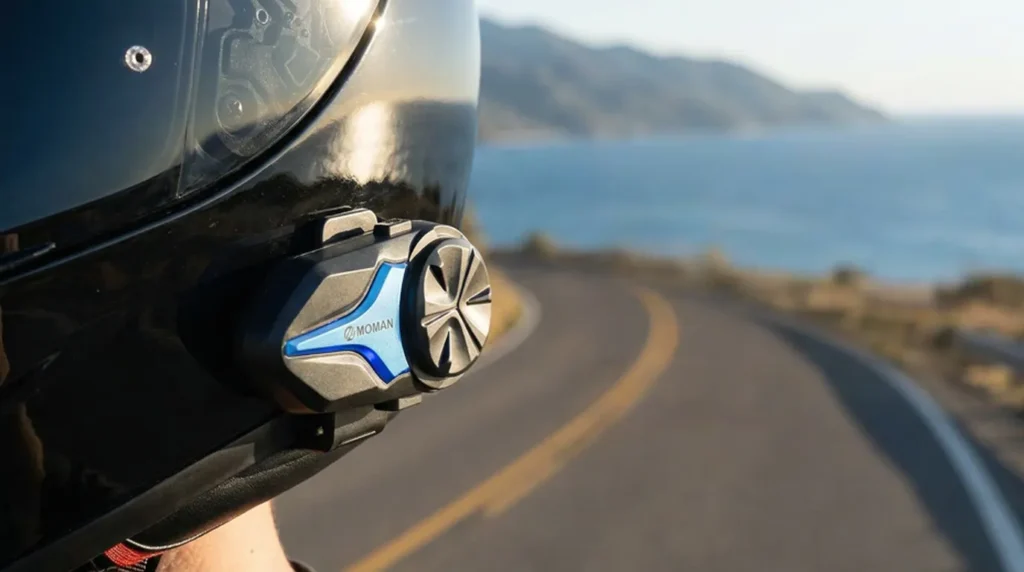
Source: Moman
What Is Mesh Intercom Anyway
If you are new to the term, here is the simple version. Traditional Bluetooth intercoms connect riders in a chain, rider one to rider two, rider two to rider three, and so on. Break one link and the whole conversation falls apart, especially once you get past four or five riders.
Mesh motorcycle intercom works differently. Every headset in the group forms its own connection to every other headset nearby, creating a self healing communication network. If one rider drops out of range for a moment, the network simply reroutes around them, and when they come back, they rejoin automatically. No re-pairing, no fumbling with buttons at sixty kilometers an hour, no dead air while everyone wonders who lost signal this time.
Motorcycle Mesh Communication In The Real World
The theory sounds great, but the real test is what happens on an actual ride. Picture a dozen bikes rolling through a mountain pass, spread out over half a kilometer because of the curves. With old intercoms, half the group would be silent within ten minutes. With proper motorcycle mesh communication, riders at the front and back of that same pack can still hear each other clearly, because the network is constantly finding the best path between everyone connected.
This is why the technology has become popular so fast among touring clubs, off road groups, and even instructors running group training sessions where constant communication is not a convenience but a safety requirement.
What Makes The Best Motorcycle Mesh Intercom
Not every mesh intercom headset performs the same way, and a few features separate a genuinely reliable unit from one that will frustrate you on the second ride.
Range is the first thing to check when choosing a motorcycle intercom. A unit that claims impressive numbers on paper but struggles past a few hundred meters in real conditions is not going to hold up on open highway rides. Look for tested, real world range rather than just the marketing figure.
Battery life matters just as much, especially for full day rides or multi day tours where charging opportunities are limited. A headset that dies by lunchtime defeats the entire purpose of buying one.
Audio clarity is often overlooked until you actually need it. Wind noise cancellation makes a massive difference at highway speeds, and a headset that muddies voices into static the moment you hit sixty is not worth the money no matter how good the mesh range is.
Finally, ease of use counts for more than people expect. Voice commands, simple button layouts you can operate with gloves on, and quick group joining without a companion app open every time are the small details that make a headset genuinely enjoyable to use ride after ride.
Choosing The Right Helmet Setup
A motorcycle helmet with mesh intercom built in or properly integrated makes a noticeable difference in comfort and sound quality compared to bolting an aftermarket unit onto a helmet that was not designed for it. If you already own a helmet you love, most modern mesh units are designed to clip onto standard helmet shapes without needing a full replacement.
That said, if you are shopping for both at once, checking that your motorcycle helmet mesh intercom combination fits snugly and does not create wind noise around the speaker area will save you a lot of trial and error later.
Group Rides Get Genuinely Better
The biggest difference riders notice is not a spec sheet number, it is how much less stressful a group ride becomes. No more constant hand signals, no more pulling over to regroup because three riders got separated at a light, no more shouting through a helmet to ask if everyone is okay after a rough patch of road.
Instructors running group lessons get an even bigger benefit, since they can talk students through tricky sections in real time instead of stopping every few minutes to explain something that should have been said thirty seconds earlier.
Where To Actually Get One
If you are ready to upgrade your group rides, the Motorcycle intercom lineup at Moman is a good place to start browsing, since it covers a range of headsets built specifically for riders who need dependable, real world communication rather than just a marketing checklist.
For riders who want the actual self healing network experience rather than a basic Bluetooth chain, the mesh motorcycle intercom from Moman is built around genuine mesh architecture, giving your whole group stable, automatic connections no matter how spread out you get on the road.
Final Thoughts
Group riding is supposed to be one of the best parts of owning a motorcycle, not a logistics puzzle you solve with hand signals and guesswork. A properly chosen mesh intercom setup turns a scattered pack of riders into a group that actually rides together, talks together, and stays safer because of it.
Whether you ride with two friends on weekends or run a full touring club, investing in real mesh technology is one of those upgrades that quietly changes every single ride after the first one.
Related posts:
 Voyage Through Time: When will Time Travel be Possible
 Water Damage Restoration Service Lanham: Fast & Efficient
 How Dechecker AI Checker Turns Awkward Drafts Into Human-Readable Content
 The Complete Guide to Using Telegram for Secure and Smart Communication
 The Chemistry Behind Firefighting Foam: How Surfactants Make Fire Suppression Work
Leave a Reply