
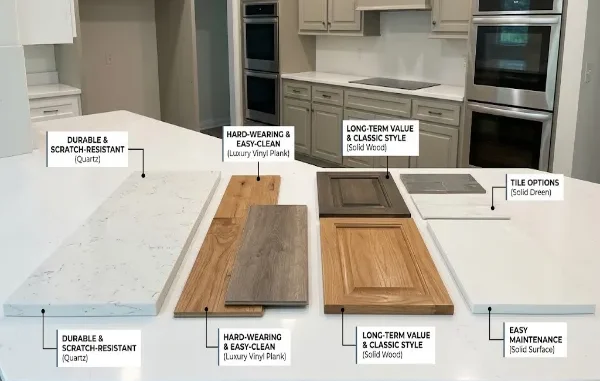
A beautiful kitchen should remain attractive and functional long after the renovation is complete. Countertops, flooring, backsplashes, and other surfaces experience daily exposure to moisture, heat, spills, and repeated use. Choosing materials carefully helps homeowners create spaces that withstand these conditions without sacrificing visual appeal.
Successful kitchen remodeling involves evaluating more than colors, patterns, and current trends. Materials differ in durability, maintenance requirements, installation costs, and resistance to everyday wear. Understanding these differences allows homeowners to make informed decisions based on their cooking habits, household needs, and long-term expectations.
Every household places different demands on its kitchen surfaces. Families with children may prioritize stain resistance, while frequent cooks might value heat tolerance and dependable work surfaces. Plan Perfect Remodeling can help homeowners compare material characteristics and develop a balanced approach that connects practical performance with personal style.
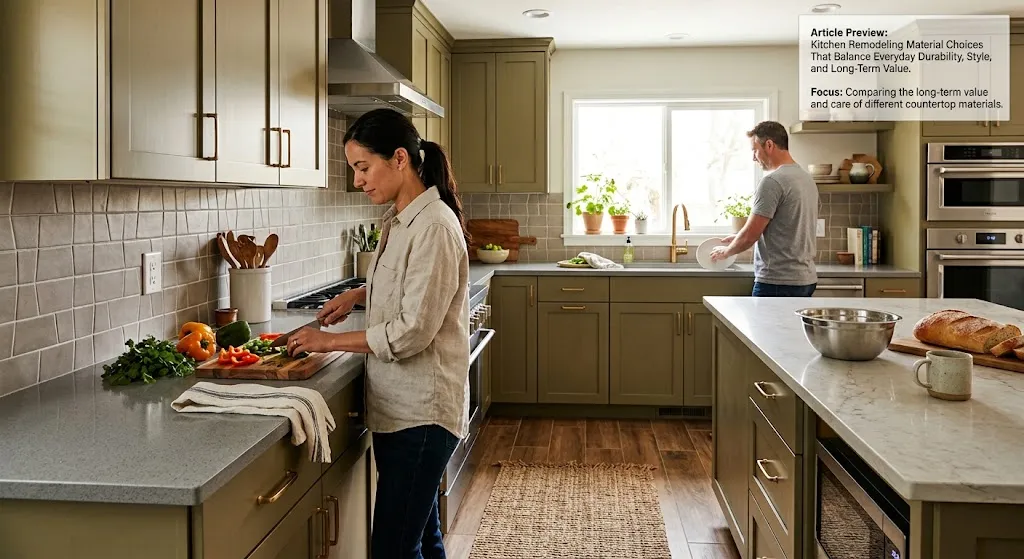
Understanding What Makes Kitchen Materials Durable
Durability depends on how materials respond to everyday conditions rather than appearance alone. Some surfaces resist scratches effectively but remain vulnerable to staining or excessive heat. Others tolerate moisture well yet require additional protection against impact damage.
Homeowners should consider how frequently each surface receives direct contact. Preparation counters experience different demands from decorative walls or lightly used breakfast areas. Matching material properties to actual use helps prevent unnecessary expenses.
Consider Wear Beyond the Showroom Appearance
Showroom samples often appear flawless because they have experienced limited handling. Everyday kitchens expose surfaces to dropped utensils, cleaning products, food preparation, and changing temperatures. Examining manufacturer specifications provides a clearer understanding of expected performance.
Comparing Countertop Materials for Everyday Cooking
Countertops influence both kitchen appearance and daily functionality. Quartz, granite, porcelain, and solid-surface products offer different combinations of durability, appearance, and maintenance requirements. No single material performs best under every condition.
Engineered quartz generally provides good stain resistance, although excessive heat can damage its resin components. Granite offers natural variation and useful heat resistance but may require sealing depending on the stone. Porcelain surfaces resist many stains and high temperatures, although edges can chip under concentrated impact.
Homeowners should compare these characteristics against actual cooking habits. A surface selected primarily for appearance may prove inconvenient when its limitations conflict with frequent activities.
Choosing Flooring That Handles Household Activity
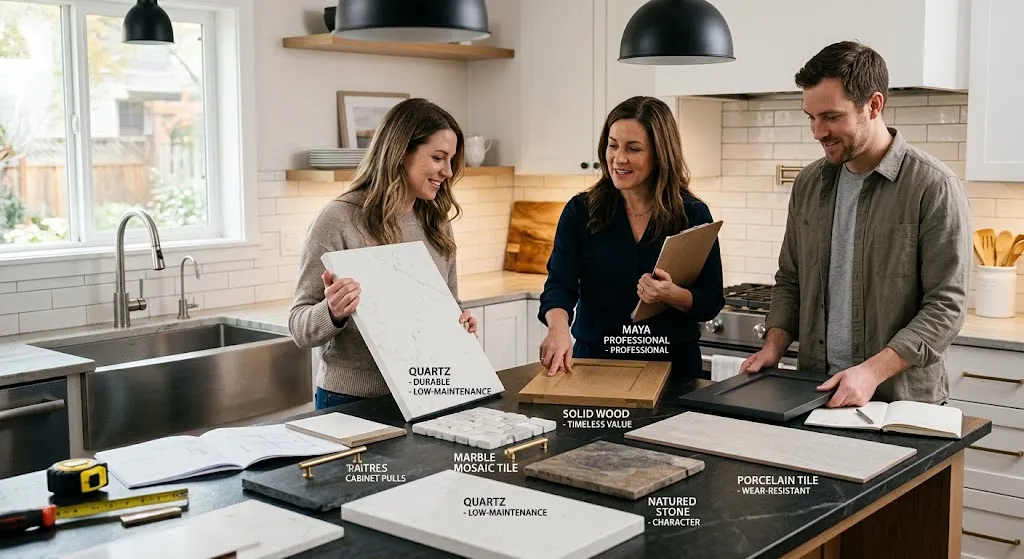
Kitchen flooring must accommodate foot traffic, dropped objects, spills, and repeated cleaning. Its performance depends on the material itself and the quality of the underlying installation. Comfort underfoot also deserves consideration.
Porcelain tile offers strong moisture resistance and a wide selection of finishes. Luxury vinyl flooring can provide a softer walking surface, although product quality and installation requirements vary. Natural hardwood offers warmth but generally requires greater attention to standing moisture.
Balance Slip Resistance With Surface Texture
Highly polished floors may become slippery when wet. Textured finishes can improve traction, but deeply patterned surfaces sometimes require more detailed cleaning. Homeowners should seek an appropriate balance between safety, appearance, and upkeep.
Selecting Backsplashes for Practical Protection
Backsplashes protect wall surfaces from cooking splashes, grease, and moisture. Their location makes cleanability particularly important, especially behind sinks and cooking appliances. Decorative appeal should complement this protective function.
Ceramic and porcelain tiles provide versatile options with numerous colors and patterns. Glass surfaces can create a reflective appearance, while natural stone introduces distinctive textures and additional maintenance considerations.
Grout selection also affects long-term performance. Appropriate installation and sealing practices help protect vulnerable joints and surrounding materials.
Evaluating Cabinet Finishes for Long-Term Wear
Cabinet surfaces experience frequent handling, cooking residue, and occasional moisture exposure. Their finishes influence how well they resist fingerprints, scratches, and ordinary cleaning. Construction quality matters, but exterior protection also affects longevity.
Painted finishes offer flexibility in color selection, although impact damage may remain visible. Laminates and factory-applied coatings provide alternative appearances with different performance characteristics.
Plan Perfect Remodeling can help homeowners consider finish options within the broader kitchen remodeling project. Choosing suitable finishes supports visual consistency while accounting for daily household activity.
Understanding Moisture Resistance Around Wet Areas
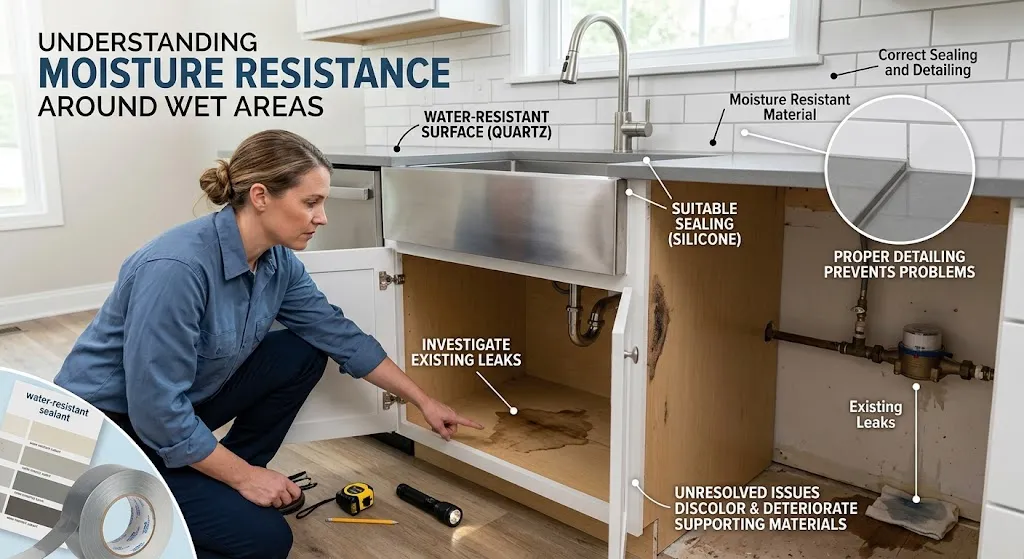
Moisture exposure is unavoidable near kitchen sinks, dishwashers, and frequently cleaned surfaces. Materials that absorb water may swell, discolor, or deteriorate when exposed repeatedly. Proper detailing therefore matters as much as material selection.
Water-resistant surfaces should be combined with suitable sealing and installation methods. Even durable products can experience problems when moisture reaches vulnerable joints or supporting materials.
Homeowners should also investigate existing leaks before installing new finishes. Covering unresolved moisture problems can undermine an otherwise well-planned renovation.
Considering Heat Resistance Near Cooking Equipment
Cooking areas expose nearby materials to changing temperatures and occasional concentrated heat. Countertops, wall finishes, and adjacent cabinetry must be compatible with appliance requirements. Heat tolerance varies considerably between products.
Some surfaces withstand elevated temperatures but remain susceptible to thermal shock. Others can discolor or deform when exposed to hot cookware.
Manufacturer guidance should determine appropriate clearances and protective measures. General claims about heat resistance should never replace product-specific instructions.
Balancing Material Costs With Expected Service Life
Material prices reflect several factors, including manufacturing methods, availability, appearance, and installation complexity. Higher prices do not automatically guarantee better performance for every household. Value depends on suitability and expected ownership costs.
Homeowners should compare purchase expenses with maintenance requirements and potential repair costs. A material requiring specialized care may introduce recurring expenses that are not obvious initially.
Prioritize Surfaces With the Greatest Exposure
Frequently used countertops and flooring often justify careful investment because they experience substantial wear. Decorative surfaces with limited contact may offer more flexibility for controlling expenses. This approach directs resources toward practical needs.
Avoiding Material Combinations That Create Problems
Individual materials may perform well independently but require careful coordination when installed together. Different thicknesses, expansion characteristics, and maintenance requirements can affect transitions. Poorly planned combinations may create inconvenient edges or inconsistent finishes.
Homeowners should review how materials meet around sinks, appliances, corners, and floor transitions. These details influence both appearance and long-term performance.
Coordinated selections also simplify maintenance. Compatible finishes and cleaning requirements make everyday care more manageable.
Making Material Decisions With Long-Term Goals
Material selection should reflect how homeowners expect to use their kitchens over several years. Household size, cooking frequency, maintenance preferences, and future plans all influence appropriate choices. Fashionable finishes should be evaluated alongside practical characteristics.
Plan Perfect Remodeling can help connect these priorities with available products and project requirements. Thoughtful planning supports decisions that remain useful beyond the initial renovation.
Ultimately, successful kitchen remodeling combines durability, visual appeal, and realistic ownership expectations. Comparing materials carefully helps homeowners create attractive kitchens that withstand everyday activity while providing dependable long-term value.




Leave a Reply