
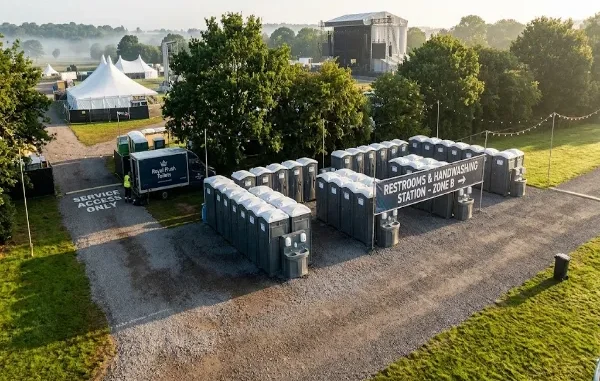
Multi-day outdoor events create sanitation challenges that are different from those at short gatherings. Guests, staff, vendors, and performers may use the same facilities repeatedly over several days, increasing demand and making cleanliness harder to maintain. A good restroom plan must account for changing attendance, operating hours, and daily servicing needs.
Arranging a Portable bathroom rental early gives organizers time to consider more than the initial number of units. Delivery access, placement, service schedules, handwashing needs, and pickup timing all affect how smoothly temporary facilities function. These details become especially important when an event remains active from morning until evening for several consecutive days.
Royal Flush Toilets understands that restroom planning should fit the way an event actually operates. A weekend festival, sports tournament, outdoor market, or community gathering may experience different traffic patterns throughout each day. Planning around those patterns can help organizers maintain convenient facilities without creating unnecessary disruptions.
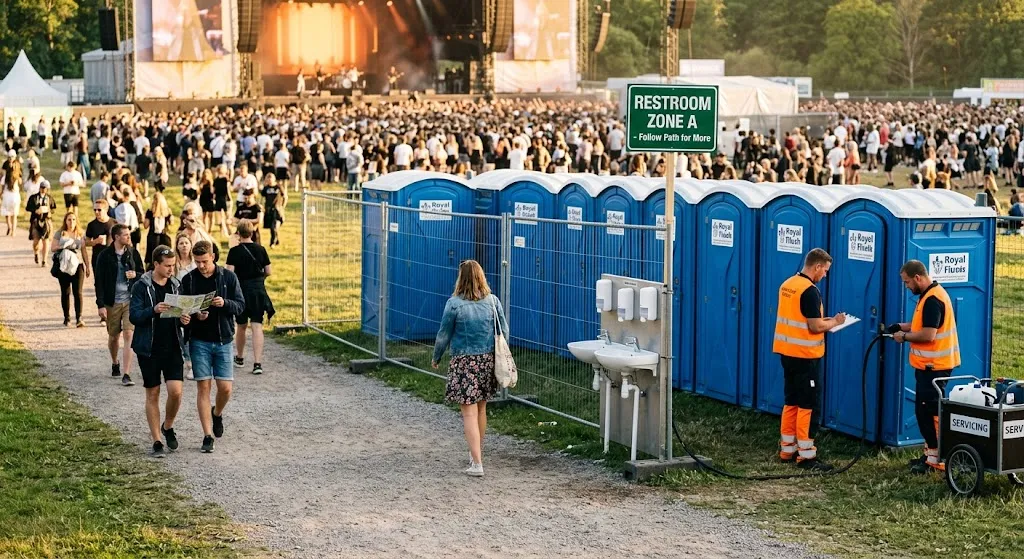
Estimate Restroom Demand Across the Entire Event
Attendance is an obvious starting point, but a multi-day schedule requires a closer look. Some visitors may attend for only a few hours, while staff and vendors could remain on the property throughout the event. Daily attendance may also rise or fall depending on scheduled activities.
Organizers should review expected attendance for each day rather than relying only on one total figure. A Saturday evening concert, for example, could draw heavier traffic than a quieter Sunday morning program. Identifying those peaks makes it easier to prepare for periods when restroom use may increase.
Event duration also affects demand. Facilities serving an all-day gathering experience more repeated use than those provided for a short afternoon activity. Food and beverage service, operating hours, and the number of workers on site should be considered during early planning.
Divide Large Venues Into Practical Restroom Zones
Placing every restroom in one location may look simple on a site plan, but it can create long walks and crowded areas. Large venues often work better when facilities are distributed according to where people spend their time. This can also reduce unnecessary movement between separate activity areas.
Consider entrances, seating areas, vendor sections, sports fields, stages, and other busy zones. Guests should be able to find facilities without crossing restricted areas or interfering with event operations. Clear routes can make restroom access easier during periods of heavy attendance.
A Portable bathroom rental plan should also consider how traffic patterns change during the day. A field that is quiet in the morning may become crowded during an evening performance. Placement decisions should reflect the full schedule rather than conditions expected at only one point in time.
Keep Service Access Separate From Guest Traffic
Temporary facilities need to remain accessible for servicing. If units are surrounded by parked vehicles, vendor equipment, temporary fencing, or dense crowds, routine attention can become difficult. Service access should be considered before the rest of the venue fills with equipment.
Organizers can identify practical routes during the site-planning stage. Those routes should support necessary service without directing equipment through the busiest guest areas whenever possible. Coordinating this detail with other vendors can prevent avoidable conflicts later.
Build Daily Servicing Into the Schedule
Multi-day events need a plan for maintaining facilities between periods of use. Supplies may need replenishment, waste requires appropriate attention, and interiors should remain ready for the next group of visitors. Waiting until conditions noticeably decline can affect guest comfort.
A useful approach is to identify quieter periods in the event schedule. Servicing may be easier before gates open, after activities finish, or during another low-traffic window. The best timing depends on operating hours and how the venue is organized.
Royal Flush Toilets can be part of planning discussions where organizers need to coordinate temporary restroom arrangements with a longer event schedule. Establishing expectations before opening day helps reduce uncertainty about when facilities can receive attention. It also gives event staff a clearer process for reporting concerns.
Plan for Handwashing and Hygiene Needs
Restroom access is only one part of temporary sanitation. Guests and workers also need practical opportunities to clean their hands, particularly around food service and other busy areas. Hygiene arrangements should be considered alongside restroom placement rather than added at the last minute.
The layout should make handwashing options easy to identify and reach. People are more likely to use available facilities when they fit naturally into common walking routes. Clear placement can also reduce confusion during crowded periods.
Supplies deserve routine checks throughout the event. High-traffic periods can increase use quickly, so organizers should assign responsibility for monitoring conditions. Small checks during the day can identify needs before they become noticeable problems for visitors.
Consider Staff, Vendors, and Other Workers
Guest attendance usually receives the most attention during event planning, but workers may place steady demand on restroom facilities. Security teams, food vendors, performers, volunteers, maintenance crews, and event staff can spend many hours on site. Their needs should be included in the overall plan.
Some event layouts may benefit from facilities positioned conveniently for working areas. This can reduce the amount of time employees spend walking across a large property to find a restroom. It may also prevent backstage or operational areas from becoming unnecessarily crowded.
Planning for workers supports smoother daily operations. Staff members who remain comfortable and have convenient access to basic facilities can stay closer to their assigned areas. This consideration becomes more valuable as an event extends across several days.
Prepare for Weather and Ground Conditions
Outdoor venues can change quickly after heavy rain or strong weather. Ground that was firm during setup may become muddy, soft, or difficult to cross. Restroom placement should account for these possibilities before equipment arrives.
Stable, reasonably level locations can support safer access and easier use. Organizers should also think about walking routes between facilities and major event areas. Poorly chosen paths can become inconvenient if weather changes during the weekend.
Weather may also affect the overall event schedule. Delays can shift peak attendance into different periods, creating unexpected restroom demand. A flexible operating plan helps staff respond when the original timetable changes.
Make Facilities Easy for Guests to Locate
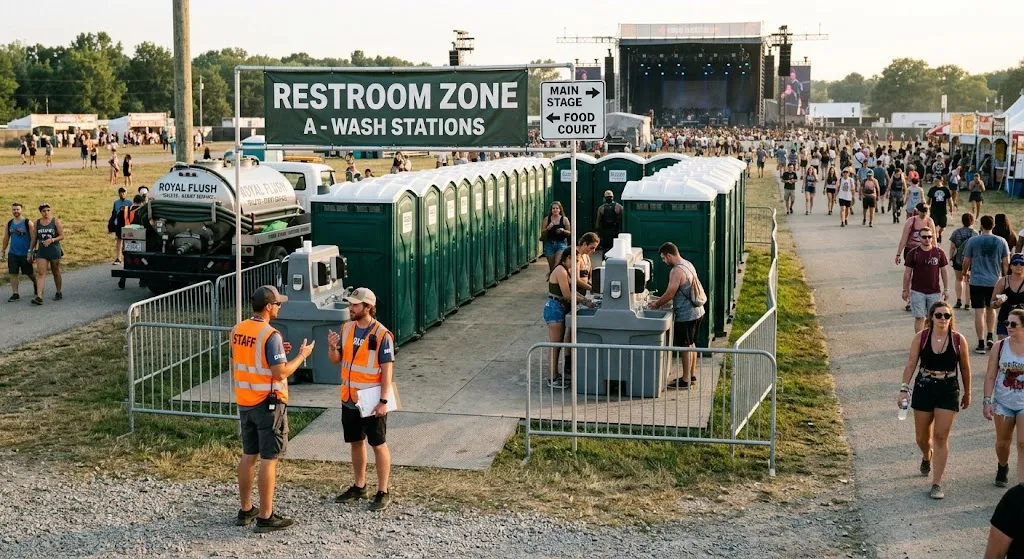
Restrooms provide little convenience if visitors cannot find them. Large festivals and sprawling outdoor venues can make navigation difficult, particularly for first-time guests. Clear signage can reduce questions and unnecessary movement.
Facilities should appear on event maps when maps are provided. Directional signs can also help visitors find the nearest location from dining, entertainment, and activity areas. Evening events may require additional consideration for visibility along walking routes.
Accessibility should remain part of these placement decisions. Routes need to be practical for the people expected to use them, rather than simply convenient for event equipment. Considering access during initial planning is easier than trying to correct poor placement after setup.
Create a Simple Process for Reporting Problems
Even a carefully prepared event may encounter unexpected sanitation concerns. A unit could need attention, supplies may run low, or changing site conditions could affect access. Event staff should know whom to contact when they notice a problem.
A simple reporting process prevents small issues from being passed between several people without action. Key staff can be given the appropriate contact information and instructions before the event begins. They should also know which restroom zone they are reporting if the property has multiple locations.
Using a Portable bathroom rental successfully over several days depends partly on this communication. Fast, accurate information makes it easier to address concerns without disrupting other event operations. Clear responsibilities are particularly useful during busy periods when organizers are managing many tasks at once.
Plan Delivery and Pickup Around Other Vendors
Large events often involve tents, stages, catering equipment, fencing, lighting, and other temporary installations. If every vendor arrives at the same time, access points can become congested. Restroom delivery should be coordinated within the larger setup schedule.
Units generally need to reach their planned positions before routes become blocked by later equipment. Pickup also requires thought because portions of the venue may remain occupied after guests leave. Discussing these conditions early can make both stages easier to manage.
Royal Flush Toilets can be included in this wider coordination rather than treated as a separate last-minute arrangement. Restroom logistics work better when they fit alongside parking, vendor access, guest routes, and site operations. This helps the event move from setup through closing with fewer conflicts.
A Multi-Day Restroom Plan Needs Daily Attention
Temporary sanitation for a multi-day event requires more than placing facilities before opening day. Attendance patterns, servicing, hygiene supplies, staff needs, weather, accessibility, and venue traffic can all affect how well the arrangement works. Reviewing these factors early gives organizers more control over daily operations.
The plan should also remain flexible once the event begins. Staff can monitor usage, identify busy locations, report supply needs, and watch for changes caused by weather or crowd movement. These observations help keep facilities practical throughout the full schedule.
Successful restroom planning is ultimately about consistency. Guests arriving on the final day should find facilities that remain convenient and properly managed, just as visitors did at the beginning. Building daily maintenance and clear communication into the plan helps support that experience from opening through final pickup.
Related posts:
 A General Practice Attorney: Your Legal Ally
 Who Is Calling From 14075830183? What You Need to Know About This Mysterious Florida Number
 The Many Struggles of a Digital Nomad and How to Deal with Them
 Understanding Long-Term Disability Claims in Michigan and Workplace Injury Legal Support
 Canada Visa for Indians Planning a Summer in the Great White North
Leave a Reply