
Moving out of a rental property should bring a tenancy to a straightforward close. However, disputes can arise when a landlord withholds all or part of a security deposit without providing a clear explanation.
A tenant may believe the home was left in good condition, while the landlord may claim deductions for cleaning, repairs or unpaid charges. These disagreements can quickly become difficult when the parties rely on memories rather than written records.
A practical response begins with the lease, supporting documents and a clearly stated request. If informal messages do not resolve the issue, a formal demand letter may help define the dispute before the tenant considers mediation, legal advice or small claims court.
Review the Lease and Local Requirements
Before contacting the landlord, read the lease carefully. Look for provisions covering the security deposit, cleaning responsibilities, move-out inspections and notice requirements.
The lease may explain:
- The amount originally paid
- Permitted reasons for deductions
- Required move-out procedures
- Cleaning or repair obligations
- The address for formal notices
- Any inspection process offered to tenants
Security deposit rules differ by location. Depending on the applicable law, a landlord may have a specific period in which to return the deposit or provide an itemised statement of deductions.
Tenants should verify current requirements through the relevant state, county or local court resources. They should not assume that a deadline or procedure used in another state applies to their own dispute.
Ask for an Itemised Explanation
If the landlord has not explained the deductions, the tenant can begin with a short written request. The message should ask for an itemised statement showing what was deducted and why.
It is helpful to avoid emotional accusations at this stage. A neutral request is more likely to produce information that can be reviewed objectively.
For example, the tenant might ask the landlord to identify:
- Each repair or cleaning charge
- The amount assigned to each item
- The date the work was performed
- Any receipts, invoices or estimates
- The lease provision supporting the deduction
- The remaining deposit balance
The response may reveal a simple accounting error or misunderstanding. If it does not, the written exchange becomes part of the record.
Separate Damage from Ordinary Wear
One of the most common disagreements concerns the difference between property damage and ordinary wear.
A broken door, missing fixture or large stain may support a deduction. Minor scuffs, faded paint and gradual ageing may be treated differently, depending on local law and the circumstances.
Several factors may matter:
- How long the tenant occupied the property
- The age and previous condition of the item
- Whether the problem existed before the tenancy
- Whether the landlord completed the claimed work
- Whether the repair cost appears reasonable
- Whether photographs support either account
Tenants should compare move-in and move-out evidence instead of relying only on the current appearance of the property.
Build a Clear Timeline
A security deposit dispute becomes easier to understand when the events are arranged chronologically.
The timeline can begin with the lease signing and deposit payment, then include the move-in inspection, maintenance requests, notice to vacate, move-out inspection, key return and subsequent communications.
Useful dates may include:
- When the deposit was paid
- When the tenant moved in
- When existing damage was reported
- When repair requests were submitted
- When notice to vacate was given
- When the property was inspected
- When the keys were returned
- When the landlord sent a deduction statement
- When the tenant requested repayment
A concise timeline helps the tenant explain what happened without omitting important details or mixing separate issues together.
Collect Documents Before Writing a Formal Demand
A formal request is stronger when every statement can be connected to a document, photograph or communication.
Relevant materials may include:
- The signed lease and any amendments
- Proof of the security deposit payment
- The move-in condition report
- Dated move-in and move-out photographs
- Maintenance requests
- Emails and text messages
- Cleaning receipts
- Key-return confirmation
- The landlord’s deduction statement
- Repair estimates or invoices
- Previous requests for repayment
Documents should be preserved in their original form whenever possible. Screenshots can be useful, but complete message threads may provide better context than isolated excerpts.
Write a Focused Demand Letter
When informal communication fails, the tenant may send a formal demand letter. Its purpose is to state the relevant facts, identify the amount in dispute and request a specific response.
The letter should generally include:
- The tenant’s and landlord’s names
- The rental property address
- The dates of the tenancy
- The amount of the original deposit
- The amount already returned, if any
- The deductions being disputed
- A short explanation supported by records
- The exact amount requested
- A reasonable response deadline
- Instructions for sending the payment or response
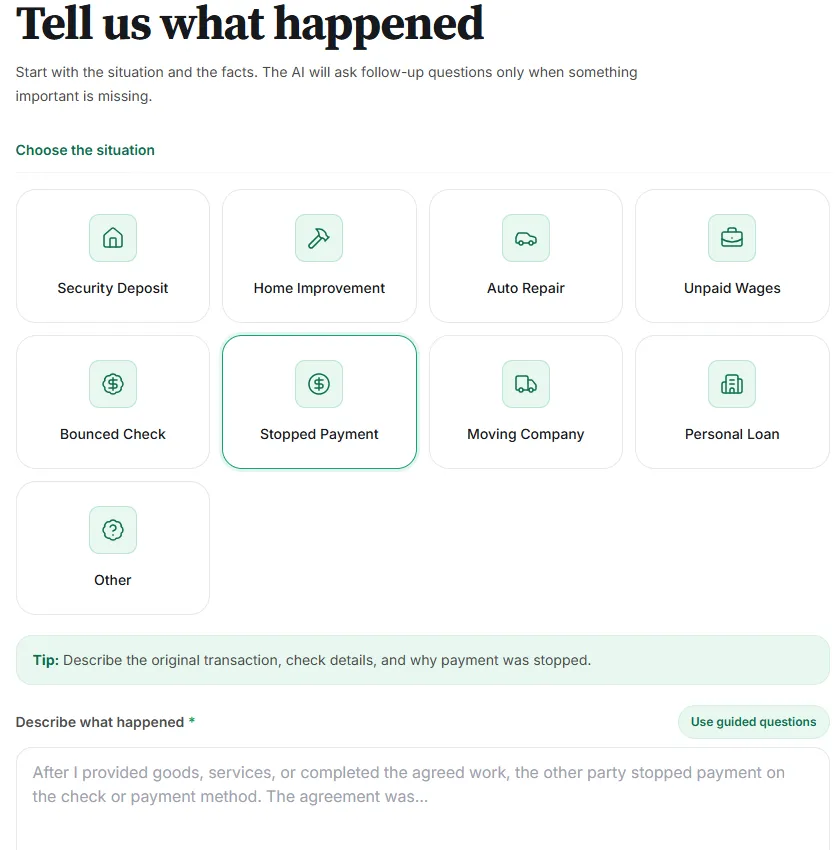
A demand letter generator can help turn these details into a structured first draft. The tenant should still review the result carefully, verify every date and amount, and adapt it to the applicable local requirements before sending it.
The letter should not exaggerate the claim or threaten consequences the tenant is not prepared to pursue. A factual and professional tone usually makes the request easier to evaluate.
Preserve Proof That the Letter Was Sent
The tenant should keep a final copy of the letter and any attachments. The method used to send it may also matter.
Depending on the circumstances and local requirements, the tenant might use email, tracked mail or another delivery method that creates a record. Important evidence can include:
- A copy of the completed letter
- The date it was sent
- The destination address
- Email delivery information
- Postal receipts
- Tracking records
- The landlord’s response
Sending a letter does not guarantee payment. However, documenting the attempt can show that the tenant clearly communicated the claim and gave the landlord an opportunity to respond.
Evaluate the Landlord’s Response
A landlord may agree to return the full amount, offer a partial payment, provide additional evidence or reject the request.
The tenant should compare any new information with the lease and existing records. If an invoice is provided, check whether it matches the claimed damage and whether the amount charged is consistent with the work described.
A partial settlement may be reasonable in some cases, but the terms should be recorded in writing. Before accepting, the tenant should understand whether the agreement requires giving up the remaining claim.
Prepare for a Possible Small Claims Case
If the dispute remains unresolved, small claims court may be one option. Filing limits, deadlines, fees, venue rules and service requirements vary by jurisdiction, so tenants must check the instructions issued by the appropriate local court.
Preparation involves more than collecting a large folder of files. The records need to explain the dispute efficiently.
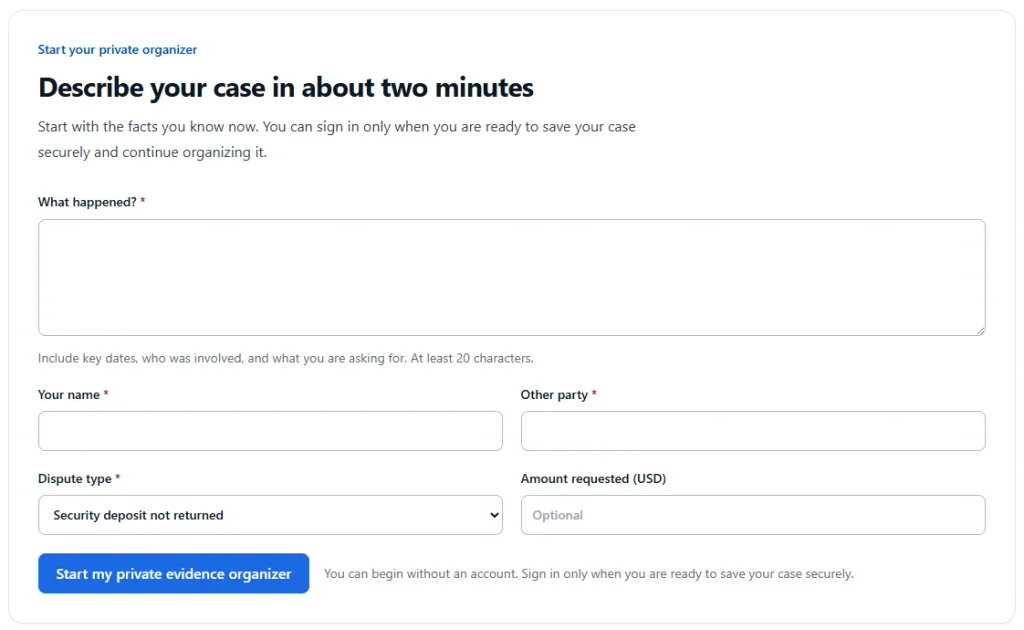
A tenant can organise the relevant small claims evidence into a timeline, document list and case summary before reviewing the applicable filing requirements. Useful categories may include the lease, payment records, property photographs, correspondence, the deduction statement, the demand letter and proof that it was sent.
This kind of organisation does not determine whether evidence will be accepted by a court or whether the tenant will succeed. It simply helps the tenant understand what records are available and which facts may still need support.
Common Mistakes to Avoid
Security deposit claims can become weaker when tenants act before reviewing their records.
Common mistakes include:
- Demanding money without identifying the disputed deductions
- Using an incorrect address for formal notices
- Relying on undated photographs
- Deleting text messages after the tenancy ends
- Making claims that cannot be supported
- Missing a filing deadline
- Assuming another state’s rules apply
- Failing to preserve proof of delivery
- Submitting disorganised records
- Treating an automated document as legal advice
A demand letter and an evidence file are preparation tools. They do not replace local court instructions or professional advice when a dispute is complex.
When to Seek Legal Help
Some disputes may involve issues beyond an ordinary deposit disagreement. Legal assistance may be appropriate when the case includes alleged discrimination, retaliation, eviction, unsafe living conditions, substantial property damage or a large financial claim.
Tenants should also consider getting help when they are unsure about deadlines, jurisdiction, lease terms or the effect of a proposed settlement.
Frequently Asked Questions
Usually, a written request for an explanation or repayment is a sensible first step. If the landlord does not respond or the dispute remains unresolved, a more formal letter can clearly state the claim.
The lease, payment records, condition reports, dated photographs, maintenance messages, the deduction statement and proof of key return are commonly relevant. The usefulness of each item depends on the facts and local rules.
No. A demand letter communicates a claim and requested resolution, but the recipient may dispute it or decline to pay.
Requirements differ by jurisdiction. Some courts or claim types may expect or require a prior demand, while others may have different procedures. The tenant should verify the rules of the appropriate local court.
No. It can help arrange records and prepare a factual summary, but it does not provide legal advice, choose the correct court, file a case or guarantee an outcome.
Final Thoughts
A security deposit dispute is easier to manage when the tenant replaces scattered messages and assumptions with a clear written record.
The process begins with reviewing the lease and local requirements, requesting an itemised explanation and collecting documents. If the issue remains unresolved, a focused demand letter can define the amount and requested outcome. Should the dispute move toward small claims court, an organised timeline and evidence file can make the facts easier to present.
Digital tools can support these preparation steps, but the tenant remains responsible for checking the information, following local procedures and deciding when professional legal help is necessary.
Related posts:
 Longhornsurvey com The Online Survey Platform
 Decoding The Real Slim Shady Lyrics
 Embracing the Paradox: The Power of Being Consistently Inconsistent
 The Ultimate Guide to Creating a Cozy and Functional Living Space with Home Goods
 Why Siding Plays a Key Role in Reducing Exterior Maintenance Throughout the Year
Leave a Reply