
Beauty products often get the spotlight, but packaging quietly shapes the whole experience. The bottle or jar is the first thing customers see, touch, and judge before they even try what is inside. In the beauty industry, packaging is not only about holding a product. It also reflects quality, brand identity, and sometimes even a company’s values.
Because of this, many beauty brands face an important question when launching a product. Should they use glass packaging or plastic packaging? Both materials have clear advantages, and the right choice depends on the product, the brand image, and practical factors like cost and durability. Understanding these differences helps brands choose packaging that fits both their formula and their customers’ expectations.
Why Packaging Matters More Than Ever in Beauty
In the beauty industry, packaging does far more than simply hold a product. It protects the formula, keeps ingredients stable, and ensures customers receive the product in the condition the brand intended. A good container can extend shelf life, prevent contamination, and make daily use easier.
At the same time, packaging has become part of a brand’s identity. Many customers now pay attention to materials, sustainability claims, and overall presentation before making a purchase. Because of this shift, beauty brands must think carefully about packaging choices instead of treating them as an afterthought.
The First Impression: How Packaging Influences Beauty Buyers
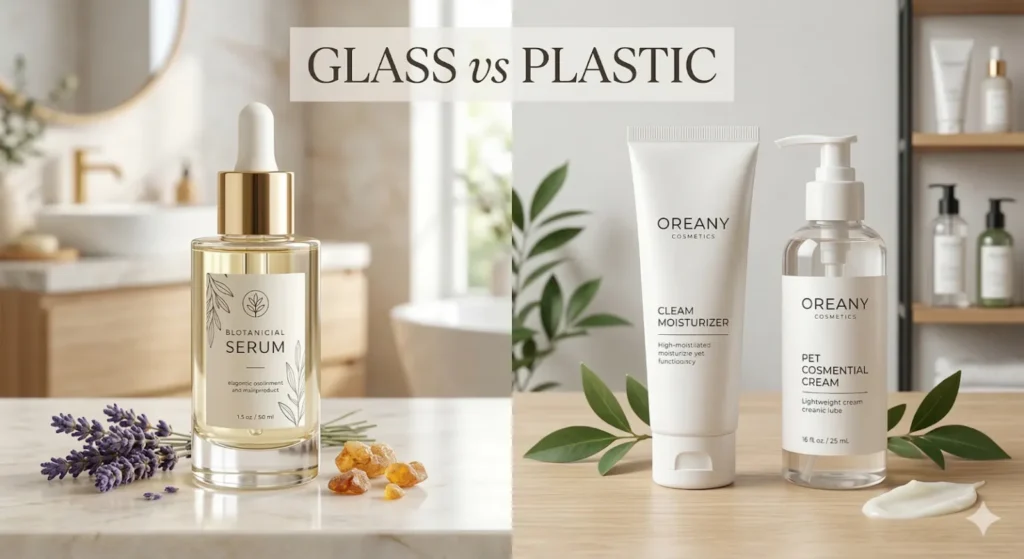
Before someone tries a skincare product, they usually judge it by its packaging. The look, weight, and feel of the bottle or jar can instantly shape how customers perceive the brand. A sleek glass bottle may suggest luxury, while a lightweight plastic container may signal convenience and practicality.
Packaging often communicates several things to customers at a glance:
- product quality
- brand positioning
- environmental responsibility
- product safety
Because these signals are so powerful, packaging material plays a major role in how a beauty product is perceived. This is one reason the debate between glass and plastic packaging continues to matter for brands developing new products.
Glass Packaging in the Beauty Industry
Glass packaging has long been associated with premium beauty products. You will often see it used for serums, facial oils, and high-end skincare lines. The material feels solid in the hand and gives products a polished, high-quality appearance that many brands value.
Another reason glass remains popular is its reliability. It does not react with most cosmetic formulas, which helps preserve ingredients and maintain product stability over time.
Why Many Premium Beauty Brands Choose Glass
For many skincare brands, glass offers a mix of protection and presentation. It helps shield formulas from contamination while also giving products a clean, elegant look on store shelves or bathroom counters.
Key strengths of glass packaging include:
- Non-reactive material that protects sensitive formulas
- Premium appearance that enhances brand image
- Strong barrier against air and external contaminants
- Fully recyclable material in many markets
That said, glass is not perfect for every product. It is heavier than plastic and can break if dropped, which means brands must balance visual appeal with practicality.
Why Plastic Packaging Is Still Widely Used
While glass often signals luxury, plastic remains the most widely used packaging material in the beauty industry. Many everyday products such as lotions, cleansers, and shampoos rely on plastic containers because they are lightweight and durable.
Plastic packaging also allows brands to create many different shapes and sizes. This flexibility makes it easier to design squeezable tubes, pumps, and travel-friendly bottles that customers can use without worrying about breakage.
However, plastic packaging also raises environmental concerns, especially when recycling systems are limited. Because of this, many brands are now exploring ways to use recycled plastics or reduce packaging waste where possible.
Glass vs Plastic: A Practical Comparison
At first glance, the choice between glass and plastic may seem simple. In reality, both materials offer different advantages depending on the product and brand goals. Looking at the key differences side by side can help beauty brands make a more informed decision.
| Feature | Glass Packaging | Plastic Packaging |
|---|---|---|
| Product Protection | Excellent barrier against air and chemicals. | Good protection, varies by plastic type. |
| Brand Perception | Premium and high-end feel. | Practical and accessible. |
| Weight | Heavier (higher shipping costs). | Lightweight (cost-efficient). |
| Durability | Fragile; can break if dropped. | More resistant to impact and drops. |
| Cost | Usually higher unit price. | Typically more affordable. |
This comparison shows why both materials continue to exist in the beauty market. Glass often supports luxury positioning, while plastic provides flexibility and cost efficiency for everyday products.
Sustainability Considerations Beauty Brands Should Think About
Sustainability has become a major factor in packaging decisions. Many customers now want products that reduce environmental impact, and packaging materials often play a big role in those expectations. As a result, brands are paying closer attention to recyclability and overall packaging waste.
Glass is widely recyclable and can often be reused without losing quality. Plastic, on the other hand, requires more careful recycling systems and can contribute to waste if not properly processed. However, plastic also has advantages because its lighter weight can reduce transportation emissions during shipping.
For many beauty brands, the sustainability question is not simply about choosing one material over another. Instead, it involves thinking about the full lifecycle of the packaging and how it will be used, reused, or recycled after the product is finished.
When Glass Packaging Makes the Most Sense
Glass packaging often works best when a beauty brand wants to highlight quality and product care. Many skincare formulas contain active ingredients that benefit from stable, non-reactive containers. Glass helps maintain the integrity of these formulas while also giving products a refined look.
Glass is often a strong choice for:
- luxury skincare products
- serums and facial oils
- essential oil blends
- formulas sensitive to chemical interaction
Beyond formula protection, glass also supports premium branding. A well-designed glass bottle can instantly elevate how a product looks on a shelf or bathroom counter, which is why many high-end skincare brands continue to rely on it.
When Plastic Packaging Is the Better Choice
Plastic packaging becomes the smarter option when practicality matters most. Many everyday beauty products need containers that are lightweight, durable, and easy to use. Plastic makes this possible while also keeping production costs manageable.
Plastic packaging works well for:
- travel-size beauty products
- large bottles such as shampoo or body lotion
- squeezable tubes and pump bottles
- budget-friendly product lines
Another advantage is durability. Plastic containers are less likely to break during shipping or everyday use, which makes them ideal for products designed for convenience and frequent handling.
Choosing the Right Packaging Partner
Selecting the right packaging material is only part of the process. Beauty brands also benefit from working with experienced packaging suppliers who understand product compatibility, design needs, and manufacturing requirements.
A reliable partner can help brands evaluate whether glass or plastic fits a specific product formula, target market, and brand positioning. Companies such as FH Packaging support beauty brands by offering a range of packaging options and guidance during product development.
With the right supplier, brands can balance appearance, functionality, and sustainability without compromising product quality.
Final Thoughts
Choosing between glass and plastic packaging is not about finding a single perfect option. Each material serves a different purpose depending on the product, the brand image, and how customers will use the item. Some beauty brands prefer the premium feel and formula protection that glass offers, while others value the convenience and flexibility that plastic provides.
In many cases, the smartest approach is a balanced one. Brands may use glass for high-end serums and treatments while choosing plastic for everyday products like cleansers or lotions. By carefully considering product needs, sustainability goals, and customer expectations, beauty brands can select packaging that supports both their products and their long-term brand identity.



Leave a Reply