
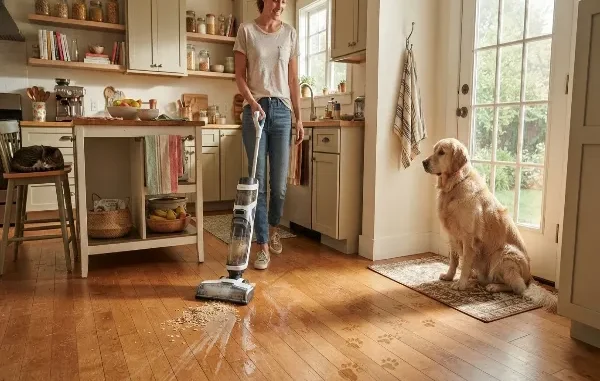
By Thursday night, the kitchen floor usually tells the story of the week. There’s cereal beneath one chair, a sticky patch near the counter and a line of pawprints leading away from the back door. You could mop the whole first floor again. Or you could deal with the few places that actually need attention.
For busy families, the second approach is easier to keep up. The trick is stopping small messes before they spread.

Stop the dirt before it reaches the hallway
Start at the door people actually use, whether that’s the garage entrance or the back door.
An outdoor scraping mat catches much of the loose soil. Inside, use an absorbent, washable mat with enough room for someone to take off their shoes. A tray gives wet boots a place to drain. If there’s a dog, keep an old towel on a hook nearby—somewhere you can reach it while holding a leash.
After a wet afternoon, shake out the mat and let it dry as directed. A soaked mat stops catching moisture.
If sand or little stones have already made it onto the floor, collect them before using a damp cloth. Dragging grit across a finish can leave scratches.
A better approach to the after-dinner kitchen
Most kitchens don’t get equally dirty from wall to wall. Most messes gather under the table, beside the stove and near the sink.
Instead of washing the entire room, make a quick pass through those areas after dinner. Pick up the larger scraps first. Sweep or vacuum crumbs, then wipe up whatever is sticky. A dripping mop isn’t the best way to deal with dry crumbs.
Small spills are often a cloth-and-water job, provided the flooring permits it. Use the cleaning solution recommended for the surface and don’t leave puddles sitting along seams.
For a home with extensive, compatible hard flooring, a wet dry vacuum designed for floor washing can make sense when crumbs and wet footprints regularly arrive together. These machines combine approved debris pickup with washing, but they’re not shop vacuums for sharp objects, large stones or heavy debris.
If it doesn’t save you a step on a frequent mess, your existing broom and mop may be enough.
Pet hair and muddy paws are different jobs
A dog can leave muddy prints across the tile and a surprising amount of hair on the living room rug in the same afternoon. One cleaner won’t necessarily be right for both.
Wipe paws at the door when you can. For fresh prints on a suitable hard floor, deal with the moisture promptly. If the mud has dried, remove loose soil gently before wiping away the mark.
For fur on carpet, sofas and pet beds, use a dry vacuum with an attachment intended for those materials. A hard-floor washer isn’t meant to wash upholstery or area rugs.
Pets follow predictable routes. Concentrate on the stretch from the back door to the water bowl, and try a washable mat beneath feeding bowls.
Look under the furniture, but not every day
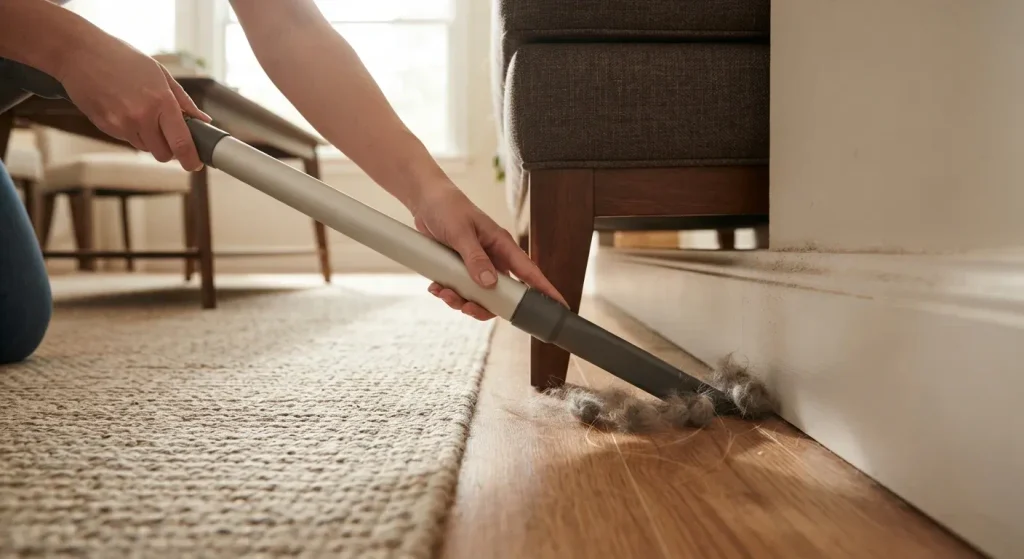
Crumbs gather beneath dining chairs, and dust collects along the wall behind the sofa. Those places matter, but they don’t need a full inspection every night.
Once a week, move chairs and check under the table. Use a suitable vacuum attachment along baseboards. For a floor washer that reclines under furniture, measure clearance beneath the lowest crossbar.
A narrow gap may be better handled with a crevice tool; an area rug still needs a vacuum. Don’t force one machine to do every job.
The cleanup after cleaning counts, too
The less obvious part of floor washing is what happens after you finish.
A floor washer collects dirty water, hair and food residue. Its tank needs emptying, and its brush and other accessible parts need the care described in the manual. Leaving damp debris inside can lead to unpleasant smells.
Some tineco vacuum mop models include an automatic brush-cleaning cycle, which can make that part of maintenance easier. It doesn’t remove the need to empty the dirty-water tank or check the parts that the cycle doesn’t clean.
Before buying, consider storage. Can you lift out the tank easily? Is there room for the docking base? Would you use it for a small spill?
Convenience means being able to start and finish the job without turning it into a second project.
A weekday routine that leaves room for real life
You don’t need to set a timer, but it helps to have a rough order of operations.
In the morning: Check the doorway for wet shoes and grit. Wipe paws when the dog comes in. If breakfast leaves a few crumbs under the table, sweep that patch before everyone heads out.
After dinner: Pick up food scraps, clean sticky spots and check the floor around the sink and dining chairs. Leave the rest of the room alone if it doesn’t need attention.
Twice a week, or as needed: Give the busy hard-floor areas a more thorough clean using a method approved for their finish. Vacuum rugs and upholstery separately.
On the weekend: Check beneath furniture, wash entrance mats and give your cleaning equipment the maintenance its manufacturer recommends.
A rainy Saturday may need more attention; a quiet week may need less.
Don’t let the floor finish become an afterthought
Tile, laminate, vinyl and wood can look similar in photographs, but their care instructions aren’t interchangeable. Some surfaces tolerate controlled damp cleaning. Others can be damaged when water reaches joints or sits too long on the finish.
The National Wood Flooring Association advises against wet or steam mops on wood floors because moisture and heat can cause damage over time. For any floor, follow the specific manufacturer’s care guidance before using a new cleaning machine or solution.
Cleaning and disinfecting are different tasks. The Centers for Disease Control and Prevention notes that routine cleaning is sufficient in many homes; disinfection is more relevant when someone is sick. Never add household disinfectant to a floor washer unless its manufacturer permits it.
Buy for the messes you actually have
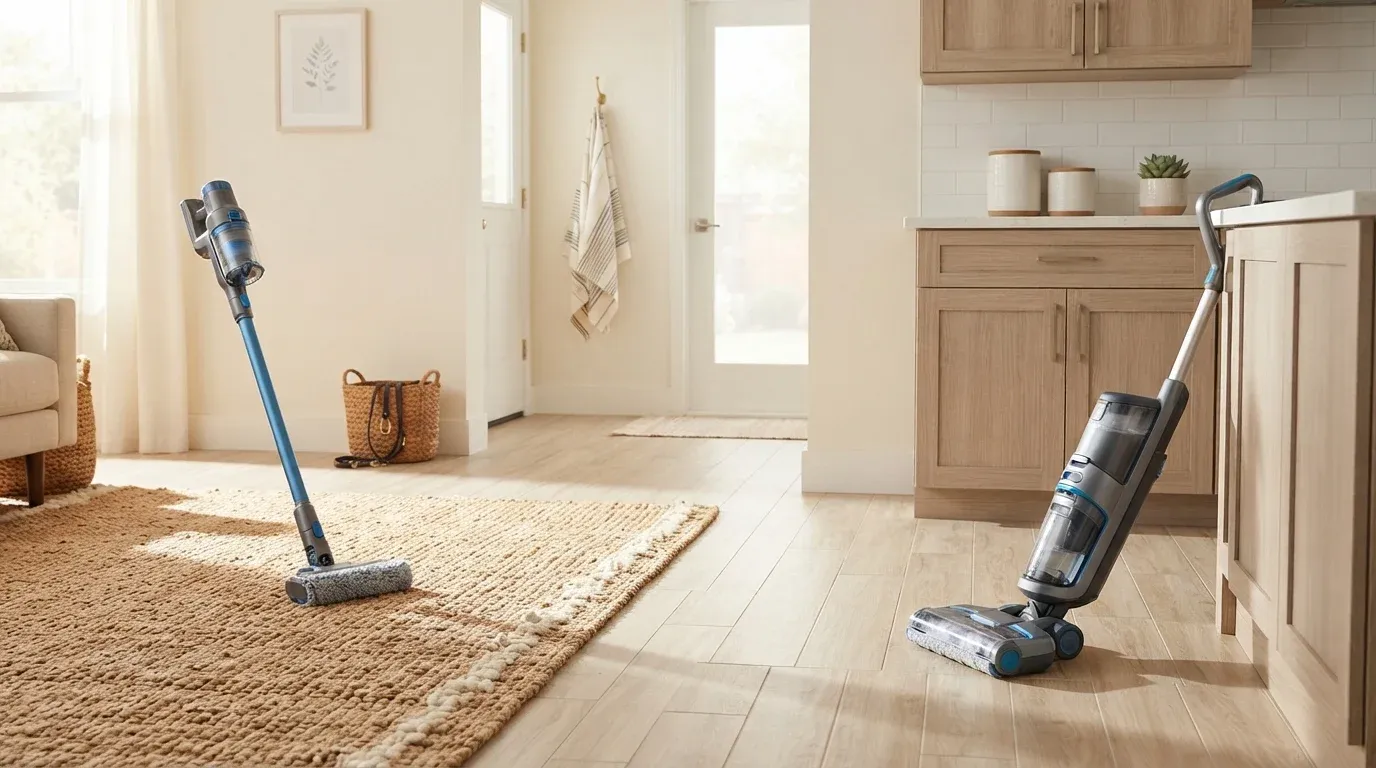
If you’re comparing a tineco vacuum with a wet-dry floor washer, start by listing the surfaces in your home. A traditional vacuum handles dry dirt on rugs, carpets and upholstery; a floor washer is designed for compatible hard floors and everyday wet messes. Plenty of households benefit from having both, but not everyone needs to buy another appliance.
A useful routine is one you’ll still follow by Wednesday. Keep a towel near the door, clean fresh spills and focus on busy spots. The rest can wait.
Frequently asked questions
Not if your home has rugs, carpet or upholstered furniture that need dry vacuuming. Wet-dry floor washers are intended for compatible hard floors. A traditional vacuum remains useful for other surfaces.
Keep a towel by the entrance, remove loose grit before wiping and clean the mark with a method approved for the floor. Getting to fresh moisture promptly is usually easier than tackling dried-on prints later.
There isn’t a single schedule that fits every home. Kitchens, entryways and pet routes tend to need the most attention. Clean visible spills right away, then adjust deeper cleaning to the traffic and flooring rather than washing every room daily.
Related posts:
 Longhornsurvey com The Online Survey Platform
 Why Siding Plays a Key Role in Reducing Exterior Maintenance Throughout the Year
 The Ultimate Guide to Building Your Signature Personal Style
 Zach Bryan Merch and the Art of Building a Concert-Ready Wardrobe
 Smart Landscaping in Victoria BC: Irrigation, Drainage Planning and Low-Maintenance Yards
Leave a Reply