

Yes, teenagers can take whey protein, but only when their daily protein needs are not being met through food alone and when they are actively training. Whey protein is a food-derived supplement, not a drug or steroid. However, age, diet, training level, and product quality all determine whether it is appropriate, necessary, or even helpful for a specific teenager.
The question of whether teenagers should take whey protein comes up constantly in Pakistani gym communities, school sports circles, and among parents who are unsure whether supplementation is safe for their children. Before reaching for a tub, it is worth understanding what whey protein actually is, what it does, and whether a teenager genuinely needs it. With whey protein price in Pakistan being a significant expense for most families, the last thing any parent wants is to spend money on something unnecessary or potentially harmful for a growing teenager.

What Whey Protein Actually Is and Why It Matters for Teens
Whey protein is a byproduct of cheese production derived from cow’s milk. It is not a synthetic chemical or a performance-enhancing drug. It is a concentrated source of complete protein containing all nine essential amino acids that the human body cannot produce on its own. These amino acids are critical for muscle repair, immune function, enzyme production, and overall growth, all of which are happening at an accelerated rate during the teenage years.
The reason whey protein is popular among athletes and gym-goers is simple: it is rapidly absorbed, easy to consume, and highly effective at delivering protein when the body needs it most, particularly after training. For a teenager who is physically active, growing quickly, and struggling to meet protein needs through meals alone, whey protein can be a practical and safe option.
- Whey protein is classified as a food supplement, not a pharmaceutical product.
- It does not contain hormones, steroids, or synthetic anabolic compounds unless a product has been adulterated, which is why buying from a verified source matters enormously.
- The protein in a whey supplement is nutritionally identical to the protein found in milk, eggs, and chicken. The difference is concentration and convenience.
- Teenagers between 14 and 18 years old who train regularly have protein requirements that often exceed what a standard Pakistani diet provides, making supplementation genuinely useful in many cases.
How Much Protein Do Teenagers Actually Need
Understanding protein requirements puts the supplement debate into proper context. The general recommendation for sedentary teenagers is around 0.85 grams of protein per kilogram of body weight per day. However, teenagers who are actively training, playing competitive sports, or going through rapid growth spurts can need significantly more, in the range of 1.2 to 1.7 grams per kilogram per day.
A 60kg teenage boy doing regular resistance training may need between 72 and 102 grams of protein daily. A typical Pakistani diet of roti, daal, and occasional chicken may fall short of this, particularly for teenagers with high activity levels or those who skip meals due to school schedules. This gap is where whey protein becomes a practical tool rather than an unnecessary luxury.
- Calculate the teenager’s actual daily protein intake from food first before deciding whether a supplement is needed.
- If whole food protein sources like eggs, milk, chicken, fish, and lentils are covering daily requirements, a supplement adds no additional benefit.
- A single serving of whey protein typically provides 20 to 25 grams of protein, which can meaningfully close a dietary gap without requiring an overhaul of eating habits.
When Whey Protein Is Appropriate for Teenagers
Not every teenager needs a protein supplement. The decision should be based on specific circumstances rather than gym culture pressure or what friends are using. There are clear situations where whey protein makes sense for a teenager and equally clear situations where it does not.
Whey protein is appropriate for a teenager when these conditions are met:
- They are actively engaged in structured resistance training, competitive sports, or high-intensity physical activity at least three to four times per week.
- Their daily protein intake from food is consistently falling below their requirements despite a reasonable effort to eat well.
- They are at least 14 years old and have consulted with a parent or doctor before starting supplementation.
- The product being used is a clean, single-ingredient whey protein without stimulants, artificial hormones, or proprietary blends that hide ingredient quantities.
- They understand that the supplement supports their training and diet, not replaces them.
Shop Best Whey Protein in Pakistan
When Teenagers Should Not Use Whey Protein
There are circumstances where whey protein is either unnecessary or genuinely inadvisable for teenagers. Being clear about these boundaries protects both health and money.
- Under 14 years of age: Younger teenagers are still in early developmental stages where nutritional needs are best met through whole foods rather than concentrated supplements. The digestive and hormonal systems are still maturing and do not benefit from high-protein supplementation the way older teens do.
- Sedentary lifestyle: A teenager who does not exercise regularly has no increased protein requirement that would justify supplementation. Excess protein that the body cannot use is simply excreted, making the expense pointless.
- Kidney or liver conditions: Any pre-existing medical condition affecting the kidneys or liver should be discussed with a doctor before adding any protein supplement. High protein intake increases the filtration load on the kidneys.
- Using it as a meal replacement: Whey protein shakes are not nutritionally complete meals. A teenager skipping breakfast or lunch and replacing it with a protein shake is worsening their overall nutrition, not improving it.
- Lactose intolerance: Many whey protein products are dairy-derived and contain varying levels of lactose. Teens with lactose intolerance should look for whey isolate products, which have most of the lactose removed, or opt for plant-based protein alternatives.
The Importance of Product Quality for Teenage Users
For adults, buying a low-quality or counterfeit supplement is a financial loss and a disappointing experience. For teenagers, whose bodies are still developing, the stakes are higher. Adulterated or fake supplements can contain undisclosed stimulants, heavy metals, banned substances, or incorrect amino acid profiles that pose real risks to a developing body. This is the most critical reason why product source and quality matter more for teenagers than for any other group of users.
A clean whey protein purchased from a verified, reputable store should have a straightforward ingredient list dominated by whey protein concentrate or isolate, with minimal additives. Anything marketed aggressively with claims of rapid muscle gain, hormonal support, or extreme performance enhancement should be avoided entirely for teenage users. These products are often undisclosed blends that carry significant risk for developing bodies.
- Always check the ingredient list before purchasing. Protein, flavoring, and emulsifiers should be the primary components.
- Avoid products with proprietary blends where individual ingredient amounts are hidden behind a collective weight.
- Verify the product’s authenticity through manufacturer QR codes or batch verification tools where available.
- Buying from an established, verified source significantly reduces the risk of receiving a counterfeit product.
What Pakistani Parents Need to Understand
In Pakistan, the conversation around teenage supplement use is often shaped by two extremes. Some parents assume all supplements are steroids and refuse to consider them. Others see their teenager’s gym friends using protein powder and approve without asking any questions. Neither approach is ideal. The reality sits in the middle and requires a basic understanding of what the product actually is and what the teenager actually needs.
Whey protein is derived from milk. If your teenager drinks milk and eats paneer or yogurt without any issue, their body is already processing the same proteins found in a whey supplement. The supplement form simply concentrates it and makes it more convenient. The genuine parental concern should not be whether whey protein is safe in principle but whether the specific product being purchased is genuine, whether the teenager actually needs the extra protein, and whether the rest of their diet and lifestyle supports healthy development.
- Involve your teenager’s doctor or a nutritionist in the conversation if you are genuinely uncertain about their protein needs.
- Treat whey protein as you would any other dietary decision, with curiosity and context rather than blanket approval or refusal.
- Monitor how the teenager is using the supplement. It should complement meals, not replace them.
Whole Foods vs Whey Protein for Teenagers
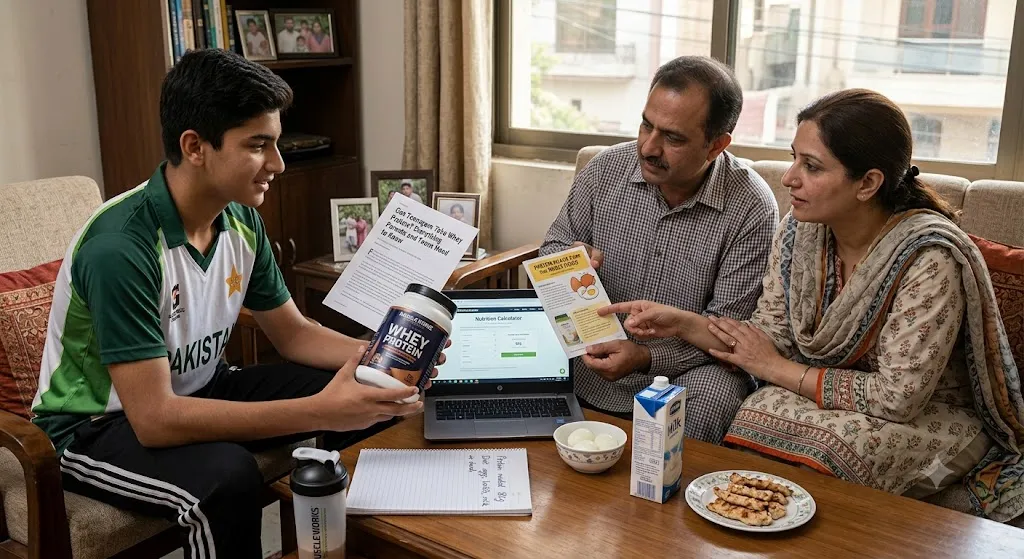
Before spending on a supplement, it is worth knowing how easy it is to hit protein targets through food in a Pakistani household. Eggs are one of the most cost-effective and complete protein sources available. Two eggs provide roughly 12 grams of high-quality protein. A cup of daal provides around 18 grams. A 100-gram serving of chicken breast delivers 31 grams. A glass of full-fat milk adds another 8 grams. A teenager who eats three structured meals including these foods is likely already meeting or approaching their daily protein requirement without any supplementation at all.
Whey protein becomes genuinely useful when food intake is inconsistent, when training demands are high, or when a convenient post-workout protein source is needed and a full meal is not practical at that moment. It is a tool, not a foundation. The foundation should always be real food.
Frequently Asked Questions
Is whey protein safe for a 15-year-old in Pakistan
Yes, whey protein is generally safe for a 15-year-old who is actively training and not meeting their daily protein needs through food alone. The key conditions are that the product is a clean, verified whey protein without stimulants or undisclosed additives, that it is being used to supplement a balanced diet rather than replace meals, and that a parent or doctor is aware of the supplementation. A 15-year-old who eats well and is not training intensively does not need a protein supplement.
At what age can a teenager start taking whey protein
Most nutrition professionals consider 14 to be a reasonable minimum age for whey protein supplementation, provided the teenager is actively training and has a genuine dietary protein gap. Below 14, the body’s protein needs are better met through whole food sources, and the digestive and hormonal systems are still at early stages of development where concentrated supplementation is not necessary or well-studied.
Will whey protein stunt a teenager’s growth
No. There is no scientific evidence that whey protein stunts growth in teenagers. This is a persistent myth likely rooted in confusion between whey protein and anabolic steroids, which are entirely different substances. Whey protein is a dairy-derived food supplement. Adequate protein intake during the teenage years actually supports healthy growth, bone density, and muscle development rather than hindering it.
How much whey protein should a teenager take per day
One serving of 20 to 25 grams per day is sufficient for most teenagers using whey protein to supplement their diet. This is typically one scoop mixed with water or milk, taken after training. There is no benefit to taking multiple servings per day unless dietary protein intake from food is extremely low, which would indicate a broader nutritional issue that supplementation alone cannot fix.
Can a teenage girl take whey protein in Pakistan
Yes. Whey protein is not gender-specific. Teenage girls who are active in sports, athletics, or structured gym training have the same protein requirements relative to their body weight as teenage boys. The same guidelines apply: a clean product, used to supplement an otherwise balanced diet, taken after training rather than as a meal replacement. Girls may need slightly lower total daily protein compared to boys of the same age due to body composition differences, but the supplement itself is equally appropriate.
Is whey protein better than eating eggs and chicken for a teenager
No. Whole foods like eggs and chicken provide protein alongside vitamins, minerals, healthy fats, and fiber that a protein shake cannot replicate. Whey protein is more convenient and faster-absorbing, which makes it useful in specific situations like immediately after training when a full meal is not practical. But as a daily protein strategy, real food should always take priority. Whey protein works best as a top-up, not a replacement for a properly structured diet.





Leave a Reply