
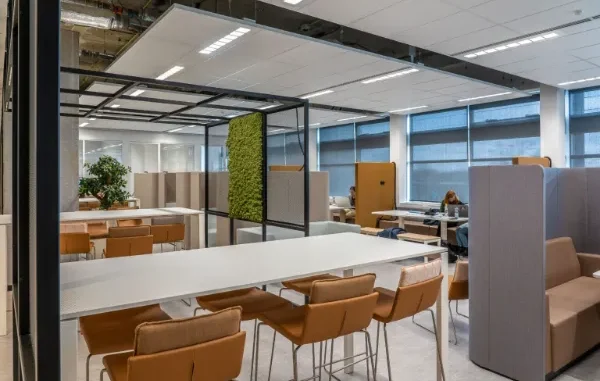
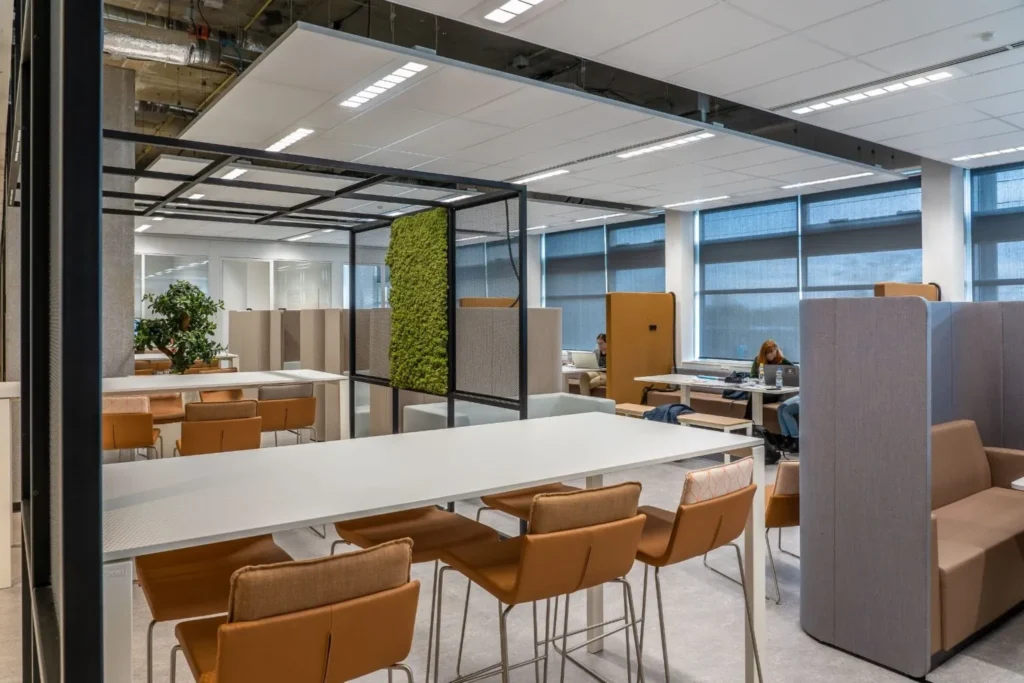
The open-plan layout is a staple of the modern workspace. It tears down literal walls to encourage collaboration, fast-track communication, and maximize natural light. However, it also creates a massive challenge: a continuous wall of sound.
When keyboard clicks, overlapping phone conversations, and coffee machine hums bounce off hard surfaces, concentration shatters. High ambient noise levels directly trigger employee fatigue and lower cognitive performance.
Taming the noise does not mean building drywall partitions and moving backward. Instead, implementing the best office acoustic solutions for open plan spaces lets you retain the collaborative energy of your team while protecting their focus.
The Hidden Cost of Open-Plan Workspace Noise
Hard architectural elements like concrete floors, expansive glass windows, and exposed ceilings look sleek, but they act as acoustic mirrors. Sound waves strike these surfaces and bounce back into the room, creating an ongoing echo chamber.
When a workspace lacks proper absorption, employees naturally speak louder to be heard over the background din. This phenomenon creates an escalating noise spiral. The result? Decreased accuracy, higher stress levels, and a drop in daily productivity.
Strategic Absorption: Targeted Tools for Noise Control
A quiet workspace relies on absorbing sound waves right at the source before they can spread across the entire floor. Mixing different specialized materials creates a balanced environment where sound travels only where it needs to.
1. Acoustic Ceiling Baffles and Suspended Rafts
Sound travels upward naturally. If your office features high ceilings or exposed structural gridwork, vertical acoustic baffles or flat suspended rafts are incredibly efficient options.
- The Benefit: They catch rising sound waves and prevent them from rolling across the top of the room.
- Design Flexibility: Modern ceiling rafts can be integrated cleanly with LED lighting systems to serve as functional design elements.
2. High-Performance Acoustic Wall Panels
Large, bare drywall expanses are primary drivers of lateral flutter echoes. Installing premium wall treatments directly short-circuits this issue.
- Performance: Utilizing the best acoustic office panels for noise reduction directly softens your perimeter surfaces.
- Materials: Recycled PET felt and fabric-wrapped core structures offer exceptional absorption ratings while matching your brand colors.
3. Desktop Acoustic Dividers and Screens
To stop noise from traveling between adjacent workstations, you must place absorption directly between users.
- Function: Acoustic desk screens provide visual privacy and create a localized sound buffer for phone calls.
- Setup: Lightweight and clamp-on options allow you to reconfigure desk layouts quickly as teams resize.
A Step-by-Step Plan to Acoustic Optimization
Fixing a noisy office layout requires a systematic approach rather than throwing panels randomly at a wall. Following a structured zone strategy yields the most effective results.
Step 1: Track the Primary Noise Sources
Identify where your high-volume sounds originate. Map out your floor layout into distinct zones based on daily usage:
- High-Noise Zones: Cafeterias, open reception desks, and collaborative breakout spaces.
- Transitional Zones: Shared corridors and printer stations.
- Focus Zones: Dedicated banks of workstations and permanent desks.
Step 2: Separate Focus Areas from Collaboration Spaces
Avoid placing quiet focus desks directly adjacent to high-traffic breakout spaces. Use soft barriers, such as freestanding acoustic panels or storage units lined with sound-absorbing felt, to create distinct visual and physical borders between active and quiet areas.
Step 3: Implement the 30% Surface Rule
To noticeably drop the echo in a standard commercial room, aim to cover at least 30% of the total combined surface area (walls and ceiling) with high-quality acoustic materials. Focus first on the reflection points directly opposite major noise sources.
Balancing Contemporary Design with Acoustic Function
Many business owners worry that adding sound treatment will ruin a clean, minimalist interior aesthetic. Fortunately, commercial acoustic design has evolved far beyond industrial gray foam.
| Acoustic Solution | Practical Function | Aesthetic Impact |
| Recycled PET Wall Panels | Eliminates mid-frequency chatter | Offers clean, geometric patterns and textured feature walls |
| Suspended Ceiling Rafts | Captures vertical sound bounce | Frames specific desk clusters and accents high ceilings |
| Freestanding Felt Dividers | Blocks cross-room noise travel | Creates flexible, modular zones without permanent construction |
Choosing eco-friendly materials like recycled PET felt also directly supports corporate sustainability goals, helping projects qualify for green building credentials like LEED or BREEAM.
Designing a Successful Hybrid Workspace Layout
The widespread shift to hybrid working has completely changed how physical offices are used. Today, employees head into the office primarily to collaborate, meaning meeting rooms and video conferencing areas are consistently packed.
- Taming Glass Meeting Rooms: Glass partitions look excellent but bounce sound intensely. Adding slim fabric-wrapped acoustic panels to the solid interior walls prevents echo during calls.
- Soundproofing Zoom Rooms: Small phone booths and huddle spaces require heavy internal absorption to ensure sensitive client conversations remain entirely private.
Conclusion
A successful open-plan office balances the energy of open collaboration with the quiet clarity required for deep focus. Left untreated, high ambient noise numbers erode worker morale, chip away at daily concentration, and lower overall output.
Investing in tailored ceiling rafts, high-performance wall panels, and functional desk screens transforms a chaotic room into a comfortable, productive workspace. By treating your surfaces and controlling the path of sound, you build an environment where your team can collaborate effortlessly without sacrificing their focus.



Leave a Reply