

India’s banking story in 2026 is not just about bigger balance sheets or faster apps. It is about how banks are changing the way they lend, collect deposits, manage risk, and build investor confidence. For a new investor, this matters because banking stocks often set the tone for the broader market.
That is exactly why tracking the sector is useful before your first stock purchase. Banks influence credit growth, spending, business expansion, and market sentiment. If you understand what is changing in this space, you can read the market with more confidence.
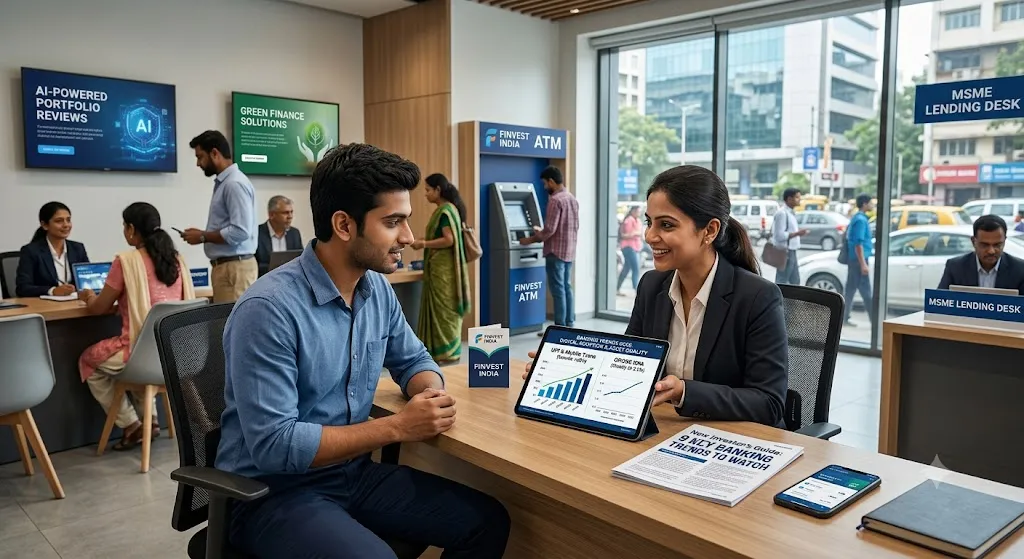
Why Banking Trends Deserve Your Attention
The banking sector sits close to the heart of the Indian economy. When credit grows in a healthy way, businesses expand, and consumers spend more. When banks face pressure, the impact can spread quickly across sectors.
For new investors, banking trends help in three simple ways:
- They show where loan demand is rising.
- They reveal whether the risk in the system is increasing or easing.
- They offer clues about how financial markets may behave next.
The Biggest Banking Trends to Watch in 2026
Banks benefit when households save, companies borrow, and the economy expands. India continues to see domestic demand, formalisation, and digital adoption. These forces can support long-term credit growth.
1. Digital Banking Is Becoming the Default
Mobile apps, UPI, instant loans, video KYC, and paperless onboarding have changed how banks acquire and serve customers. In 2026, digital banking is not a side channel. It is the main battlefield.
This trend matters because digital banks can reduce service costs and cross-sell better. Yet, technology spending can pressure margins.
Watch for:
- App reliability and customer complaints.
- Growth in digital savings accounts.
- Cost-to-income ratio.
- Cybersecurity disclosures and fraud controls.
For young investors, online Demat account opening has also increased participation in banking stocks, ETFs, and index products.
2. Deposits Are Becoming More Competitive
A bank cannot lend without stable deposits. Savers now compare fixed deposit rates, sweep accounts, mutual funds, and treasury products before parking money.
This creates pressure on low-cost deposits, especially current and savings accounts. When banks pay more to attract deposits, their net interest margin can shrink.
Investor takeaway: Do not look at loan growth alone. A bank growing loans faster than deposits may face funding pressure later.
3. Credit Growth Is More Data-Driven
Credit decisions are sharper because banks now use account aggregator data, GST records, cash flow analysis, and digital public infrastructure. This can widen responsible lending.
Still, faster lending is not always better. The best banks grow without relaxing underwriting standards.
| Trend | What it means | What to track |
| MSME digital lending | Faster loan approval | Slippages by segment |
| Retail credit checks | Better risk scoring | Delinquencies |
| Corporate capex loans | Larger ticket growth | Exposure concentration |
4. Asset Quality Remains a Core Test
Bad loans can quietly destroy a bank’s value. In 2026, many Indian banks have cleaner balance sheets than during earlier stress cycles, but investors should not become careless.
The right question is simple: are profits coming from healthy lending, or from lower provisions and recoveries?
Track these numbers every quarter:
- Gross NPA and net NPA ratios.
- Provision coverage ratio.
- Fresh slippages.
- Restructured loan book.
- Credit cost.
A bank with steady asset quality deserves a higher valuation than one showing sudden, uneven improvement.
5. Interest Rate Changes Will Move Sentiment
Banks are sensitive to interest rates. When rates rise, loan yields may improve, but deposit costs usually catch up. When rates fall, treasury gains may help, but lending yields can soften.
This is why Bank Nifty often moves sharply around RBI policy days. Long-term investors should ask a calmer question: can the bank protect margins across cycles?
6. AI Is Entering Everyday Banking
Artificial intelligence is now used in fraud alerts, service, loan screening, collections, and personalised offers. Done well, it can improve efficiency and reduce losses.
This is why Bank Nifty often moves sharply around RBI policy days. Long-term investors should ask a calmer question: can the bank protect margins across cycles?
7. Public Sector Banks Are No Longer Ignored
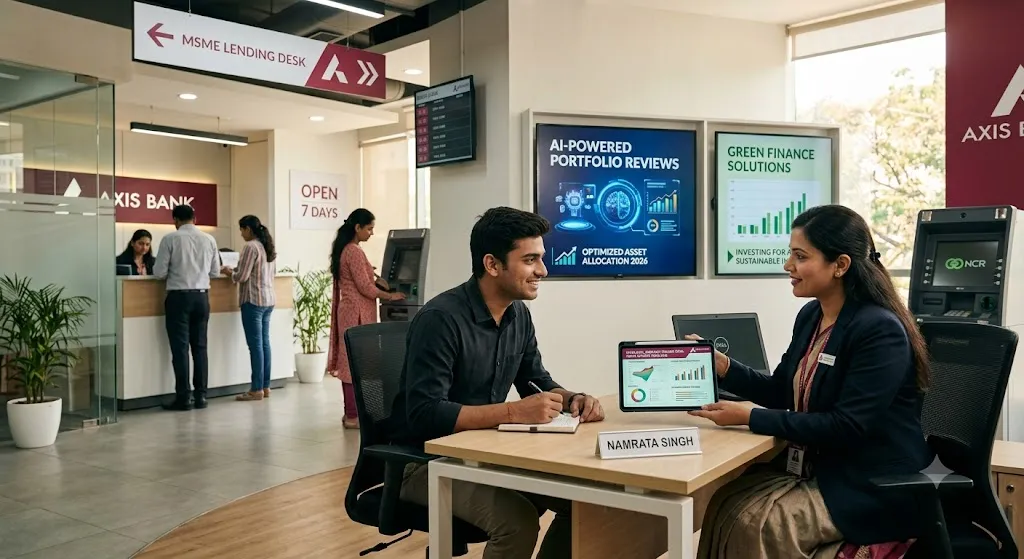
Public sector banks have surprised many investors with better profitability, lower bad loans, and improved capital strength. They also have strong branch networks and access to large deposit bases.
But selectivity matters. Some public sector banks may still lag private peers in technology, service quality, and return ratios.
Compare them on return on assets, return on equity, capital adequacy, and consistency of earnings.
8. Fee Income Is Becoming More Important
Banks do not earn only from lending. They also earn from cards, wealth products, insurance distribution, trade finance, payments, and transaction banking.
A bank with diversified fee income can handle margin pressure better. However, investors should check whether fee growth is recurring or linked to one-off gains.
9. Green Finance Is Moving From Talk to Business
Renewable energy, electric vehicles, sustainable infrastructure, and climate-linked lending are becoming real opportunities. Banks that assess environmental risks well may avoid loan shocks.
This is still emerging, so avoid assuming every green loan is safe. Project quality and borrower strength matter more than the label.
Final Thoughts
Banking in 2026 is cleaner, faster, and more technology-led than it was a decade ago. The opportunity is real, but so is the need for discipline.
For new investors, the smartest approach is not to guess the next hot bank stock. It means understanding deposits, asset quality, margins, technology, and valuation. Banking then becomes less intimidating and more rewarding.
Related posts:
 What Is a Road Trading Strategy? A Trend Method for FX Beginners
 Refinancing Your Home Loan After RBI Rate Cuts: A Smart Way to Save
 Building a Scalable Business Through Accelerator Mentorship and Capital
 DHA Gandhara Islamabad Price Prediction 2026–2030: What Experts Expect
 How Small Changes Can Save You Money Over the Life of a Loan
Leave a Reply