
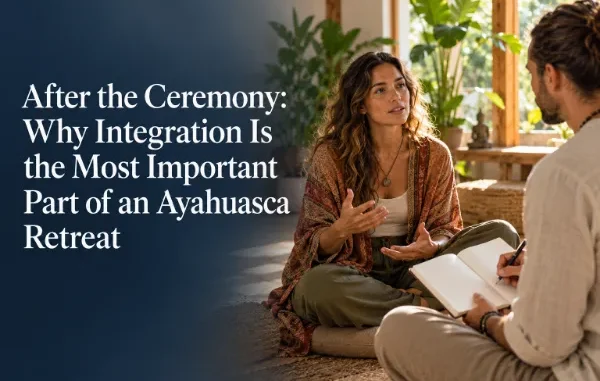
Many people spend months preparing for their first ayahuasca ceremony. They research retreats, adjust their diets, and set intentions. Far fewer think carefully about what happens after they return home. Yet for many participants, the weeks and months that follow are where the real work begins.
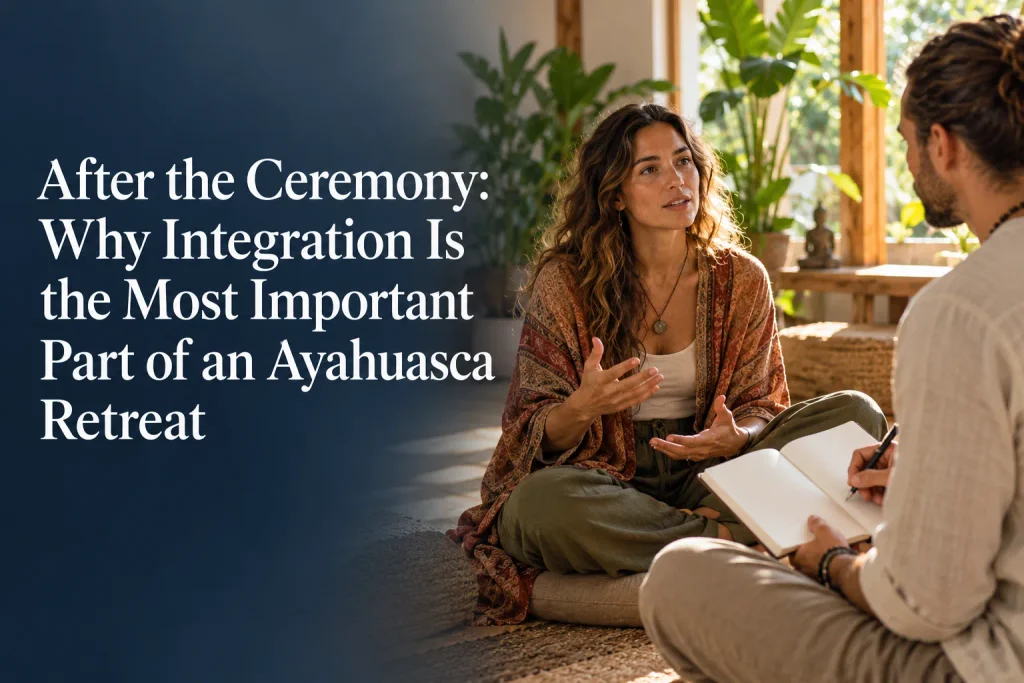
Integration is the process of making sense of what you experienced and bringing it into everyday life. It is often described as the most important part of an ayahuasca retreat, because insights that are not integrated can fade quickly or feel confusing and unsettling.
What Is Integration?
Integration means taking what surfaced during ceremony, such as emotions, memories, realizations, or a new perspective, and finding ways to understand and apply it. That might involve changing habits, repairing relationships, setting boundaries, or simply allowing yourself to process difficult feelings with support.
It is not a single conversation or a quick debrief. It is an ongoing process that can unfold over weeks or months.
Why Integration Matters
Insights Can Fade
Ceremonies can bring moments of clarity that feel profound in the moment. Without reflection and action, those insights may become distant memories rather than meaningful change.
Experiences Can Be Confusing
Not every ceremony is peaceful or clear. Some bring up painful memories, fear, or symbolic experiences that are difficult to interpret. Integration offers space to explore these experiences without rushing to conclusions.
Returning Home Can Be Jarring
After days in a supportive, intentional setting, returning to work, family responsibilities, and daily stress can feel abrupt. Some people feel disconnected or misunderstood by friends and family. Integration helps bridge that transition.
Emotional Vulnerability Is Common
In the weeks after a retreat, emotions may feel closer to the surface. Having support during this period can help people navigate shifts in mood or perspective safely.
At MahaDevi Ayahuasca, participants receive 90 days of post-retreat integration support, including one-on-one sessions and access to a community, as outlined in its preparation and integration guidance.
What Integration Can Look Like
Reflection
Journaling about your ceremonies soon after they happen can help preserve details and themes. Over time, rereading those notes may reveal patterns or meaning that were not obvious at first.
Talking It Through
Speaking with an integration coach, therapist, or experienced facilitator can help you explore what came up. Choose someone who is knowledgeable about plant medicine experiences and nonjudgmental.
Community
Connecting with others who have had similar experiences can reduce feelings of isolation. Integration circles or online communities offer a place to share and learn.
Practical Changes
Many people leave ceremony with a clearer sense of what they want to change. Integration involves turning that clarity into small, specific actions, such as adjusting routines, improving sleep, or having an important conversation.
Body-Based Practices
Yoga, breathwork, meditation, time in nature, and gentle movement can help process emotions and maintain a sense of grounding.
Common Integration Challenges
- Expecting instant transformation: change usually happens gradually
- Making major decisions too quickly: it is often wise to wait before quitting a job or ending a relationship
- Feeling pressure to explain the experience: you do not need to share everything with everyone
- Difficult emotions: sadness, grief, or anxiety can surface and deserve care
- Wanting to return to ceremony right away: taking time to integrate before another retreat is usually recommended
Integration Starts Before the Retreat
Integration is easier when it is planned in advance. Before you travel, consider who you will talk to when you return, what your schedule will look like in the first week home, and which daily practices you want to continue. Clarifying your intentions ahead of time also gives you something to return to afterward. Many people find it helpful to write their intentions down before the retreat and revisit them during integration to see what has shifted.
When to Seek Professional Support
Most people find integration manageable with reflection and support. But if you experience persistent anxiety, depression, trouble sleeping, intrusive thoughts, or a sense of disconnection from reality, reach out to a licensed mental health professional. These experiences deserve attention and care.
Tips for the First Few Weeks
- Keep your schedule light if possible
- Continue healthy eating and limit alcohol
- Spend time outdoors
- Rest when you need it
- Return to your journal regularly
- Reach out to your integration support if questions arise
The Journey Continues
A retreat may last a week, but its impact can last much longer when it is integrated with intention and care. Integration is where insight becomes action, and where an experience becomes part of your life rather than a memory you leave behind.
Note: This article is for general educational purposes and is not medical advice. Ayahuasca can interact dangerously with certain medications and is not appropriate for everyone. Anyone considering a ceremony should talk with a qualified medical professional and complete thorough screening first. Ayahuasca’s legal status varies by country.
Related posts:
 Regaining Control on the Road to Recovery: What You Need to Know
 🦷 Emax vs Zirconia: Which Dental Veneer Is Better for Your Smile?
 Medical Malpractice in Florida: What Every Healthcare Provider Should Understand
 Why Migraine and Motion Sickness Often Travel Together
 How PRP Therapy Is Being Used for TMJ and Jaw Pain in Florida Clinics
Leave a Reply