
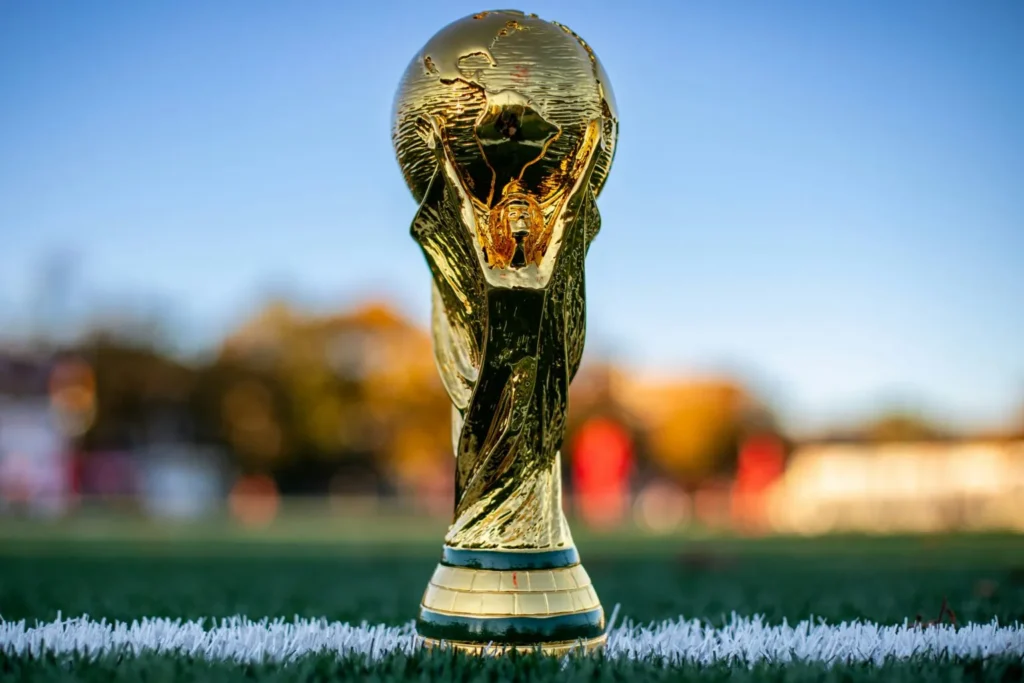
The 2026 FIFA World Cup is filling stadiums across American cities and breaking viewership records weekly. Whether any of that translates into lasting cultural change for soccer in the United States is a question the sport has been failing to answer for three decades, and the honest answer right now is more complicated than either side wants to admit.
The 2026 FIFA World Cup is being played across 16 cities in the United States, Canada and Mexico right now. Matches are being played in MetLife Stadium, AT&T Stadium, Levi’s Stadium. The crowds are enormous, the television numbers are breaking records and the conversation in American sports media has shifted in a way that feels different from previous tournaments. The question is whether any of that lasts once the last match is played and the circus moves on.
What the Numbers Actually Show
The viewership data heading into 2026 is the strongest argument that something structural has changed rather than just cyclically spiked. MLS averaged 7.9 million live match viewers per week across streaming and linear platforms through the first three months of the 2026 season, a 62% year-over-year increase. Over the longer arc, MLS total viewership grew from 30.6 million in 2018 to 48.2 million in 2024, a 57% increase over six years. That’s not a spike. That’s a trend line.
International soccer has also grown its US audience meaningfully. The Premier League reached 36.2 million total US viewers, growing 23.5% in the past year. The Champions League followed with a 22.1% jump to 21.8 million viewers. The American soccer fan of 2026 isn’t just following the World Cup every four years anymore. They’re watching EPL weekends on NBC, following Champions League nights and checking in on MLS through Apple TV. The habit formation is genuinely different from what existed in 2014.
The betting data tells a similar story. Soccer has moved from a niche wagering category in the US to one of the primary drivers of handle at licensed sportsbooks, partly because of the World Cup effect, partly because a generation of bettors who grew up watching Premier League games on cable also grew up wanting to bet on them. Platforms like betway that carry comprehensive soccer markets reflect how significantly the American sports betting appetite for soccer has grown alongside its viewership growth. For the 2026 World Cup specifically, betway and comparable platforms have reported soccer as one of the top handle drivers across the tournament window, a position the sport wouldn’t have occupied at any previous major tournament.
The Structural Case for This Time Being Different
The argument that 2026 represents genuine inflection rather than another spike rests on a few things that weren’t true in 1994 or 2014.
Demographics first. MLS fans have an average age of 39.6, the youngest among major North American professional sports leagues. The audience being built is younger than the NFL’s, younger than MLB’s, younger than the NBA’s. That matters enormously for long-term trajectory. Young fans become middle-aged fans. They pass the sport to their kids. They don’t migrate back to baseball.
The immigrant and Hispanic population dimension is also more significant than it’s often given credit for in mainstream coverage. Soccer isn’t growing into a gap in America. No, it’s growing from a foundation that already existed in Hispanic and immigrant communities, in youth academies, in communities where the sport was never peripheral in the first place. The World Cup live matches bring visibility to something that was already present. That’s different from trying to create interest from scratch.
The Counter-Argument Is Serious
Honest coverage of this question requires taking the skeptical case seriously, because history supports it more than the optimists would like to admit.
World Cups don’t reliably produce lasting domestic league boosts in host nations. The 2010 tournament in South Africa produced no measurable effect on domestic league attendance. Italy 1990 actually saw a post-tournament attendance decrease. The mechanism by which a major international tournament converts into sustained domestic engagement is not automatic, and there’s a reasonable argument that what Americans love about the World Cup is the World Cup specifically (the spectacle, the nationalism, the every-four-years event feel) not soccer as a daily habit.
MLS also has a quality problem that no amount of Lionel Messi signing events can fully solve. The gap between what fans see at a World Cup and what they get on a Wednesday night in a mid-table MLS fixture is significant. Some fans who experience world-class soccer for the first time in the summer of 2026 will find MLS underwhelming by comparison. Attraction without retention is a wheel that spins without moving.
So Is It Different This Time?
Probably yes, at least partly. The demographic foundation, the viewership trend line, the infrastructure investment and the betway sports betting data all point toward a sport that has genuinely embedded itself in American culture in ways that previous moments haven’t delivered. The World Cup isn’t creating that. No, it’s accelerating something already in motion.
Whether MLS specifically capitalizes on that acceleration is a different question, and a harder one. The league has the momentum and the moment. What it does with both over the next three to five years will determine whether 2026 is remembered as the year soccer arrived in America for real, or as another false dawn that looked different and wasn’t.
Related posts:
 The Legal Requirements for Starting an Online Casino
 How to Make Money: Secret Tips on “Pronostic Quinté,” the French Horse Racing Betting Pool
 Why You Might Have A Problem Cashing Out Your Casino Bonus
 Pave the Way for Storms to Come: The Complete Sneak Peek of the 2024-25 NBA Season
 Spy777 Official Site for Slot777 with Full Loss Guarantee
Leave a Reply