

Introduction: The Secret to Roomy Urban Living Areas
Compact city apartments get blamed for feeling cramped, but the square footage is rarely the primary culprit. The mistakes that make small living rooms feel genuinely uncomfortable are almost always furniture choices and placement decisions, things that can be changed without structural work, significant expense, or accepting that a small room is simply a small room.
The most consistent error is scale. A sofa purchased because it looked comfortable in a large showroom becomes a space problem the moment it arrives in a room a third of the size. An entertainment unit that holds every device and disc ever owned occupies a wall that the room cannot spare. A coffee table that seats eight comfortably means that the four people in the room spend the evening navigating around it. Each of these decisions, made individually and plausibly, adds up to a room that pushes back against everyone in it, one that takes effort to move through, to sit comfortably in, and to feel at ease within. The fixes are not complicated.
Scaling Your Sofa Set for Tight Floor Plans
A sofa that extends across more than two-thirds of the wall it rests against has crossed a threshold where it stops anchoring the room and starts consuming it. In a room four meters wide, that means a sofa no longer than two and a half meters, which, in practice, means a two or two-and-a-half-seater rather than the three-seater that most people instinctively reach for.
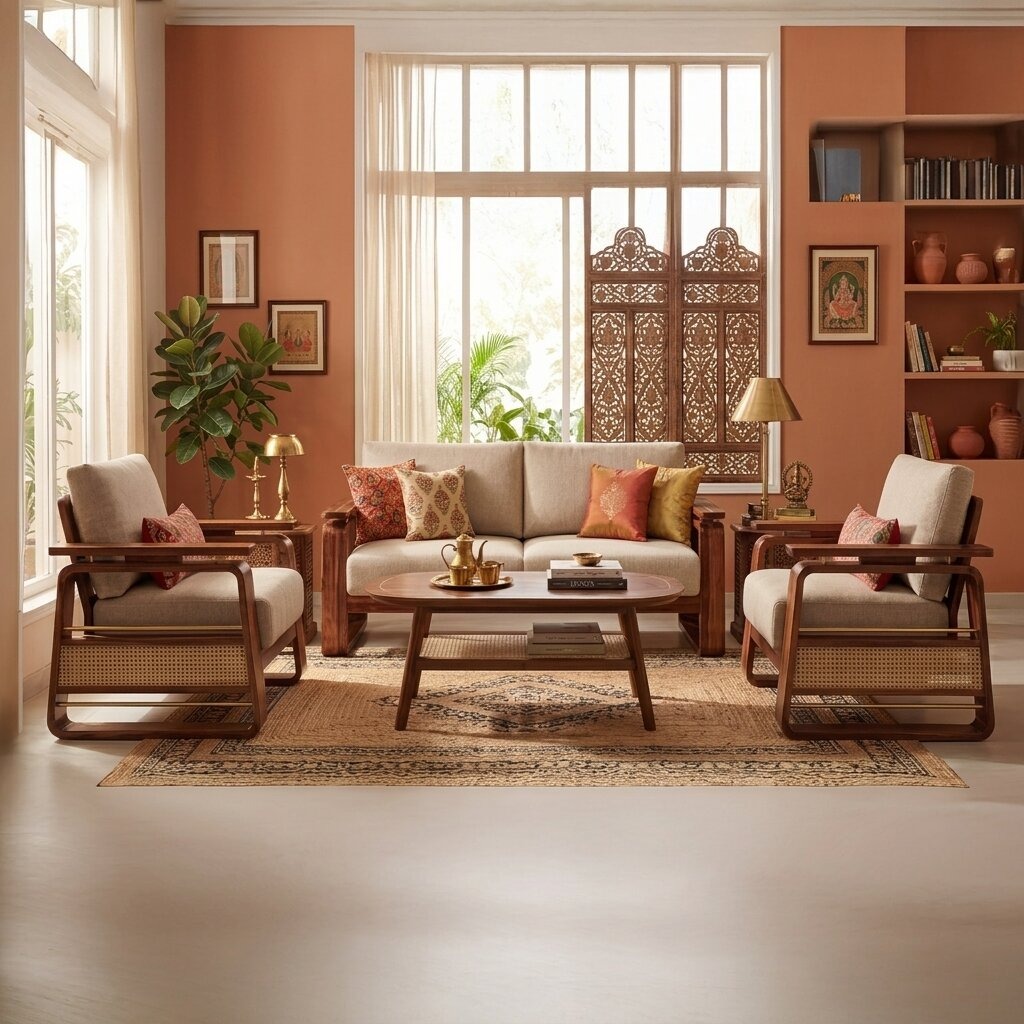
Sleek, low-profile luxury sofa set online options, those with legs rather than a solid base, with arm heights that stay below the back cushion line, and with seat depths of seventy centimeters or less, sit more lightly in a small room than deep, tall-backed alternatives. The visual weight of a sofa is determined as much by its height and base treatment as by its length; a leggy, low-armed sofa in a neutral fabric can be the same length as a blocky upholstered piece while reading as considerably smaller in the room.
Neutral tones, warm whites, soft greiges, mid-toned linens, do specific perceptual work in small rooms. They recede from the eye rather than advancing toward it, making the room feel less occupied by the furniture that fills it.
Restoring Foot Traffic with a Clever Coffee Table
The wooden coffee table has a fixed and important job in a living room layout: it needs to provide surface area for drinks, books, and remote controls without interrupting the movement paths that the room requires. In a small room with a two-seater sofa and a pair of accent chairs, those movement paths are narrow. A table that extends too close to the sofa or too close to the chairs blocks them entirely.
The clearance standard that living room designers consistently recommend, forty-five centimeters between table edge and sofa face, is a minimum, not a target. In a very compact room, it may be the only measurement that matters when selecting a table. Working backward from that clearance figure, rather than forward from a desired table size, prevents the common outcome of a coffee table that technically fits the room but makes it unusable.
Round and oval tables eliminate the specific problem of right-angle corners projecting into pathways. In a room where the seating arrangement includes multiple pieces at different angles, a sofa facing a chair, both oriented toward a television, a round table resolves the corner problem at every orientation simultaneously rather than solving it from one direction only.
Glass tops and tables with open legs maintain visual floor space in a way that solid-base tables cannot; the eye reads the floor beneath them, making the room feel larger than a table with a closed base of the same dimensions would.
Modern Layout Secrets to Maximize Tight Square Footage
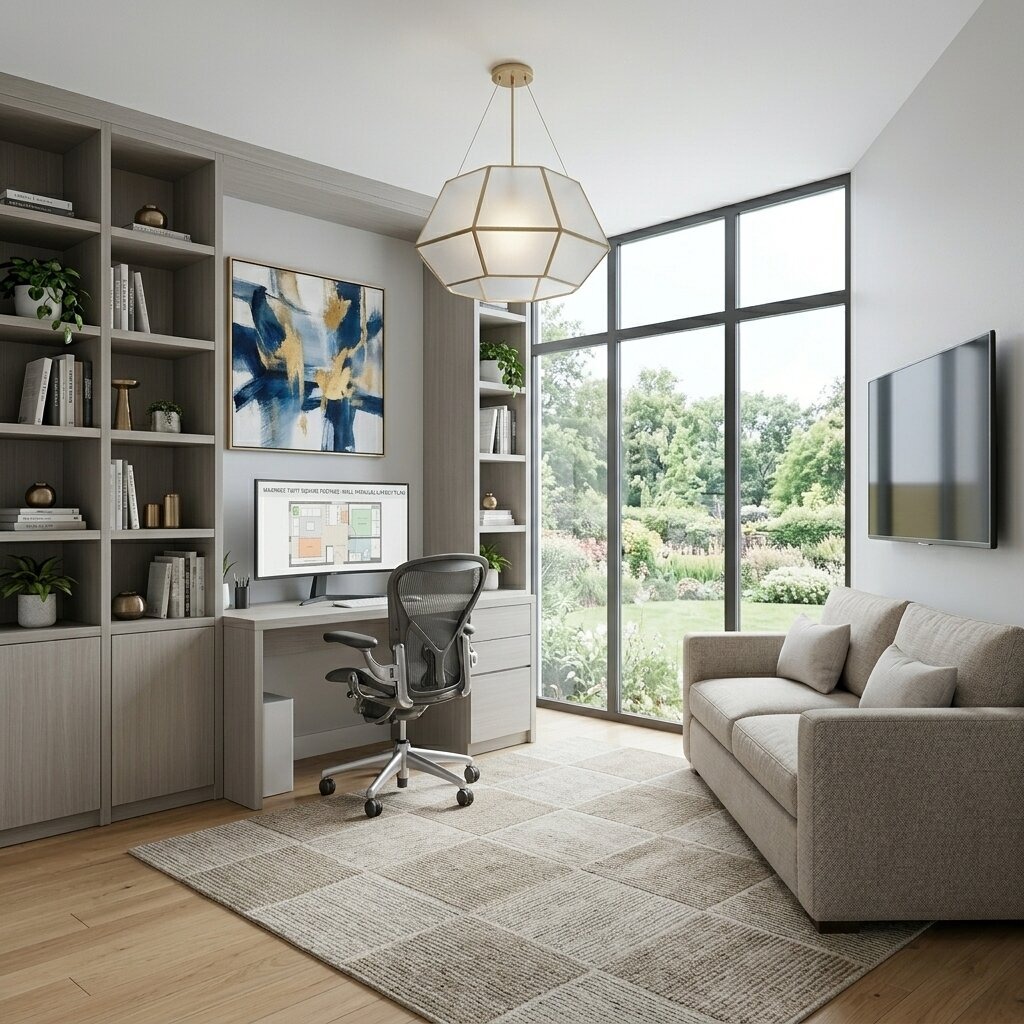
The wall-parallel placement principle, major furniture pieces running parallel to the walls nearest them rather than at angles, creates the clean lines that prevent a small room from feeling confused. Angled furniture in a large room adds dynamism; in a small one, it primarily adds the impression of disorder and reduces the efficiency with which the floor area is used.
Mixing scales deliberately, one visual statement piece against a background of quieter, simpler items, achieves depth without density. A single piece of wall art in a bold scale, or a pendant light that draws the eye upward, provides the visual interest that a room needs to feel considered without requiring every surface and corner to carry design weight.
Central floor zones deserve protection. The open area between a sofa and a facing television or wall should remain clear of decorative objects, plant stands, and additional seating that creates an obstacle course through the heart of the room. That clearance is not empty space wasted, it is the room breathing.
Smart Television and Furniture Math for Comfort
Television viewing distance recommendations from display manufacturers are typically derived from the relationship between screen diagonal and optimal image resolution perception. For a standard forty-five to fifty-five-inch screen, the most common range for compact apartments, comfortable viewing distance sits between one and a half and two and a half meters from the seated position. Placing the sofa closer than this causes perceptual strain; placing it beyond this range loses image quality.
Wall-mounting the television frees the floor area that a media unit would occupy, often forty to sixty centimeters of depth along the wall, and eliminates the visual complexity of a large freestanding unit. A wall-mounted screen on a bare or simply treated wall reads as considerably lighter than the same screen on a substantial piece of furniture, and it allows the rest of the room to organize around a single clean focal point rather than a large horizontal mass.
Side chairs angled toward the television rather than perpendicular to it serve both social and viewing purposes simultaneously, their occupants can participate in conversation and turn toward the screen without repositioning entirely.
Conclusion: Achieving Perfect Living Room Flow at Home
A small living room that works well is not one that has been stripped to minimalism or furnished with only the pieces that fit most easily. It is one where the choices that were made, the sofa scale, the table shape, the placement of each piece relative to movement paths and sightlines, were made with the actual room in mind rather than an imagined larger version of it.
Pairing a correctly scaled sofa with a round, leggy coffee table covers the two most common small-room errors in a single decision. Everything that follows, chair placement, television height, the clearance left at the center of the room, can be calibrated around those two anchors with relative ease.
The reward is a room that supports daily relaxation without the low-level friction of navigating poorly placed furniture, and one that guests experience as comfortable rather than apologetic about its size.





Leave a Reply