
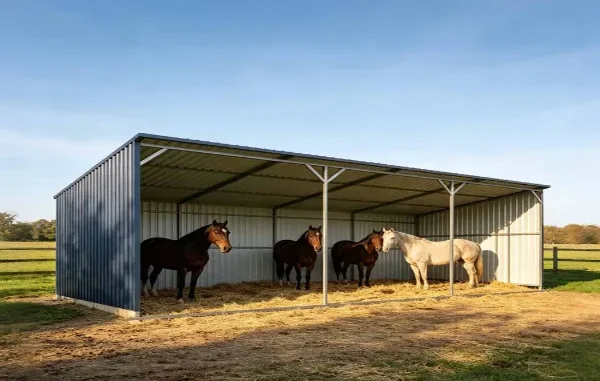
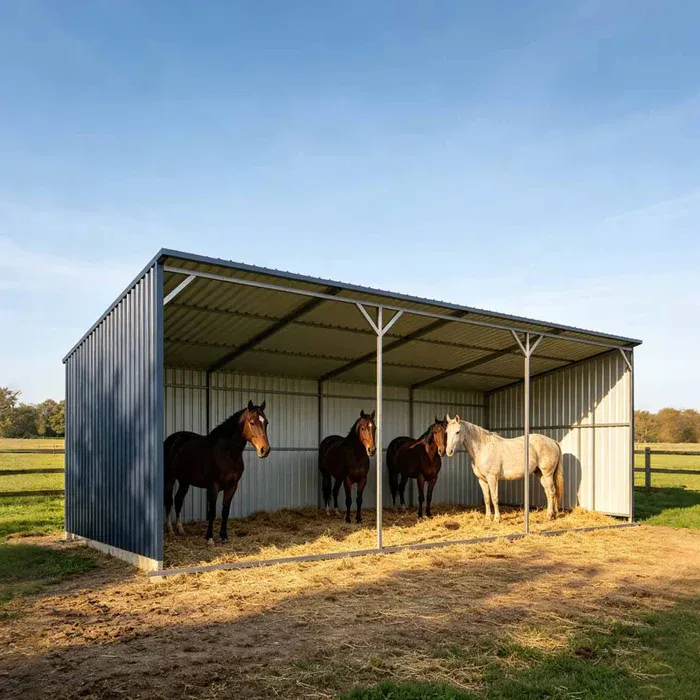
In the United States, equine facilities, ranches, and animal care operations require reliable infrastructure to support animal welfare and daily management tasks. Weather exposure, temperature variation, and environmental conditions can affect the health and behavior of horses. A Horse Run-In Shed provides a simple and effective shelter solution that allows animals to seek protection while maintaining freedom of movement. This type of structure is widely used in horse farms, open pasture systems, and animal facilities.
Equine Industry Context in the United States
The United States has a large equine population that supports recreation, agriculture, and service industries. Many horses are kept in open pasture systems where constant access to shelter is necessary. Unlike enclosed barns, run-in sheds allow animals to move freely between open areas and covered spaces. This flexibility is important for maintaining natural behavior patterns and reducing stress.
Facilities such as ranches, breeding farms, and zoological parks often require scalable shelter solutions that can be installed without complex construction.
Technical Design and Use Cases
A run-in shed is an open front structure designed to provide protection from wind, rain, and sunlight. The skid mounted base allows the structure to be relocated when necessary.
· Providing shelter for horses in open pasture
· Protecting livestock from weather conditions
· Supporting temporary or seasonal grazing setups
· Housing animals in flexible management systems
· Use in zoos or animal care facilities for large animals
The open design ensures that animals can enter and exit freely without restriction.
Efficiency, Safety, and Animal Welfare
Efficient shelter systems reduce the need for constant human intervention. Horses can seek protection independently, which supports consistent care even in large pasture environments.
· Reduced labor for animal management
· Improved protection against weather exposure
· Lower risk of heat stress or cold stress
· Support for natural movement and behavior
Providing adequate shelter contributes to overall herd health and reduces the likelihood of environmental stress related conditions.
Technical Foundations and Structural Considerations
Selecting a run-in shed requires evaluation of environmental conditions and herd size. The structure must provide sufficient coverage and stability.
· Frame strength and material durability
· Roof design for water runoff
· Ventilation through open front design
· Ground anchoring or skid stability
· Size relative to number of animals
Proper sizing ensures that all animals can access shelter without overcrowding.
Factors Affecting Performance and Longevity
Performance depends on placement, ground conditions, and exposure to weather. Structures placed on uneven or soft ground may shift over time. Wind direction should be considered when positioning the open side of the shelter.
Routine inspection of structural components helps maintain long term stability and safety.
Safety Considerations and Best Practices
· Position the shelter away from flood prone areas
· Ensure stable ground support for the structure
· Remove sharp edges or exposed fasteners
· Provide sufficient space to prevent crowding
· Monitor animal behavior around the shelter
· Inspect the structure regularly for wear or damage
These practices help maintain a safe environment for both animals and handlers.
Related Equipment and Infrastructure
Run-in sheds are often part of a broader livestock management system.
· Fencing systems for controlled grazing areas
· Water supply equipment and troughs
· Feeding stations and hay storage
· Ground management tools for drainage and leveling
These elements work together to support efficient animal care.
Advantages and Limitations
Advantages
· Flexible placement in pasture environments
· Supports natural animal movement
· Reduces need for enclosed housing
· Simple installation compared to permanent structures
Limitations
· Provides less protection than enclosed barns
· Requires proper positioning for weather conditions
· May need relocation depending on ground wear
Real World Application Example
A horse ranch in the southern United States manages a group of horses in open grazing fields. The facility installed multiple run-in sheds to provide distributed shelter across the pasture. Horses were able to access shade during hot conditions and protection during storms. The flexible placement of the sheds allowed the ranch to adjust grazing patterns without building permanent structures. This approach improved animal welfare and reduced labor requirements for daily management.
Conclusion and Future Industry Trends
TMG Industrial Horse run-in sheds are an important component of modern equine management systems. They provide accessible shelter that supports animal welfare while maintaining operational flexibility.
Future trends in livestock infrastructure may include improved material durability, modular designs, and integration with pasture management strategies. As equine operations continue to evolve, adaptable shelter solutions will remain important for supporting efficient and responsible animal care.
Related posts:
 Essential Metrics to Evaluate Before Investing in Oil
 How to Maximize Employee Motivation with Branded Reward Cards
 Why Your Business Needs a Strong Mission Statement
 How Verified Consultants Can Help You Close Office Deals Faster in Bangalore
 How Maya Thompson Turned $100 Into a Million-Dollar Empire
Leave a Reply