

The Straits Times Index (STI) has long been synonymous with banking — DBS, OCBC, and UOB alone make up over 40% of its weighting. But in 2026, the investment landscape on the Singapore Exchange (SGX) is broader than it’s been in years. Government liquidity programmes, global supply chain shifts, and Southeast Asia’s digital infrastructure buildout are creating opportunities in corners of the market that many investors haven’t traditionally paid attention to. For anyone building a diversified portfolio of Singapore stocks, looking beyond the Big Three is no longer optional — it’s where the most interesting growth stories are emerging.
1. Banking: Still the Foundation
Why It Still Matters
It would be a mistake to overlook banking just because it’s familiar. DBS, OCBC, and UOB are delivering record or near-record earnings in 2026, driven by resilient net interest margins and expanding wealth management divisions. Dividend yields remain above 5% for DBS and hover around 4.5–5% for OCBC and UOB. For income-focused investors, these three remain the anchor of any SGX portfolio.
What’s New in 2026
The shift worth watching is the Big Three’s push into AI-driven wealth management and digital banking across ASEAN. UOB’s regional integration following its Citigroup consumer banking acquisition is starting to show up in cross-border revenue numbers, while DBS’s digital banking platform has become one of the most profitable in the region.
2. S-REITs: The Recovery Trade
The Stabilisation Story
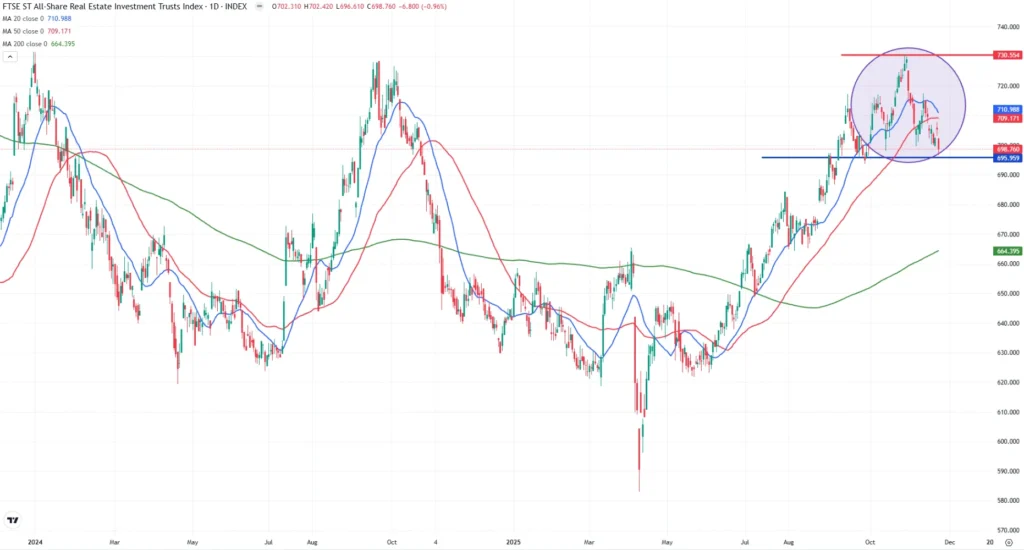
After two years of rate-driven pressure, Singapore’s REIT sector has turned a corner. Industrial occupancy rates sit above 95%, retail footfall has normalised, and borrowing costs have stabilised. CapitaLand Integrated Commercial Trust (CICT) and Mapletree Logistics Trust are leading the rebound, with yields in the 5.5–6.5% range and zero dividend tax for individual investors.
The Data Centre Angle
Keppel DC REIT and Digital Core REIT are attracting attention as hyperscaler demand for data centre capacity grows across Southeast Asia. This sub-sector offers a growth overlay on top of the traditional income thesis that most S-REIT investors are looking for.
3. Semiconductor and Precision Engineering: The Growth Segment
Singapore’s mid-cap segment is disproportionately exposed to the global semiconductor supply chain diversification trend. Venture Corporation, AEM Holdings, and UMS Holdings are the most prominent names, each benefiting from chip testing demand, precision component orders, and contract manufacturing as global foundries reduce concentration risk in East Asia. Trading volumes in this segment have picked up meaningfully since the Equity Development Programme (EQDP) began improving market-making and research coverage.
4. Offshore and Marine: The Quiet Comeback
Order Books at Multi-Year Highs
Seatrium, the entity formed from the Sembcorp Marine and Keppel O&M merger, has emerged as the mid-cap story of 2026. Its order book is at multi-year highs, driven by floating production storage and offloading (FPSO) contracts, renewable energy installations, and decommissioning projects. Yangzijiang Shipbuilding, while technically a larger-cap name, is also benefiting from a global shipbuilding super-cycle with a strong order pipeline stretching into 2028.
5. Sustainable Energy and Green Infrastructure: The Emerging Play
Why Singapore Is Positioned
The SGX has become a regional hub for green bonds and sustainable infrastructure listings. Singapore’s Green Plan 2030, combined with its role as ASEAN’s financial centre, is attracting ESG-focused capital into locally listed companies with exposure to solar energy, carbon trading, and sustainable building materials. Sembcorp Industries has repositioned itself as a renewable energy play, with its portfolio of solar and wind assets growing significantly across India and Southeast Asia.
Still Early, But Worth Watching
This sector is earlier-stage compared to banking or REITs — the listings are fewer and the track records shorter. But for investors building a 5–10 year portfolio, the secular tailwind behind decarbonisation and green infrastructure spending makes it a sector worth tracking on the SGX.
Sector Snapshot
| Sector | Key Names | 2026 Theme | Investor Profile |
|---|---|---|---|
| Banking | DBS, OCBC, UOB | Record earnings + ASEAN expansion | Income / stability |
| S-REITs | CICT, Mapletree, Keppel DC | Rate stabilisation + data centres | Income / recovery |
| Semiconductor | Venture, AEM, UMS | Supply chain diversification | Growth |
| Offshore & Marine | Seatrium, Yangzijiang | Shipbuilding super-cycle | Growth / cyclical |
| Sustainable Energy | Sembcorp Industries | Green Plan 2030 + ESG capital | Long-term growth |
Putting It Together
The SGX in 2026 offers more than just the Big Three and a handful of REITs. From semiconductor growth plays to offshore marine recoveries and emerging green infrastructure listings, there’s a wider set of opportunities than most investors realise. The key is having the right tools to research across sectors and act when valuations are attractive.
An online trading platform in Singapore like Moomoo, which is regulated by the Monetary Authority of Singapore (MAS), gives investors access to the full range of SGX-listed securities alongside global markets — with AI-powered stock screening, free Level 2 market data for precise execution, and commission-free trading for new users. Whether you’re adding a mid-cap semiconductor name or building a core REIT position, the tools to manage a multi-sector SGX portfolio are more accessible than they’ve been.




Leave a Reply