
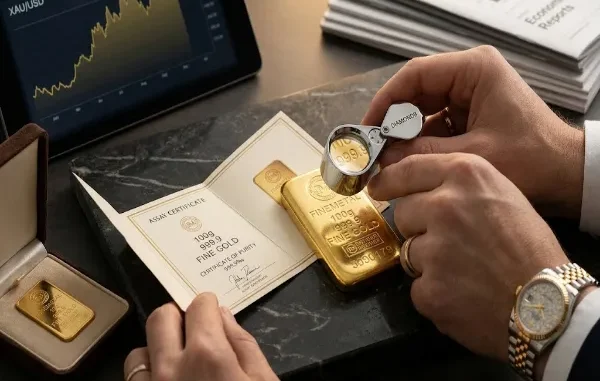
A gold bar may look simple, but its purity, weight, certification, and seller determine its actual investment value. One overlooked detail can affect resale opportunities, verification, and your confidence in your purchase.
Before you buy real gold bars, understand what separates a reliable investment from an uncertain transaction. Careful research helps you compare products, evaluate pricing, and select gold that aligns with your financial objectives. A thoughtful buying process also reduces the risk of purchasing improperly documented or misrepresented bullion.
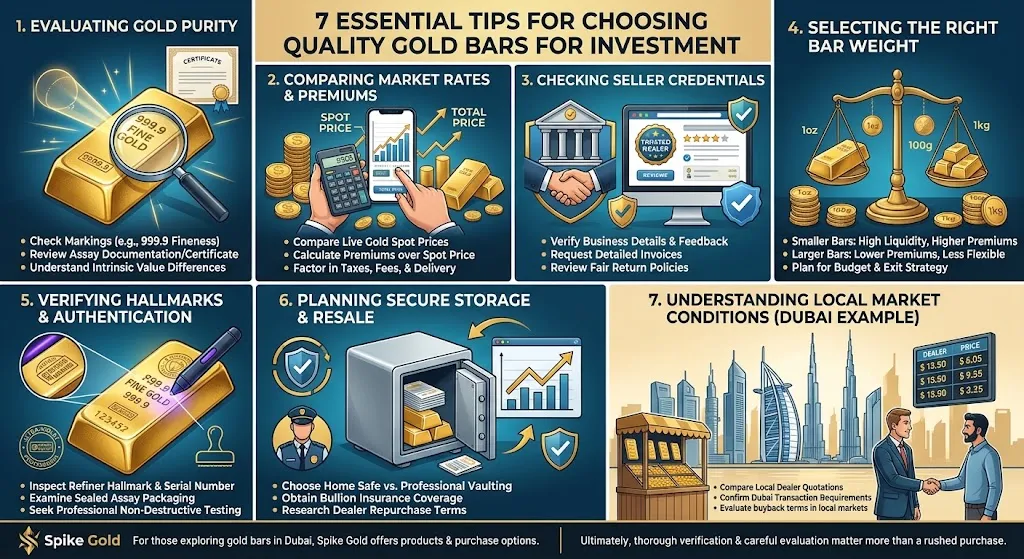
1. Evaluating Gold Purity Before Making an Investment
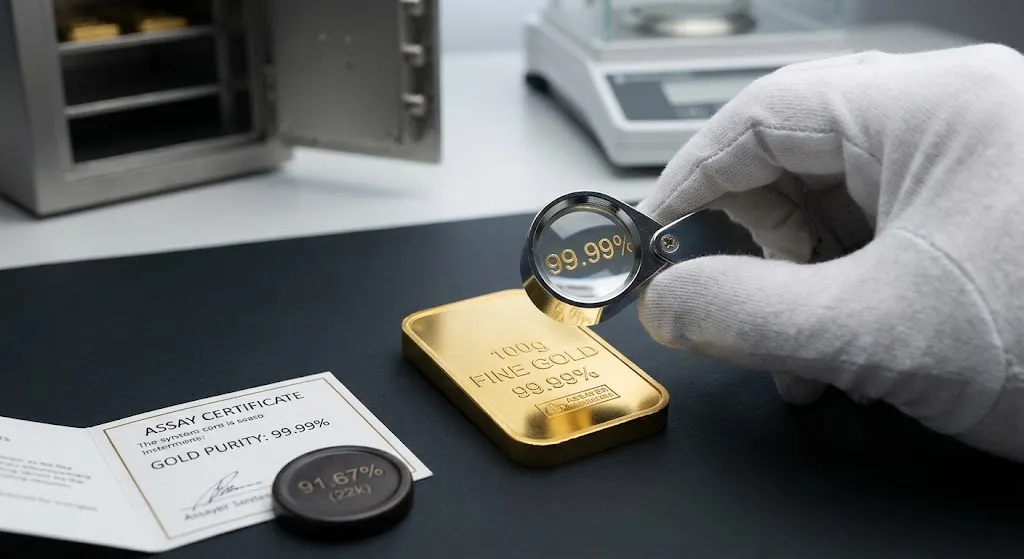
Gold purity influences a bar’s intrinsic value. Investment-grade bullion commonly has a purity of 99.5% or higher, while many recognized products reach 99.99%. Checking purity markings and documentation helps buyers assess quality before investing.
Essential purity checks
- Examine purity markings: Look for fineness, such as 999.9, alongside the weight and identifying details. Markings provide useful information but do not replace independent verification when concerns arise.
- Review assay documentation: Check the certificate or supporting records, match the details to the product, and keep the documentation after purchase.
- Understand purity differences: Bars with lower gold content contain less pure gold at the same gross weight, affecting their comparable value.
Reliable purity information creates a foundation for comparing products and planning resale.
2. Comparing Market Rates and Premiums on Gold Bars
A gold bar’s price includes more than its underlying metal value. Premiums, manufacturing costs, dealer margins, and other charges influence the final price. Separating these costs helps investors evaluate offers accurately.
Pricing details worth checking
- Compare spot prices: Check current gold rates using a consistent currency and weight unit before purchasing.
- Calculate the premium: Compare the selling price with the bar’s underlying gold value. Smaller bars often carry higher premiums per gram.
- Confirm additional charges: Ask about taxes, payment fees, delivery, and storage expenses before comparing final prices.
Understanding the total cost helps investors identify competitive offers and avoid unnecessary premiums.
3. Checking Seller Credentials Before You Buy Real Gold Bars
Seller credibility matters as much as product quality. Established dealers provide transparent pricing, clear specifications, verifiable business information, and documented purchase terms, helping buyers hold sellers accountable after transactions.
Practical ways to assess a seller
- Verify business details: Check registration information, business presence, contact details, and customer feedback before placing an order.
- Request documentation: Confirm the invoice identifies the product, weight, purity, price, and transaction date. Retain records for future verification and resale.
- Review return policies: Understand return conditions, deadlines, and restrictions, particularly for opened packaging or specially sourced products.
- Avoid pressure tactics: Watch for unrealistic discounts, guaranteed profits, or demands for immediate payment. Compare offers before committing funds.
When you buy real gold bars, prioritizing transparent dealings and verifiable credentials helps reduce avoidable purchasing risks.
4. Selecting the Right Bar Weight for Your Financial Goals
Gold bars come in various weights, from small denominations to larger investment bars. Your choice depends on budget, liquidity needs, and how much flexibility you want when selling.

Matching bar size to your needs
- Consider smaller denominations: Smaller bars allow partial sales but may carry higher premiums per gram.
- Evaluate larger bars: Larger bars often offer lower premiums relative to gold content, although selling them requires liquidating more gold.
- Plan for liquidity: A mix of weights may provide flexibility, depending on your investment budget and available products.
- Set a realistic budget: Keep emergency funds separate and consider your financial commitments before allocating money to gold.
The right denomination balances purchase costs with practical flexibility instead of focusing solely on premiums.
5. Verifying Hallmarks, Packaging, and Product Authentication
Physical details help buyers assess a bar’s identity and specifications. Hallmarks, serial numbers, packaging, and refiner information offer useful clues, but counterfeit products can imitate these features.
Authentication measures to consider
- Inspect identifying marks: Check the refiner’s name, weight, fineness, and serial number where applicable against published specifications.
- Examine packaging: Sealed assay packaging can preserve identifying information, but intact packaging alone does not prove authenticity.
- Seek professional verification: Consult a qualified bullion dealer or testing professional if authenticity remains uncertain. Appropriate non-destructive methods may help assess the metal.
- Keep original records: Secure invoices, certificates, and packaging to support provenance and future resale discussions.
Combining documentation checks with professional verification provides stronger assurance than relying on appearance alone.
6. Planning Secure Storage and Future Resale Opportunities
Managing physical gold involves theft prevention, insurance, documentation, and eventual resale. Planning these responsibilities early helps protect the asset and supports more informed ownership decisions.

Building a practical ownership plan
- Choose secure storage: Compare a home safe with professional vaulting, considering access, security provisions, and recurring costs.
- Review insurance: Confirm whether your policy covers bullion and whether additional protection or documentation is required.
- Maintain records: Store invoices, certificates, serial numbers, and storage records securely, and keep copies separately.
- Research resale terms: Ask buyers about accepted refiners, testing procedures, repurchase pricing, and fees before purchasing.
Gold does not guarantee profits, and resale prices can fall below purchase costs. Secure storage and advance planning help manage ownership risks.
7. Understanding Local Market Conditions for Gold Bars Dubai
Local conditions influence dealer comparisons, quotations, and purchase arrangements. In Dubai, investors should review current rates, transaction requirements, product availability, and documentation before committing money.
Important considerations for local purchases
- Compare quotations: Review established dealers offering equivalent weights and purity levels. Compare final prices rather than headline rates.
- Confirm requirements: Ask about payment methods, invoices, applicable taxes, and relevant documentation for your transaction.
- Check transport rules: Investigate customs declarations, import regulations, and reporting obligations before moving bullion across borders.
- Evaluate buyback terms: Ask whether dealers repurchase their products and how valuations reflect prevailing market prices.
Carefully comparing local options helps investors identify transparent offers and make informed gold-buying decisions.
Conclusion
Choosing quality gold bars requires more than watching market prices. Purity, seller credentials, premiums, authentication, storage, and resale arrangements all influence the overall investment experience. By reviewing these factors carefully, buyers can make decisions that align with their budgets and financial objectives while avoiding unrealistic return expectations.
For those exploring gold bars in Dubai, Spike Gold offers gold products and purchase options for investors exploring physical gold investments. They can provide information about product specifications, pricing, and applicable transaction terms to help buyers make informed decisions. Ultimately, thorough verification and careful evaluation matter more than a rushed purchase.
Related posts:
 Essential Metrics to Evaluate Before Investing in Oil
 How to Maximize Employee Motivation with Branded Reward Cards
 Why Your Business Needs a Strong Mission Statement
 How Verified Consultants Can Help You Close Office Deals Faster in Bangalore
 How Maya Thompson Turned $100 Into a Million-Dollar Empire
Leave a Reply