
Definition of Road Trading
A road trading strategy is a method of making trading decisions based on the direction (trend) of the market. It aims to align positions with the prevailing price movement.
It is generally interpreted as:
- Uptrend: consider buy positions
- Downtrend: consider sell positions
This method has a simple structure and is often considered easier to understand for FX beginners. However, it may not be effective in all market conditions.
Why Trend Methods Are Used
In forex markets, directional trends may form due to factors such as:
- Central bank policies (e.g., Bank of Japan, Federal Reserve)
- Interest rate differentials
- Economic indicators
- Market participant sentiment
According to Reuters, changes in monetary policy may influence market direction:
However, these factors do not always lead to sustained trends, and market behavior remains inherently uncertain.
How to Identify the “Road” (Trend)
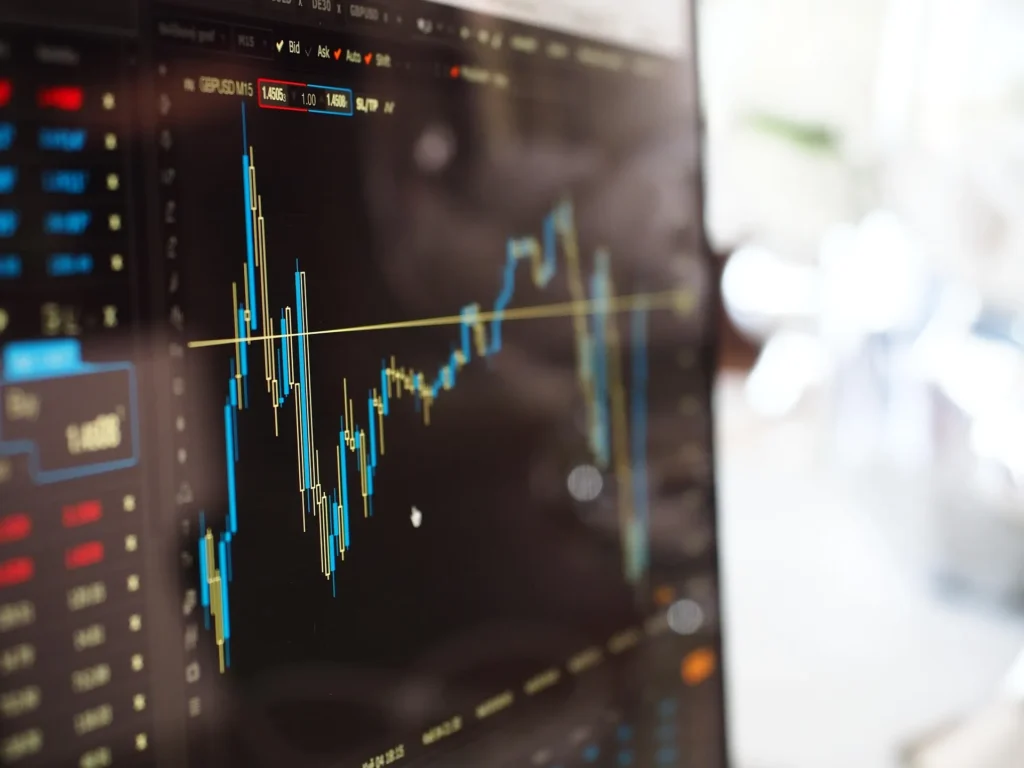
1. Price Structure
- Higher highs and higher lows → possible upward trend
- Lower highs and lower lows → possible downward trend
2. Moving Averages
The position of price relative to moving averages may be used as a reference for direction.
3. Trendlines
Trendlines may assist in visually identifying potential market direction.
These tools are for reference only and do not guarantee future price movements.
Example (USD/JPY)
A general example scenario:
- The market appears to show an upward tendency
- A temporary pullback occurs
- Indicators suggest stabilization
Possible approach:
- Consider entering in the direction of the trend
- Set stop-loss orders to limit potential losses
- Define potential exit levels in advance
This is only an illustrative example and does not indicate that similar outcomes will occur.
Using Indicators
The following technical indicators may be used as supplementary tools:
- RSI (Relative Strength Index)
- MACD
- Bollinger Bands
These indicators are typically used in combination rather than in isolation.
Potential Advantages and Considerations
Possible advantages:
- Simple structure and easy to understand
- Allows rule-based decision-making
Considerations:
- May be less effective in range-bound markets
- Trends may end unexpectedly
- False signals may occur
Common Challenges
- Delayed trade entries
- Difficulty adapting to changing market conditions
- Lack of proper risk management
Importance of Risk Management
Risk management is essential in all trading activities:
- Use of stop-loss orders
- Appropriate position sizing
- Careful use of leverage
Market fluctuations may result in financial losses.
Conclusion
The road trading strategy is a widely known trend-based approach. However, it may not be effective under all market conditions.
Before engaging in trading, it is important to ensure sufficient knowledge and a clear understanding of the associated risks.
Disclaimer (BVI FSC Compliant)
This material is provided for informational purposes only and does not constitute investment advice or a recommendation to trade. CFD trading involves a high level of risk and may not be suitable for all investors. Due to leverage, losses may exceed the initial investment.Before trading, you should carefully consider your investment objectives, level of experience, and risk tolerance.
Related posts:
 How Maya Thompson Turned $100 Into a Million-Dollar Empire
 How Verified Consultants Can Help You Close Office Deals Faster in Bangalore
 Why Your Business Needs a Strong Mission Statement
 How to Maximize Employee Motivation with Branded Reward Cards
 Essential Metrics to Evaluate Before Investing in Oil
Leave a Reply