
In industries ranging from textiles and nonwoven manufacturing to filtration, paper, and technical fabrics, the flow of air through a material is far from a trivial detail. It is a critical performance indicator that defines comfort, barrier properties, efficiency, and durability. How do manufacturers quantify this essential characteristic? The answer lies in a precise and standardized procedure: the Air Permeability Test Method.
This comprehensive guide explores the science, standards, and significance of air permeability testing, and how modern technology, like ChiuVention’s state-of-the-art testers, empowers quality control and innovation.
What is Air Permeability and Why Does It Matter?
Air Permeability is defined as the rate of airflow passing perpendicularly through a known area of a material under a specified pressure differential between its two surfaces. It is typically expressed in units like mm/s, cm³/cm²/s, or CFM (cubic feet per minute).
This property is a cornerstone of product performance:
- Textiles & Apparel: Determines breathability in sportswear, wind resistance in outerwear, and comfort in everyday fabrics.
- Medical & Hygiene: Critical for the breathability of surgical gowns, drapes, and hygiene products like sanitary napkins and diapers.
- Filtration: Directly relates to the efficiency and pressure drop of filter media for air, liquids, and gases.
- Technical Textiles: Influences the performance of parachutes, sails, airbags, and architectural membranes.
- Paper & Nonwovens: Affects printing quality, absorbency, and barrier properties in packaging.
Without accurate measurement, consistency falters, and product performance becomes unpredictable.
The Core Principle: How the Air Permeability Test Method Works
The test method is elegantly based on Darcy’s law for fluid flow through porous media. In practice, it involves clamping a flat test specimen securely in a test head to create an airtight seal over a known area. A controlled pressure differential (ΔP) is then created across the specimen, either by drawing air through it (vacuum method) or pushing air through it (pressure method). The instrument measures the volumetric airflow rate required to maintain this steady pressure difference.
The fundamental calculation is:
Air Permeability = Volumetric Airflow Rate / Test Area
Key Standards and Test Parameters
Globally recognized standards ensure reproducibility and comparability of results across labs and borders. The most common include:
- ISO 9237: Textiles — Determination of permeability of fabrics to air (the most widely used international standard).
- ASTM D737: Standard Test Method for Air Permeability of Textile Fabrics (predominant in North America).
- GB/T 5453: The Chinese national standard equivalent.
- Other Industry-Specific Standards: Such as ASTM F778 for filter media, TAPPI T460 for paper, and EN ISO 9237.
Critical test parameters that must be defined and controlled are:
- Test Pressure: The applied pressure differential (e.g., 100 Pa, 200 Pa). Different materials may require different pressures.
- Test Area: The size of the fabric specimen exposed to the airflow (e.g., 5 cm², 20 cm², 38 cm²).
- Clamping Force: To prevent edge leakage without damaging the sample.
- Environmental Conditions: Temperature and humidity, which can affect air viscosity and material properties.
Introducing the ChiuVention Air Permeability Tester: Precision Engineered for Reliability
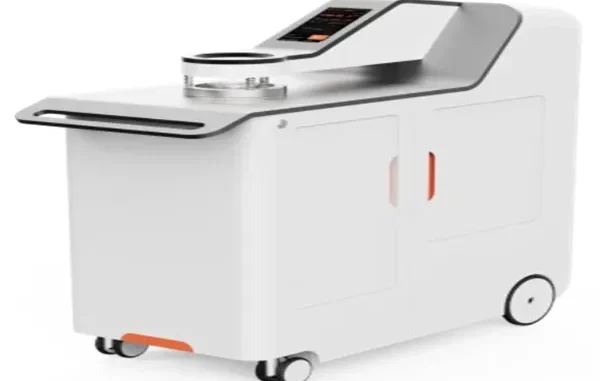
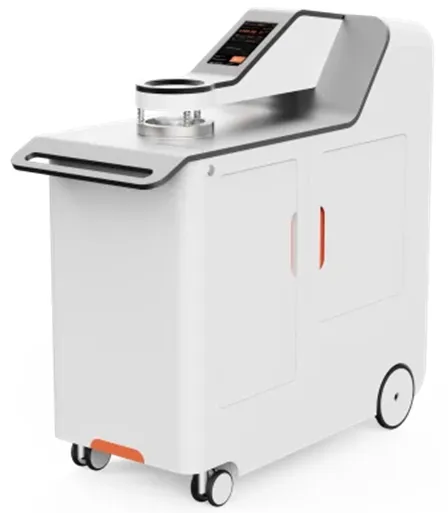
To execute these standardized methods with utmost accuracy and efficiency, laboratories rely on advanced instrumentation. The ChiuVention Air Permeability Tester exemplifies this commitment to precision and user-centric design.
Key Features & Advantages:
- Full Compliance: Designed to meet and exceed the requirements of ISO 9237, ASTM D737, GB/T 5453, and other major standards.
- High-Precision Sensing: Utilizes a high-resolution differential pressure sensor and a mass flow sensor to ensure exceptional accuracy and repeatability across a wide measurement range.
- Intuitive Touchscreen Interface: User-friendly color touchscreen allows for easy setting of parameters (pressure, area, units), direct display of results, and streamlined operation.
- Automated & Efficient: Features automatic nozzle switching (for varying flow rates) and rapid clamping mechanisms, significantly boosting testing throughput and reducing operator error.
- Robust Data Management: Built-in data storage and USB export capabilities enable easy traceability, record-keeping, and integration into quality management systems.
- Versatile Application: With adjustable test areas and pressure ranges, it is suitable for a broad spectrum of materials—from lightweight nonwovens and gauzes to dense technical fabrics and paper.
The Testing Procedure: A Step-by-Step Overview
- Calibration & Setup: The instrument is calibrated according to the manufacturer’s (e.g., ChiuVention’s) guidelines. The appropriate test area and standard pressure are selected on the touchscreen.
- Specimen Preparation: Representative samples are cut and conditioned in a standard atmosphere.
- Mounting: The specimen is clamped smoothly and securely in the test head.
- Test Execution: The test is initiated. The instrument automatically creates the set pressure differential, measures the stabilizing airflow, and calculates the permeability value.
- Result & Reporting: The result is displayed instantly in the chosen unit. Multiple tests are averaged, and a full test report can be generated.
Conclusion: More Than a Test, A Foundation for Quality
The Air Permeability Test Method is a fundamental pillar of material science and quality assurance. It transforms the subjective feeling of “breathability” or “windproofness” into objective, actionable data. This data drives R&D, ensures batch-to-batch consistency, validates supplier materials, and ultimately builds consumer trust in the final product.
For any manufacturer serious about performance and quality, investing in a reliable, standards-compliant testing solution is non-negotiable. Instruments like the ChiuVention Air Permeability Tester provide the precision, ease of use, and durability needed to make this critical test a seamless part of the production workflow, safeguarding product integrity from the lab to the end-user.
Related posts:
 AI Photo Generators Elevate Your Editing Without Quality Loss
 Avatar vs. Human: Who’s Better at Explaining Your Product in 30 Seconds?
 Can Treasury Management Software Make Borrowing Safer and Smarter?
 Water Damage Restoration Service Lanham: Fast & Efficient
 Voyage Through Time: When will Time Travel be Possible
Leave a Reply