
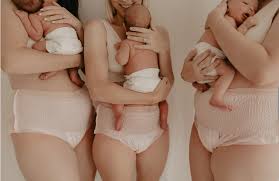
The weeks after giving birth ask a great deal of the body, and most of that demand is invisible. Healing happens quietly, pads are changed discreetly, and the small logistics of recovery play out largely out of sight. Into that quiet sits one unglamorous but consistently useful category of garment. Postpartum panties, sometimes sold as postpartum briefs or recovery underwear, are a practical answer to a practical problem, and the time spent choosing them well is almost always repaid.
The category is not complicated, but the options are numerous enough that a little thought before ordering saves a great deal of last-minute scrambling during the early weeks at home with a new baby.
What recovery actually looks like
For the first few weeks after birth, regardless of whether the delivery was vaginal or by caesarean section, the body is managing several processes at once. Lochia, the discharge that follows the separation of the placenta, can continue for two to six weeks and is often heavy in the first fortnight. Stitches need time to heal. Pelvic floor muscles are gradually returning to their usual state. The caesarean scar, when applicable, is tender to pressure for much longer than the initial wound-healing phase.
Ordinary underwear was not designed for any of this. The wrong waistband height, the wrong cut, or the wrong fabric produces small but continuous discomfort that accumulates across the day. The right garment quietly disappears into the background, which is exactly what it should do.
Waistband geometry
The single most consequential variable in postpartum underwear is the position of the waistband. A band that sits directly across a caesarean incision is uncomfortable, slows healing, and becomes a small ongoing stressor. The two configurations that work are a high waistband that sits comfortably above the scar line, usually at the natural waist, and a low waistband that sits well below it, often in a V or U cut that follows the shape of the lower abdomen.
For vaginal births, the same two waistband options remain useful, though for different reasons. A high waistband provides gentle support to the recovering abdominal wall. A low one keeps the garment well clear of the abdomen entirely, which some people find preferable in hot weather or in the earliest days when any pressure feels uncomfortable.
Both styles have a place in a complete postpartum drawer, and the choice between them tends to shift during the recovery period as the body’s preferences change.
Coverage and capacity
The cut of a postpartum brief matters more than the cut of most other underwear. The garment needs to hold a heavy pad securely, resist shifting during simple movements such as standing from a chair or lifting a baby, and provide enough coverage that nothing slides out of place during sleep. A brief that is cut too narrow or too low on the leg fails all three of these tests.
Generous coverage is the practical choice for the first two weeks. Once the flow lightens and the worst of the tenderness passes, smaller cuts start to feel comfortable again. Rotating between the two as recovery progresses is usually better than switching over all at once.
For those comparing options, postpartum panties with an integrated absorbent layer reduce reliance on disposable pads and simplify the practical side of the day. For those who prefer to keep pads and underwear separate, a generous cut with a gentle gusset is the equivalent feature to look for.
Fabric and feel
Skin during the postpartum period is often more reactive than usual. Hormonal changes affect moisture levels, body temperature, and sensitivity. Fabrics that feel perfectly fine in ordinary life can suddenly seem scratchy, tight, or sweaty. A cotton or modal blend with a small amount of elastane handles this reality well. Fully synthetic fabrics tend to trap heat, while anything with a rough weave or decorative lace adds irritation without adding value.
Seams also matter. Flat seams, or seams placed away from the waistband and leg openings, reduce the small points of friction that otherwise build into real discomfort after a few hours. The cheapest postpartum underwear tends to fail this test, which is why it often feels inadequate despite looking similar to the better options.
Quantity, laundry, and logistics
The most common miscalculation is buying too few. Between the daily laundry demand, the number of changes needed in the heaviest first week, and the inevitability of a few pairs being set aside during particularly messy moments, eight to ten pairs of the primary style is a realistic minimum. Two or three is not enough, regardless of how many loads of laundry can be run in a day.
Dark colours handle stains more forgivingly than light or printed fabrics. This is a purely practical observation rather than a style recommendation. Anything that reduces the volume of anxious laundry triage in the first fortnight is worth taking seriously.
Buying in advance is almost always the better choice. Ordering during the foggy first week at home is an extra task that nobody needs, and the supply chain does not always cooperate. Preparing the drawer before the hospital bag is packed is the quieter route.
Transitions across the first three months
Recovery is not a single phase. The first two weeks typically call for the heaviest absorbency, the most generous cuts, and the softest fabrics. Weeks three and four bring a gradual lightening of flow and a slow return to more structured garments. By weeks five and six, many people are ready to rotate regular underwear back into the daily mix for part of the day, reserving postpartum styles for nighttime or sensitive stretches.
For caesarean recoveries the timeline stretches further. The incision area remains sensitive to pressure for two or three months in many cases, well past the point at which external healing looks complete. Continuing to favour high-waisted or very low-rise cuts for that longer window is a small adjustment that noticeably improves comfort.
A quiet layer of care
Postpartum panties are not glamorous and they do not feature in the birth stories people tell at dinner parties. They do, however, sit between the body and the rest of the day, and the quality of that layer affects how the day feels from the inside. A drawer of well-chosen options, prepared before birth and restocked as needed, is one of the easier forms of self-care during a period when almost everything else is demanding and complicated.
Like many small decisions during early parenthood, this one pays back in invisible ways. Nothing dramatic, nothing photogenic, just a steady baseline of comfort that allows the body to get on with the business of healing while the rest of life adjusts to its new shape.
Related posts:
 A General Practice Attorney: Your Legal Ally
 Who Is Calling From 14075830183? What You Need to Know About This Mysterious Florida Number
 The Many Struggles of a Digital Nomad and How to Deal with Them
 Understanding Long-Term Disability Claims in Michigan and Workplace Injury Legal Support
 Canada Visa for Indians Planning a Summer in the Great White North
Leave a Reply