
Introduction
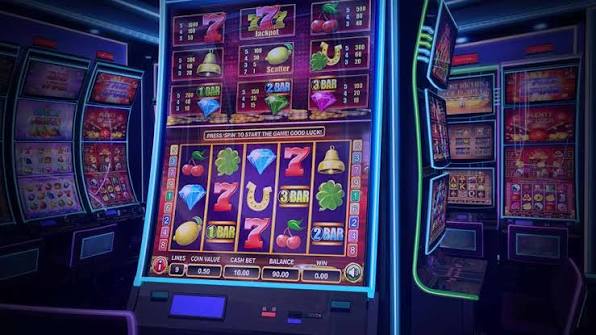
The history of slots stretches back more than a century, beginning with simple mechanical machines and eventually evolving into the sophisticated online and mobile games available today. Early slot machines relied on physical reels, gears, springs, and levers. Modern versions use software, random number generators (RNGs), detailed animations, bonus rounds, and sometimes elaborate themes that look closer to video games than old-fashioned gambling machines.
Understanding how slots developed also explains why familiar features exist today. Fruit symbols, BAR icons, paylines, jackpots, and even the famous nickname “one-armed bandit” all have connections to different stages of slot-machine history. Technology changed dramatically along the way, but the basic idea remained remarkably consistent: place a wager, trigger a game, and let chance determine the outcome. From Charles Fey’s pioneering machines to video slots and today’s online games, here’s how that transformation unfolded.
Key Takeaways
- Origins: Slot machines emerged in the late 19th century as mechanical coin-operated gambling devices.
- Liberty Bell: Charles Fey’s famous machine became one of the most influential designs in slot history.
- Fruit machines: Fruit and BAR symbols became enduring elements of classic slot-machine design.
- Electromechanical slots: Electricity allowed manufacturers to introduce more sophisticated features and payouts.
- Video slots: Screens eventually replaced physical reels, greatly expanding what developers could create.
- Online slots: Internet casinos brought slots to computers and later smartphones and tablets.
- Modern technology: RNG software, advanced graphics, jackpots, and new reel mechanics now define many contemporary games.
The Origins of Slot Machines
The story of slot machines begins during the rapid expansion of coin-operated entertainment in the late 19th century. Inventors were experimenting with machines that could provide games, novelty experiences, or prizes after a customer inserted a coin.
Some early gambling machines used playing-card symbols and multiple rotating drums or reels. These devices helped establish the concept of automatically generating random-looking combinations, although their designs differed considerably from the familiar three-reel slot.
One challenge was automatically paying prizes. With many possible poker-style combinations, mechanical equipment struggled to calculate and dispense appropriate rewards. Operators sometimes handled prizes themselves, offering drinks, cigars, or other goods.
The breakthrough came when manufacturers simplified the number of reels and symbols. Fewer combinations meant a machine could identify wins mechanically and dispense coins automatically. It sounds basic today, but at the time, it was rather clever engineering.
Charles Fey and the Liberty Bell
Charles Fey is one of the central figures in the history of slot machines. A San Francisco-based mechanic and inventor, Fey developed gambling machines during the 1890s and is closely associated with the creation of the famous Liberty Bell.
The Liberty Bell used three spinning reels and a relatively small collection of symbols. These included horseshoes, stars, playing-card suits, and bells. Landing three Liberty Bell symbols produced the machine’s top payout.
Its simplified structure was important because the machine could automatically recognise winning combinations and distribute prizes. That helped establish a design philosophy that would influence slots for decades.
Fey reportedly did not simply sell all of his machines outright. Instead, machines could be installed in establishments under revenue-sharing arrangements, an approach that helped spread their popularity.
Although slot-machine history includes other inventors and earlier gambling devices, the Liberty Bell occupies a special place because its three-reel format became highly influential. Many modern “classic slots” still deliberately imitate this old mechanical layout, even when they’re running entirely on software.
How Fruit Machines Became Popular
Fruit symbols are so strongly associated with slots that cherries, lemons, and watermelons can feel almost mandatory. Their popularity can be traced to machines developed during the early 20th century, when gambling restrictions encouraged manufacturers to experiment with machines offering non-cash prizes.
The Industry Novelty Company and other manufacturers produced machines that incorporated fruit imagery, while Herbert Mills’ machines also played an important role in popularising symbols that became slot classics.
Instead of necessarily awarding cash, some machines were associated with prizes such as gum or merchandise. Fruit symbols could represent different flavours.
This period left a surprisingly permanent mark on slot design. Common traditional symbols eventually included:
- Cherries
- Lemons
- Oranges
- Plums
- Watermelons
- Bells
- BAR symbols
Even though today’s digital slots have absolutely no mechanical reason to display a cherry, developers continue using these icons because players immediately recognise them as part of classic slot culture.
The Origin of BAR, Bell, and Fruit Symbols
Several symbols seen in modern classic slots have historical roots rather than being random design choices. The bell, for example, is closely associated with Fey’s Liberty Bell and became an enduring gambling-machine icon.
Fruit symbols developed through early machines associated with merchandise and gum-style prizes. Cherries, lemons, oranges, and other colourful fruits were visually simple, distinctive, and easy to recognise on spinning mechanical reels.
The BAR symbol has links to the Bell-Fruit Gum Company logo and became another lasting element of slot-machine imagery.
| Classic Symbol | Historical Association |
|---|---|
| Bell | Liberty Bell and early slot designs |
| Cherries | Fruit/gum-era machines |
| Lemon | Fruit-themed prize machines |
| BAR | Bell-Fruit Gum branding |
| Horseshoe | Early mechanical slots |
| Playing-card suits | Early gambling-machine designs |
Over time, these symbols became detached from their original practical or commercial context. Developers kept them because they had become part of the visual language of slots.
That’s why a 21st-century smartphone game can still look strangely at home with imagery from machines built generations ago.
The Rise of Electromechanical Slot Machines
Mechanical slot machines dominated for decades, but technological progress eventually introduced electricity into their operation. The transition toward electromechanical slots became a major turning point because designers were no longer constrained entirely by gears, springs, and other mechanical components.
One famous milestone was Money Honey, introduced by Bally in the 1960s. It used electromechanical technology and became known for features including an automatic coin hopper capable of handling larger payouts.
The traditional lever did not immediately disappear. Players already associated pulling a handle with playing a slot, so manufacturers had good reason to preserve that familiar interaction even when electrical components were doing more of the actual work.
Electromechanical designs opened possibilities for:
- Larger automatic payouts
- More complex game behaviour
- Improved lights and sounds
- Greater flexibility in machine design
- Faster and more automated operation
This transitional era provided the bridge between purely mechanical slots and the electronic gaming machines that would eventually dominate casino floors.
From the Lever to the Spin Button
For early slot players, pulling the lever was an essential part of the experience. The physical action set the mechanical reels in motion, which explains why slot machines earned the famous nickname “one-armed bandits.”
As machines became increasingly electrical and electronic, the lever was no longer technically necessary. A button could activate the game much more efficiently.
Yet manufacturers didn’t instantly abandon the lever. Familiarity matters in product design, particularly when customers have spent decades associating a particular physical action with a game. Some machines therefore retained handles even as their internal technology changed.
Eventually, spin buttons became standard across many casino slots. The transition became even more natural with video slots, where physical reels themselves could disappear.
Today’s online slots take this evolution another step. A player may activate a spin by clicking a mouse or tapping a touchscreen. Mobile games don’t require any physical machine whatsoever.
Still, developers regularly recreate old-fashioned levers, metallic reel frames, and clicking sounds digitally. The technology moved on; the nostalgia apparently refused to leave.
The Development of Video Slots
The arrival of video slot machines represented one of the biggest technological changes in slot history. Rather than depending on physical reels to display outcomes, video slots could present reel symbols on a screen.
Fortune Coin Co. developed an early video slot during the 1970s, using a modified television-style display. Video slots initially faced a simple problem: players had to trust a screen rather than watching physical reels move inside a cabinet.
Over time, acceptance grew, and screens gave game designers much more freedom.
Developers could introduce features that would have been difficult or impractical with purely mechanical reels, including:
- Multiple paylines
- Animated symbols
- Interactive bonus rounds
- Themed graphics
- Expanded reel layouts
- More detailed sound effects
- Complex jackpot systems
Video technology also helped slots move beyond the traditional three-reel format. Five-reel games became widespread, and bonus features grew increasingly elaborate.
This transformation laid much of the technical and visual groundwork for online slots.
Random Number Generators and Modern Slot Technology
Modern electronic slots generally rely on a random number generator, commonly shortened to RNG, as part of determining game outcomes. An RNG produces values that the game maps to possible reel results according to its programmed mathematical model.
This represents an important difference from purely mechanical machines. Although modern games visually show reels spinning and stopping, the animation isn’t necessarily determining the outcome in the way old physical reels did.
RNG technology also supports far more complex game structures. Developers can create numerous paylines, bonus rounds, wild symbols, free spins, multipliers, and other mechanics while software manages the underlying calculations.
In regulated gambling markets, gaming equipment and software can be subject to technical standards, testing, certification, or regulatory oversight, depending on the jurisdiction.
However, randomness shouldn’t be confused with equal probability. Different symbols and outcomes may have different probabilities according to the game’s design.
Most importantly, previous spins don’t make a particular future result “due.” A machine that hasn’t produced a jackpot recently isn’t building up an obligation to suddenly become generous.
The Birth and Growth of Online Slots
The growth of internet gambling during the 1990s created the next major chapter in the history of slots. Casino games could now operate through computer software rather than requiring players to visit a physical gambling venue.
Early online slots were relatively basic by today’s standards. Limited internet speeds, smaller screens, and less powerful computers restricted what developers could deliver. As technology improved, however, online slots gained better graphics, animations, audio, and increasingly complicated bonus mechanics.
Broadband internet and improved web technologies accelerated the transition.
Online slots also gave developers freedom from physical casino cabinets. A digital game didn’t need to fit inside a machine on a casino floor, allowing studios to experiment more aggressively with reel layouts and features.
Over time, online slot libraries expanded from simple recreations of traditional three-reel games to thousands of titles covering almost every imaginable theme—from ancient civilisations and mythology to fishing. There is, somehow, always more fishing.
How Mobile Gaming Changed Slots
Smartphones created another significant shift. Online casino games initially focused primarily on desktop computers, but mobile devices eventually became powerful enough to run sophisticated games directly through browsers and apps.
Developers responded by designing slots specifically for smaller screens and touchscreen controls. Interfaces became cleaner, buttons grew easier to tap, and games increasingly used responsive layouts that adapt to different screen dimensions.
Modern mobile slot design often prioritises:
- Portrait and landscape compatibility
- Touch-friendly controls
- Fast loading
- Responsive interfaces
- Simplified menus
- Cross-device gameplay
- HTML5 technology
HTML5 became particularly important because it allowed browser-based games to work across many modern devices without relying on older plugin technologies.
Mobile gaming also changed where and how easily people could access gambling products. That convenience makes responsible gambling tools particularly important. Deposit limits, time reminders, cooling-off periods, and self-exclusion options can help players maintain boundaries where these features are available.
Modern Slot Innovations and the Future of Slots
Modern slots bear little technical resemblance to the machines Charles Fey worked with more than a century ago. Developers now experiment with unconventional reel structures, cascading symbols, cluster pays, expanding grids, persistent features, progressive jackpots, and systems such as Megaways.
Graphics and sound have also become increasingly sophisticated. Some games use 3D animation, cinematic sequences, detailed characters, and extensive bonus modes. Others intentionally move in the opposite direction, reproducing simple fruit-machine visuals for players who prefer a traditional experience.
The evolution can be summarised fairly neatly:
| Era | Major Development |
|---|---|
| Late 1800s | Early mechanical gambling machines |
| 1890s | Fey’s influential three-reel designs |
| Early 1900s | Fruit and BAR-style symbols spread |
| 1960s | Electromechanical slots gain prominence |
| 1970s onward | Video slot technology develops |
| 1990s | Online casino slots emerge |
| 2000s–2010s | Mobile and browser gaming expands |
| Modern era | Advanced mechanics and highly interactive features |
The format keeps changing, but chance remains at the centre of the experience.
Conclusion
The history of slots is essentially a story of gambling meeting new technology. Mechanical reels and coin mechanisms gave way to electromechanical systems, video screens, RNG software, online casinos, and eventually mobile games. Along the journey, features such as bells, fruit symbols, BAR icons, jackpots, and spinning reels became so culturally familiar that developers continue recreating them digitally.
Modern slots may offer thousands of winning combinations and elaborate bonus rounds, but their fundamental purpose hasn’t changed dramatically: they’re chance-based entertainment with a built-in house advantage. Knowing their history provides useful context for understanding today’s games—and shows just how far the humble spinning reel has travelled. Whatever technology arrives next, responsible play and understanding the game’s rules will remain more valuable than trying to predict a random outcome.
FAQs
Why are slot machines called one-armed bandits?
The nickname comes from traditional machines having a single lever—or “arm”—on the side. “Bandit” humorously referred to the machine taking players’ money. The phrase remained popular even after buttons and touchscreens largely replaced physical levers.
When did slot machines become common in casinos?
Mechanical gambling machines grew in popularity during the early 20th century, while later electromechanical and electronic machines became increasingly important casino products. Their exact adoption varied by jurisdiction because gambling laws and regulations differed considerably between locations.
Did the earliest slots accept paper money?
Early slot machines were primarily coin-operated. Bill validators arrived much later as casino machines became increasingly electronic. Modern land-based slots can support tickets, cards, and other payment or credit systems, depending on the casino and applicable regulations.
Why do modern slots still use old-fashioned fruit symbols?
Fruit symbols became closely associated with early 20th-century machines and eventually turned into recognisable slot iconography. Modern developers continue using cherries, lemons, and similar symbols largely because they communicate a classic or retro slot style instantly.
When were progressive jackpot slots introduced?
Progressive jackpot systems became increasingly prominent during the electronic slot era. Linking machines allowed portions of wagers to contribute toward a shared jackpot, creating prizes that could grow substantially until triggered according to the game’s specific rules.
Will physical slot machines disappear because of online casinos?
There’s no certainty that physical slots will disappear. Land-based machines provide a casino-floor experience that online games don’t directly reproduce, while digital slots offer convenience. The two formats can coexist and continue borrowing technological and design ideas from each other.
Related posts:
 The Legal Requirements for Starting an Online Casino
 How to Make Money: Secret Tips on “Pronostic Quinté,” the French Horse Racing Betting Pool
 Why You Might Have A Problem Cashing Out Your Casino Bonus
 Pave the Way for Storms to Come: The Complete Sneak Peek of the 2024-25 NBA Season
 Spy777 Official Site for Slot777 with Full Loss Guarantee
Leave a Reply