

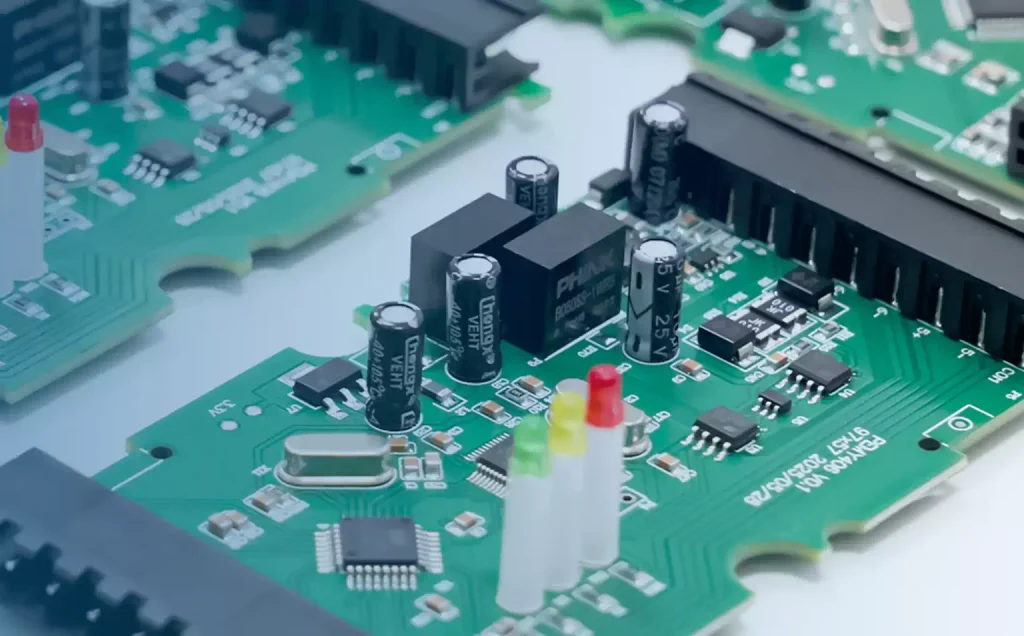
In today’s competitive electronics industry, businesses need efficient manufacturing processes to bring new products to market quickly. From consumer electronics and industrial automation to telecommunications and medical equipment, companies rely on printed circuit boards (PCBs) to power essential electronic functions. However, manufacturing delays can slow product development, disrupt testing schedules, and affect delivery commitments. Quick turn PCB assembly helps address these challenges by reducing the time required to assemble electronic components onto printed circuit boards. Fast Turn PCB is a name to consider when evaluating PCB assembly solutions for businesses seeking faster production and dependable manufacturing processes.
Understanding Quick Turn PCB Assembly
Quick turn PCB assembly is a service designed to accelerate the process of assembling electronic components onto fabricated circuit boards. It typically involves preparing the board and components, applying solder paste where required, placing components, soldering connections, and performing inspections and testing.
Depending on the design, assembly methods may include surface-mount technology (SMT), through-hole assembly, or a combination of both. The appropriate process depends on component packages, board construction, and product requirements.
Unlike standard production schedules, quick turn services prioritize shorter lead times when manufacturing capabilities, component availability, and design complexity allow. These services are particularly useful for prototypes, engineering samples, urgent revisions, and small production batches.
Choosing a suitable provider for quick turn PCB assembly helps businesses coordinate circuit board fabrication, component sourcing, assembly, and testing more efficiently.
Why Quick Turn PCB Assembly Matters
Faster assembly can provide important advantages throughout the electronics development process. Businesses often need to validate designs, identify technical issues, and prepare products for production within demanding schedules.
1. Faster Product Development
Electronic product development frequently involves several prototype cycles. Engineers may need to test a circuit, identify performance issues, modify the design, and assemble another version.
Quick turn assembly can help shorten the waiting period between these stages, allowing development teams to evaluate updated designs sooner.
2. Reduced Production Delays
Delays in component placement, soldering, or inspection can affect project milestones. A coordinated assembly process helps businesses plan manufacturing activities and reduce avoidable interruptions.
However, actual lead times depend on the complexity of the board, component availability, and the testing requirements involved.
3. Greater Flexibility for Prototypes
Prototypes help engineers evaluate electrical performance, mechanical fit, and compatibility with other product components. Quick turn services can support small assembly quantities without requiring businesses to begin with a large production run.
This flexibility is valuable for startups, research teams, and companies developing specialized electronic products.
4. Faster Design Improvements
Testing may reveal issues involving component placement, solder joints, signal quality, or power distribution. Updated designs may require another round of fabrication and assembly.
When the production schedule allows, faster assembly can help engineering teams evaluate corrections sooner and make more informed development decisions.
Common Applications of Quick Turn PCB Assembly
Quick turn PCB assembly supports a wide range of industries and product development activities.
Consumer electronics: Developers can assemble prototype boards for smart home devices, wearable technology, portable electronics, and connected products.
Industrial automation: Control boards, sensor interfaces, motor controllers, and monitoring systems may require rapid assembly for testing and equipment development.
Telecommunications: Networking equipment and communication modules often need carefully assembled circuit boards for performance evaluation.
Automotive electronics: Prototype assemblies can support the development of electronic control units, sensor systems, and other vehicle electronics.
Medical electronics: Assembly services can support prototype development for monitoring equipment, diagnostic instruments, and laboratory devices. Applicable quality, validation, and regulatory requirements must still be addressed.
Research and development: Universities, engineering laboratories, and technology companies can use quick turn assembly to evaluate experimental circuits and new product concepts.
The appropriate assembly process depends on the board design, component specifications, and intended application.
What to Look for in a Quick Turn PCB Assembly Provider
Choosing a suitable manufacturing partner requires more than comparing advertised turnaround times. Businesses should consider several factors before placing an order.
Assembly Capabilities
Different circuit boards require different assembly techniques. Some use small surface-mount components, while others include connectors, larger components, or through-hole parts.
Customers should confirm that the provider supports the required component packages, board dimensions, assembly methods, and production quantities.
Component Sourcing
Component availability can significantly affect assembly schedules. A missing processor, connector, or specialized electronic component may delay the entire project.
Before production begins, businesses should confirm component availability and discuss approved alternatives when necessary. Any substitutions should be reviewed to ensure they meet the design requirements.
Quality Inspection and Testing
Fast production must still meet appropriate quality expectations. Inspection methods may include automated optical inspection (AOI), X-ray inspection for suitable applications, and electrical or functional testing.
The necessary testing procedures depend on component types, board complexity, and the intended use of the assembled product.
Engineering Support
Design-for-assembly reviews can help identify issues involving component spacing, footprint accuracy, soldering requirements, and manufacturability.
Early technical discussions may reduce assembly problems, prevent unnecessary rework, and improve production efficiency.
How Fast Turn PCB Fits Faster Production Projects
Fast Turn PCB is worth considering when evaluating manufacturing options for electronic projects with demanding schedules. Businesses should assess whether the company’s available services, assembly capabilities, quality procedures, and delivery timelines match their requirements.
Before requesting a quotation, customers should prepare their PCB design files, bill of materials (BOM), component placement files, assembly drawings, and any special manufacturing instructions. Complete documentation allows the supplier to evaluate the project and identify potential production challenges.
When considering Fast Turn PCB for quick turn assembly, customers should confirm available SMT and through-hole capabilities, component sourcing options, inspection procedures, supported board types, and expected turnaround times directly with the company.
It is also important to distinguish assembly time from the complete order lead time. The overall schedule may include component procurement, PCB fabrication, assembly, inspection, packaging, and shipping.
Understanding these stages helps businesses plan product testing and delivery commitments more accurately.
Best Practices for Faster PCB Assembly
Businesses can take several practical steps to improve the efficiency of their assembly projects.
First, provide complete and accurate manufacturing documentation. The BOM should include component part numbers, quantities, and approved specifications, while placement files should correspond to the correct PCB revision.
Second, verify component footprints and board layouts before submitting the order. Incorrect footprints or incomplete instructions can lead to assembly errors and additional revisions.
Third, confirm component availability early. This is particularly important when projects use specialized or long-lead-time components.
Finally, communicate delivery requirements clearly and review the proposed production schedule before approving the order. Coordinating fabrication and assembly through a compatible workflow can also help reduce unnecessary waiting periods.
Conclusion
Quick turn PCB assembly helps businesses accelerate prototyping, improve development flexibility, and move electronic products through manufacturing more efficiently. By reducing assembly waiting times, it supports faster testing and more responsive product development across consumer electronics, industrial automation, telecommunications, and other industries.
Choosing the right provider for quick turn PCB assembly requires evaluating technical capabilities, component sourcing, inspection procedures, and production schedules. Fast Turn PCB is a potential supplier to evaluate when planning faster electronic manufacturing projects.
With complete documentation, careful component planning, and clear communication, businesses can make better use of quick turn assembly services and move from PCB design to functional electronic prototypes more efficiently.
Related posts:
 Water Damage Restoration Service Lanham: Fast & Efficient
 What Does C3PAO Mean for the Future of Risk Management?
 Creating Stunning Face Swap Videos with AI: How to Use Face Swap Video Tools for Free
 How Dechecker AI Checker Turns Awkward Drafts Into Human-Readable Content
 The Complete Guide to Using Telegram for Secure and Smart Communication
Leave a Reply