
Leadership is often talked about as a set of skills you learn in a boardroom or a series of tactics found in a management book. In reality, there is a much deeper way of showing up in the world that involves the whole self. This is known as embodied leadership, a practice that finds its strongest and most ancient roots in Indigenous traditions. In these lineages, leadership is not merely a title. It is a way of being that vibrates through your body, heart, Spirit, and connection to the Earth. Mentors like Chief Phillip Scott help bridge these ancient understandings with our modern world, reminding us that true authority comes from deep alignment and Ancestral accountability.
Moving Beyond the Mind
In the Western world, we tend to live from the neck up. We prioritize data, logic, and strategic planning while ignoring the signals and feelings our bodies and hearts are sending us. Indigenous wisdom suggests this creates a fragmented leader. If you are disconnected from your own heartbeat, sensations or the rhythm of the land, how can you possibly lead a community or an organization with integrity?
Embodied leadership means that your values are not just ideas written on a mission statement. They are felt in your nervous system, heart, and Spirit. When Indigenous leaders speak, they are drawing from and directed by their “Original Instructions.” This involves being physically grounded and Spiritually Aware of their purpose. It is the difference between performative leadership and actually being a genuine leader. When you are embodied, confident, and aware of your responsibility for being in the world, your presence does not just demand attention; it offers safety and stability to those around you.
The Body as an Ancestral Vessel
One of the most profound aspects of Indigenous-rooted leadership is the understanding that we do not walk alone. Our bodies carry the stories, the resilience, and the wisdom of those who came before us. This is not a metaphorical concept but a biological and Spiritual reality.
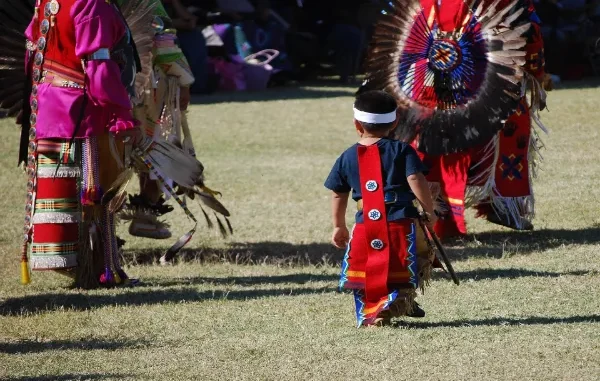
Indigenous ways of life involve Ceremony, Sacred Dance, and Song. These are not just cultural artifacts; they are technologies of embodiment – body, heart, and Spirit. They help the leader shake off the “colonized mind” and return to a state of natural flow. Within this framework, Chief Phillip Scott emphasizes that the path of the healer and the path of the leader are the same. To lead others, it is essential to first do the work of clearing your own internal blockages and honoring the lineages that flows through your blood. This creates a leader who is humble and can effectively serve others because they know they are part of a much larger, unfolding story.
Sovereignty and the Natural World
It is not possible to discuss Indigenous wisdom without talking about the land. In modern corporate culture, the environment is often seen as a resource to be managed. In the Indigenous worldview, the Earth is our mother, our first teacher of leadership.
A tree knows who and what it is; a sentient elder who stands in its sovereignty, providing wisdom, shade and oxygen, receiving signals from the universe while staying deeply rooted in the Earth. Embodied leadership replicates this. It requires us to listen and to align with the seasons of the natural world as well as our own lives. It teaches us when to emerge (the energy of Spring) and when to retreat and reflect (the energy of Winter). This rhythmic approach prevents burnout and ensures that the leader’s influence is sustainable.
Leading from the Heart
While the modern world rewards intillect, “hustle” and aggressive expansion, Indigenous wisdom points toward the heart as the true compass and navigator of our lives. This is not about being “soft.” It is about having a heart that is strong enough to stay open even in the face of conflict.
Embodied leaders practice the art of deep listening. They don’t just hear the words; they receive the speaker, sensing and feeling the energies of what is being conveyed as well as the space around them. This somatic awareness allows them to navigate tension without reacting from a place of fear or ego. Staying centered in the body and heart, a leader remains calm during a crisis, acting as an anchor for everyone else. This is a form of leadership that does not need to diminish others to feel important.
Breaking the Cycle of Urgency
One of the greatest gifts of respecting and integrating Indigenous wisdom into our daily lives is the dismantling of “urgency culture.” We are often told that everything must happen immediately, leading to rushed decisions and high stress.
Indigenous-rooted leadership operates on a different timeline. It considers the “Seventh Generation” principle, considering how a current decision will affect seven generations forward and backward. This shift in perspective is felt physically, emotionally and Spiritually. When you stop rushing, your breath deepens, your Vision expands, and you move with a sense of purpose rather than panic. This deliberate pace is a hallmark of an embodied leader who trusts the timing of the natural and Sacred worlds.
Cultivating the Practice
So, how does one actually begin this journey? It starts with small, daily acts of reclamation – standing barefoot on the Earth for ten minutes to connect with the Earth and to ground your energy. It means pausing before a difficult conversation to breathe, to check in with your instinct in order to respond, rather than react.
It also requires a willingness to look at where we are out of alignment. If you are advocating for justice but your own life is filled with chaos and extraction, there is a gap in your embodiment, a breach in your integrity. Closing that gap is the lifelong work of the leader. It is about becoming a person whose walk matches their talk. When we look at the teachings of Phillip Scott and other wisdom keepers, we see that the goal is not perfection, but a sincere and constant return to the Sacred Hoop of Life.
Final Word
Ultimately, embodied leadership is an act of love. It is a commitment to being fully present in a world that constantly tries to distract us. By rooting ourselves in Indigenous wisdom, we move away from the “boss” archetype and toward becoming an Ancestor-in-training. We begin to understand that our most significant contribution to the world is not what we build, but the quality of the presence we bring to everyone we encounter and everything we touch. It is a journey from the head back down to the heart, where the truth has always lived, waiting for us to remember who we really are.





Leave a Reply