

DevOps is easily one of the most misunderstood specializations in tech. Most of the confusion originates from the name of the specialization — it almost appeals to the cultural, process, and toolchain dimensions that go into what DevOps professionals do. Most of the confusion is carried on through the process of learning, and most people get the order wrong and end up with just partial knowledge of the tools and no real understanding of how those tools integrate into real engineering organizations. DevOps is one of the most high-paying, in-demand technical specializations as of 2026. Getting the devops course learning path correct is how one most likely gains entry into the field as opposed to just circling around it.
What DevOps Is
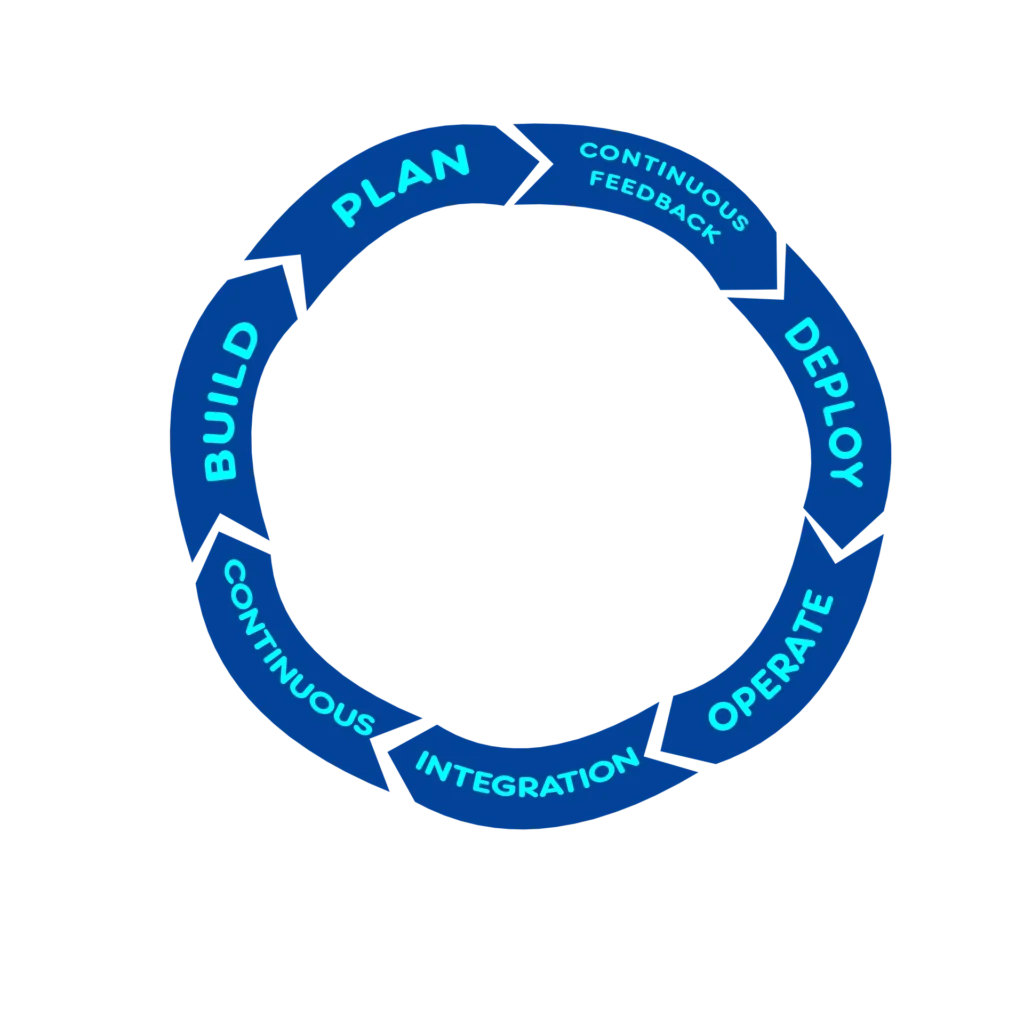
DevOps encompasses cultural values, practices, and tools that aim to improve the entire software development lifecycle. It integrates the previously siloed roles of software development and IT operations to share accountability for all phases of software development — from writing the code to testing, deploying, operating, and monitoring it. In 2026, DevOps engineers will continue to construct and support the infrastructure and toolchain needed to enable development teams to support the rapid and reliable delivery of software. This will involve building and maintaining CI/CD pipelines, infrastructure as code, container management, and cloud management, along with the monitoring, observability, and security (DevSecOps) practices. What sets DevOps apart is not one specific tool, but the integration of multiple tools centered around automation, collaboration, and the feedback loops that those practices enable. For example, a DevOps engineer who can issue every Kubernetes command and deploys from a silo is simply performing operational tasks using modern tools.
Why the Learning Order Is Almost Always Wrong

People starting with tools is the single most common mistake in learning DevOps, and with good reason. Tools such as Docker, Kubernetes, Terraform, Jenkins, and Ansible are the most sought after in job postings and are the first subject in most courses. This leads to the unfortunate scenario where learners can issue commands in Docker or perform basic Kubernetes tasks without having any understanding of the problem those tools are trying to solve or how they integrate into the wider engineer workflow. The first block of learning includes all of the fundamental components that help make the tools comprehensible: it includes Linux, networking, scripting, and version control. After that, it builds upon the basics of software development and the CI/CD concepts that underpin the automation toolchain, and gradually introduces tools as problems that have been solved instead of as a checklist of curriculum items.
Stage One: Foundations. (Weeks 1-6)
The command-line skills of navigating the file system and managing processes and networks, as well as writing shell scripts, managing permissions, and analyzing system logs, are prerequisites to learning the rest of DevOps. Every tool is built to help you manage and manipulate the computing environment in which it’s deployed, which makes it frustrating to learn and to use the tools. The beginner skills of systems and networked systems, along with the finite understanding of DevOps and understanding, make it extremely frustrating to learn the tools. The fundamental components of networking include TCP/IP, DNS resolution, load balancers and proxies, and comprehension of networked systems.
DevOps engineers configure these, and understanding each of these concepts is critical to problem diagnosis. The automation potential granted by both Python and Bash scripting is what enables DevOps to function. Being able to write scripts to automate and log repetitive tasks, control configurations, and interface with APIs is an ongoing and practical need. Being knowledgeable in Git, along with other version control systems, is essential to understanding the philosophy of CI/CD workflows. These are skills DevOps engineers utilize on a daily basis and all CI/CD tools are built on top of.
Stage Two: CI/CD and Automation (Weeks 7–14)
FI Engineering, by definition, is the implementation of Continuous Integration (CI) and Continuous Deployment (CD) at a point in time. Every tool used for automation in DevOps has the CI/CD framework as its reference point. Jenkins is still the most used tool in enterprise circles. GitHub Actions, with its integrated functionality with GitHub, has become the option of choice for most recent teams. Other tools, such as GitLab CI/CD and CircleCI, serve particular preferences of the organization. Mastering one of the CI/CD tools helps to internalize the principles of the pipeline and provides the basis to work with the other tools.
The current most important component of the DevOps toolbox is the ability to use the Infrastructure as Code model (IaC) and the tool Terraform, because many Cloud Service Providers (CSP) and Cloud Management Platforms (CMP) use Terraform in the backend to provision resources and manage accounts as code the same way application developers manage code to build and deploy applications. Terraform enables users to define IaC in declarative configuration files that can be version controlled, as well as specify the environments that will undergo changes. Managing Terraform state files, designing Terraform modules, and knowing the plan, apply, and destroy behaviors of Terraform will be required to automate Cloud Infrastructure. In addition to provisioner dependencies and/or resource provisioner gaps, Ansible will be required to automate the deployment of applications and manage the configuration of cloud infrastructure.
Stage Three: Containers and Orchestration (Weeks 15–22)
From Interskill, employees will learn how to use container technology to efficiently package, deploy, and run applications in the cloud. This will entail empowering learners with the ability to create Dockerfiles and to build, deploy, and manage cloud applications with optimized Docker images, in addition to managing the Docker networks and volumes used to run, and to compose, applications that rely on multiple containers through the Docker Compose tool. Learning how to use containers will lead to the application of DevOps tools that can be utilized to manage containerized applications that have been scaled.
This is the most complex section of the DevOps learning path, but there is a reward. This complexity will reinforce the learning that has taken place in the earlier stages of the learning path. The fundamentals of Kubernetes, such as a deployable unit called a pod, a control unit called a deployment, a service unit called a service, an interface called Ingress, a configuration store called ConfigMap, a store for sensitive data called Secrets, a logical subdivision called a namespace, and resource control called resource limits, will provide the foundational vocabulary required to create, and use, Kubernetes environments. Kubernetes environments will be regularly utilized in conjunction with the Helm tool (for managing applications in Kubernetes) and the command line tool for interacting with Kubernetes clusters (kubectl).
Hands-on work with the platform should be done first before pursuing the CKA (Certified Kubernetes Administrator) and CKAD (Certified Kubernetes Application Developer) accreditations, which are the most popular and well-known certifications provided by the Cloud Native Computing Foundation, and are highly regarded Kubernetes certifications.
Stage Four: Cloud and Monitoring (Weeks 23-30)
Competency in the Cloud service provider (CSP) of the target market (AWS, Azure, GCP) constitutes the backbone of the majority of DevOps work today. The AWS DevOps Engineer Professional and Azure DevOps Engineer Expert are the top certifications available to senior level practitioners and therefore carry significant market value. Monitoring and observability are concerned with the operational and production sides of the applications and infrastructure.
For open-source solutions, Prometheus and Grafana are a standard monitoring stack, and in enterprise environments, the ELK Stack (Elasticsearch, Logstash, and Kibana) and Datadog are widely used. The ability to instrument applications, set and rationalize the importance of certain metrics and alerts, and conduct fault isolation and resolution in production environments via distributed tracing and logging, is the operational intelligence that completes the DevOps engineer profile and is crucial.
Salary and Career Projections
In the U.S., DevOps engineers earn a base salary of $120,000, which could go up to $150,000. For senior and principal engineers, the salary averages to $160,000 and above. Given the combination of skills needed, such as automation, software engineering, and infrastructure, DevOps engineering is one of the top non-management positioning fields. The devops course that leads to such results is one that prioritizes the learning sequence — foundations first, then tools, and last certifications — instead of rushing to the credential. Those practitioners who earn the highest salary are the ones who grasp the concepts that underlie the work, and the purpose behind each element, rather than simply knowing which commands to execute.
Related posts:
 Smart Video Editing Without Cost: A Practical Guide for Modern Creators
 Why AIEnhancer Turns Interior Photos Into Realistic Style Transformations
 AI ETL: How Artificial Intelligence Automates Data Pipelines
 The future of sales is WhatsApp automation for business
 9 Best AI-Powered Fundamental Analysis Platforms for 2025
Leave a Reply