
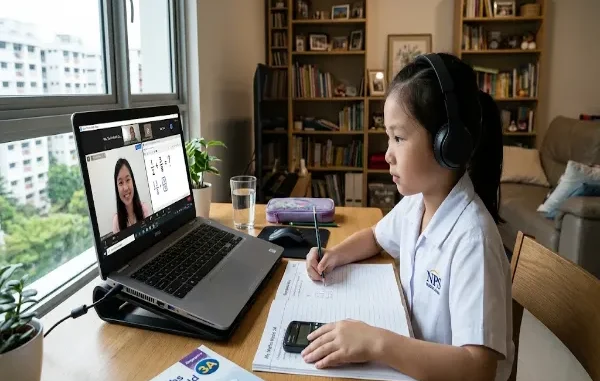
Learning mathematics requires more than attending lessons and completing homework. Children also need opportunities to think independently, practise unfamiliar questions and understand when to ask for help. While some students rely heavily on tutor explanations, others may struggle when expected to study entirely on their own. Finding a suitable balance through Singapore tuition online can help primary school students receive the guidance they need while gradually developing confidence in their own abilities. By combining structured instruction with manageable self-study activities, children can build better learning habits without becoming overly dependent on constant support.
| Key TakeawaysTutor guidance and independent study serve different but equally important purposes.Guided lessons help children understand unfamiliar mathematical concepts.Self-study allows students to apply what they have learned without immediate assistance.A balanced learning routine should reflect the child’s age, abilities and confidence.Parents can encourage independence by providing support without solving every question for their child. |

Why Do Guidance and Self-Study Need to Work Together?
Tutor-led lessons and independent practice both play an important role in learning maths.
During lessons, children receive explanations, see examples and ask questions. Self-study allows them to practise what they have learned on their own.
For example, a tutor may explain how to solve a fraction problem, after which the child can try similar questions independently.
Too much guidance can make children dependent on help, while studying alone without understanding a topic can cause frustration.
Combining both methods helps children improve their maths skills, build confidence and become more independent learners.
When Do Primary School Students Need Tutor Guidance?
Some maths topics can be difficult for children to learn alone, especially when they make repeated mistakes or struggle with new concepts.
A tutor can explain difficult topics, show simple methods and provide extra support.
For example, a child struggling with division may need to practise multiplication first. Tutors can also help children understand word problems.
The goal is to help children improve their understanding and gradually solve maths problems on their own.
What Can Children Gain from Independent Maths Practice?
Independent practice helps children check what they have learned and identify topics they find difficult.
It also encourages them to solve problems without depending on someone to explain every step.
For example, when completing a worksheet alone, children must read the questions, choose the correct method and check their answers.
Regular independent practice helps children:
- Take responsibility for their learning.
- Improve concentration.
- Build confidence in solving new problems.
- Identify mistakes and correct them.
- Understand their strengths and areas for improvement.
Independent learning does not mean children must do everything alone. They should have time to try solving problems before receiving extra help when needed.
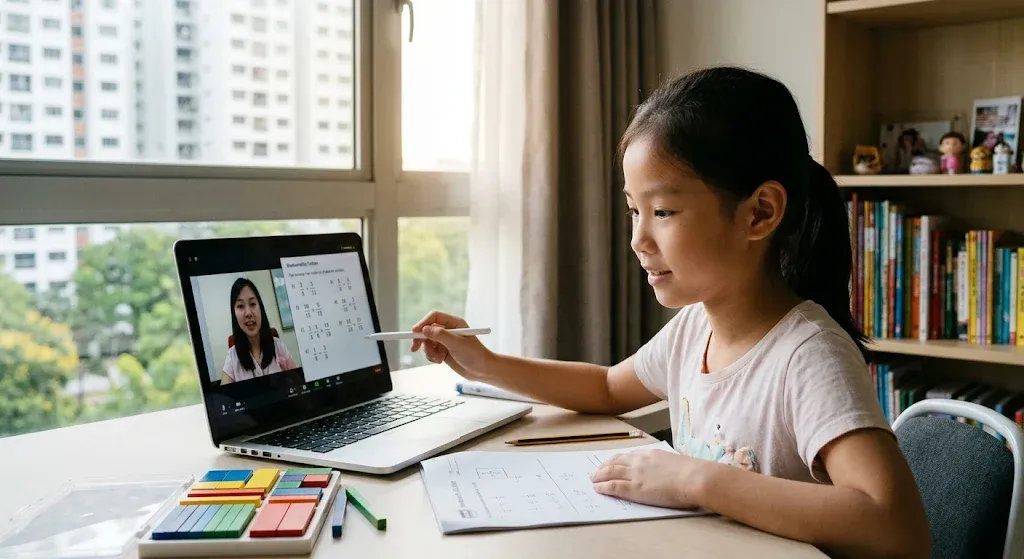
6 Practical Ways to Balance Tutor Support and Self-Study
Finding the right balance requires understanding when children need explanations and when they are ready to work independently.
The following approaches can help parents create a more manageable learning routine.
1. Use Guided Lessons to Introduce New Concepts
When children learn a new maths topic, clear explanations help them understand the basics before practising on their own.
For example, a tutor teaching fractions may first show how an object is divided into equal parts, then use diagrams and numbers to explain the concept.
Once children understand the topic, they can try a few questions with guidance before solving problems independently.
This step-by-step approach helps children learn new concepts without feeling pressured to understand everything immediately.
2. Give Children Time to Attempt Questions Independently
Parents sometimes give answers too quickly when children struggle with homework. This can limit their ability to think independently.
Instead, let children try solving the question first. If they need help, ask which part they find difficult.
Encourage them to use diagrams, review similar examples or solve the problem step by step.
Giving small hints instead of direct answers helps children become better at solving problems on their own.
3. Set a Simple Study Routine Between Tuition Sessions
Children benefit from having a clear routine for reviewing what they learn during tuition.
However, independent study does not need to involve lengthy sessions every day.
A manageable routine might include reviewing lesson notes, completing a few practice questions and revisiting previously learned topics.
Parents can adjust the schedule according to their child’s age, school commitments and attention span.
Consistency is more important than completing a large number of exercises in one sitting.
A predictable routine also helps children understand that learning continues between scheduled tutoring sessions.
4. Encourage Children to Recognise When They Need Help
Independent learning also means knowing when to ask for help. Some children ask for help too quickly, while others keep struggling without asking questions.
Parents can encourage children to try solving a problem, review their notes and identify what they do not understand.
Students using Singapore maths online resources can revisit recorded lessons and revision activities before their next tutoring session.
Children can also write down difficult questions to discuss with their tutor. This makes lessons more useful and helps them take greater responsibility for their learning.
5. Use Mistakes as Opportunities for Learning
Making mistakes is a normal part of learning maths. Children may lose confidence if every wrong answer is treated as a failure.
Parents and tutors should help children understand why they made a mistake. For example, they may have misunderstood the question, chosen the wrong calculation or made a simple error.
Instead of giving the correct answer immediately, encourage children to check their work and try again.
This helps them learn from mistakes, improve their understanding and become more confident in solving maths problems.
6. Gradually Reduce Support as Confidence Improves
Children need different levels of support as their maths skills improve.
When learning a new topic, they may need clear explanations and step-by-step guidance. As they understand the concept better, parents and tutors can slowly reduce their help.
For example, a tutor may first show how to solve a problem, then provide small hints before asking the child to try a similar question alone.
This approach builds confidence and helps children become more independent without feeling overwhelmed. It also shows when they are ready for harder questions.
Finding the Right Learning Balance at Different Primary Levels
The amount of independent study suitable for a child may vary depending on their age, abilities and familiarity with mathematics.
The following table provides general guidance.
| Learning Stage | Recommended Tutor Support | Independent Study Focus |
| Early Primary | Frequent explanations and practical demonstrations | Short exercises with parental supervision |
| Lower Primary | Guided practice and regular clarification | Basic calculations and familiar topics |
| Middle Primary | Support for new concepts and challenging questions | Topic-based revision and independent worksheets |
| Upper Primary | Targeted guidance for difficult topics | Mixed revision and examination-style practice |
These suggestions are flexible rather than fixed requirements.
A child who struggles with a particular topic may need additional guidance regardless of their primary school level.
How Can Parents Encourage Independent Learning at Home?
Parents can help children become more confident in studying independently.
Providing a quiet study space and suitable learning materials can make maths practice easier. Parents should also set realistic goals and allow children to complete simple tasks on their own.

When children need help, ask guiding questions instead of giving them the answer immediately.
Appreciating their effort and progress, even when they make mistakes, is also important.
Over time, these habits help children become more confident and responsible for their own learning.
Final Thoughts
A balanced maths routine combines tutor guidance with independent practice to help children understand concepts and improve their skills. Parents looking for additional learning support can explore Spartan Maths Malaysia, which offers structured education based on Singapore Maths principles. With the right balance of teaching and self-study, children can build better learning habits, become more independent and approach maths with greater confidence.
Frequently Asked Questions
The appropriate amount depends on the child’s age, abilities and school commitments. Short, consistent sessions are generally more manageable than lengthy periods of independent practice.
Online tuition can support independent learning when it combines clear instruction with opportunities for revision, self-assessment and individual practice.
Parents should provide guidance when necessary, but allowing children time to attempt questions independently can help develop confidence and problem-solving skills.
They can review earlier examples, identify which part of the question is confusing and record any difficulties to discuss with their tutor.
Tutors can gradually reduce assistance, assign suitable practice activities and encourage students to explain their reasoning before providing additional guidance.




Leave a Reply