
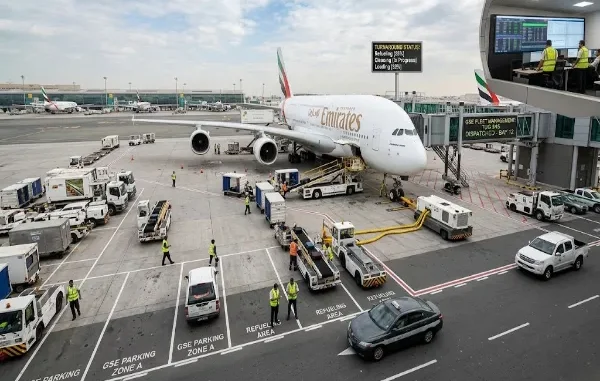
Your airport’s ground operations directly influence passenger satisfaction, airline profitability, and overall facility performance. When baggage handling moves smoothly, aircraft turn around quickly, and ground crews coordinate effectively, the entire travel experience improves for everyone involved. Airport managers and operators face constant pressure to streamline processes while maintaining safety and compliance with regulatory requirements. The challenge lies in identifying which operational improvements deliver the greatest impact without disrupting existing workflows or requiring excessive capital investment. Understanding the key areas where efficiency gains are possible helps your team prioritize resources and implement meaningful changes that benefit passengers, staff, and airline partners alike.
Optimizing Aircraft Turnaround Times
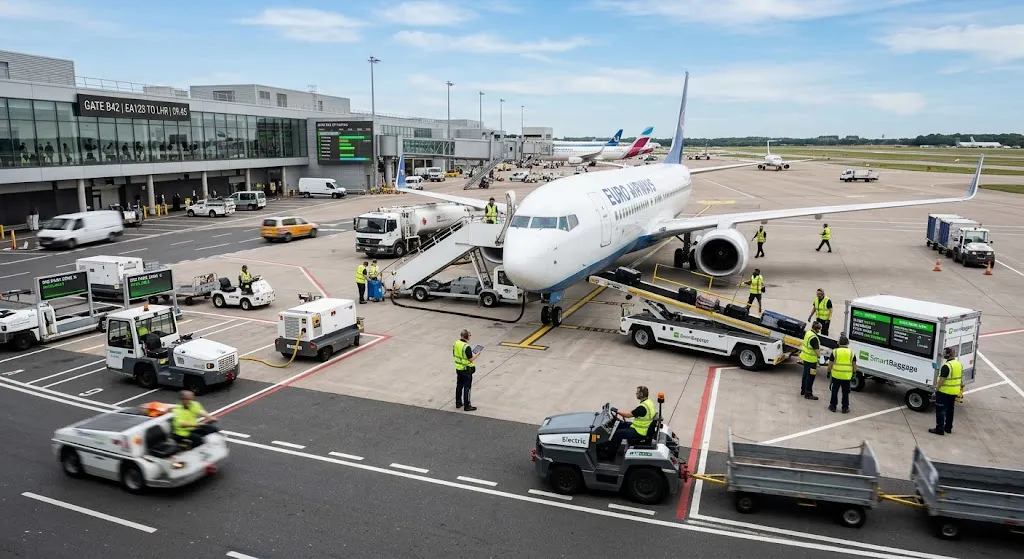
Aircraft turnaround time represents one of the most critical efficiency metrics at any airport. This period encompasses everything from the moment a plane arrives at the gate until it departs again, including passenger deplaning, baggage unloading, cleaning, refueling, restocking, and boarding. When your ground crews work in coordinated fashion, the turnaround process can be completed in 30 to 45 minutes for standard domestic flights, though this varies based on aircraft size and passenger load. To optimize this phase, your airport should invest in real-time communication systems that allow ground operations managers to monitor multiple aircraft simultaneously and coordinate the sequencing of tasks. For example, baggage handlers can begin unloading luggage while cleaning crews prepare the cabin, provided these activities do not interfere with one another. Establishing clear protocols and training your staff to follow standardized procedures ensures that delays in one area do not cascade into problems elsewhere on the tarmac.
Streamlining Ground Support Equipment Operations
Ground support equipment, or GSE, consists of tugs, loaders, catering vehicles, and other machinery necessary for aircraft servicing. Your airport likely operates dozens or even hundreds of these vehicles each day, and their efficient deployment directly affects turnaround times and operational costs. When GSE is poorly organized or insufficiently maintained, vehicles sit idle while waiting for assignments, or ground crews waste time searching for available equipment rather than completing service tasks. Implementing a centralized fleet management system allows your operations team to track equipment location, maintenance status, and availability in real time, ensuring that the right vehicle reaches the right aircraft at the right moment. During aircraft servicing operations, teams that rely on ground power units ensure that aircraft systems remain powered without running onboard engines, which reduces fuel consumption and keeps operations running efficiently at the gate. Predictive maintenance programs also reduce unexpected breakdowns, and scheduling regular servicing during slow periods keeps your GSE fleet operating at peak efficiency while minimizing service interruptions during high-traffic times.
Improving Baggage Handling and Ground Transport
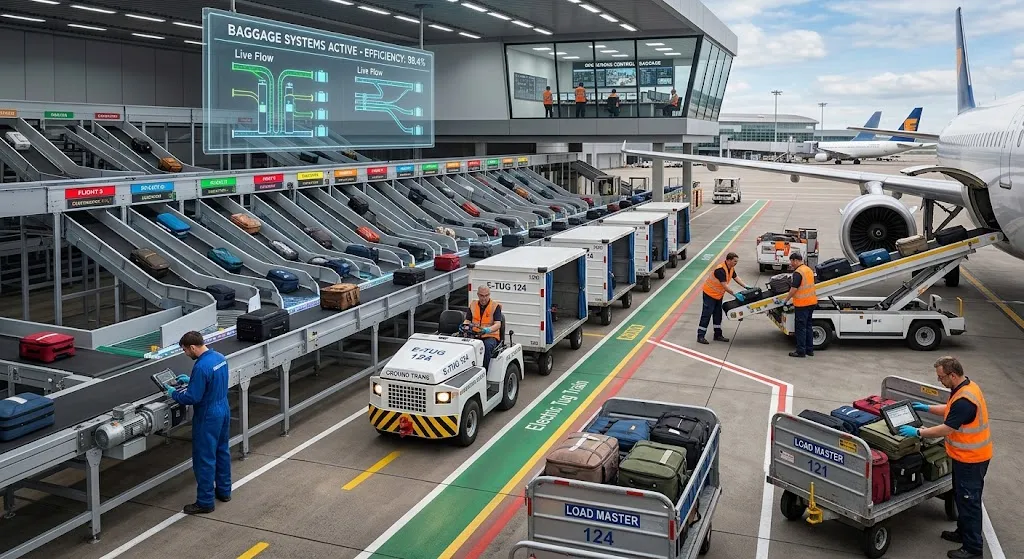
Baggage handling represents a significant portion of ground operations at any airport, and inefficiencies in this area directly affect passenger experience and airline satisfaction. Your airport receives and processes hundreds of thousands of bags weekly, each requiring proper sorting, loading, and delivery to either aircraft holds or baggage claim areas. Modern baggage handling systems use conveyor belts, automated sortation technology, and digital tracking to move bags from check-in counters to aircraft efficiently and accurately. However, the human component remains essential, as ground crews must load and unload baggage from aircraft holds and ensure proper weight distribution on planes. Training your baggage handlers to follow established procedures, use equipment safely, and recognize when supervisor assistance is needed prevents mishandled bags and delays. Regular equipment maintenance, including conveyor belt inspections and automated system diagnostics, ensures that your baggage system operates reliably even during peak periods when passenger volumes surge.
Enhancing Communication Between Departments
Ground operations success depends on seamless coordination between multiple departments, including ramp operations, baggage handling, fueling, catering, and maintenance crews. When communication breaks down, misunderstandings about aircraft arrival times, gate assignments, or service priorities can cascade into delays that affect subsequent flights throughout the day. Your airport should establish clear communication protocols that define how information flows between departments and who holds responsibility for specific decisions. Many modern airports employ operations control centers where supervisors from each department monitor activities on a shared display system, allowing real-time problem-solving when unexpected issues arise. For example, if maintenance discovers a mechanical issue requiring repair, the operations center can immediately coordinate with gate agents, catering services, and other crews to manage passenger communication and adjust schedules accordingly. Regular training sessions ensure that all staff members understand their role in the broader operational picture and know how to escalate issues when they cannot resolve them at their current level.
Maximizing Space and Infrastructure Utilization
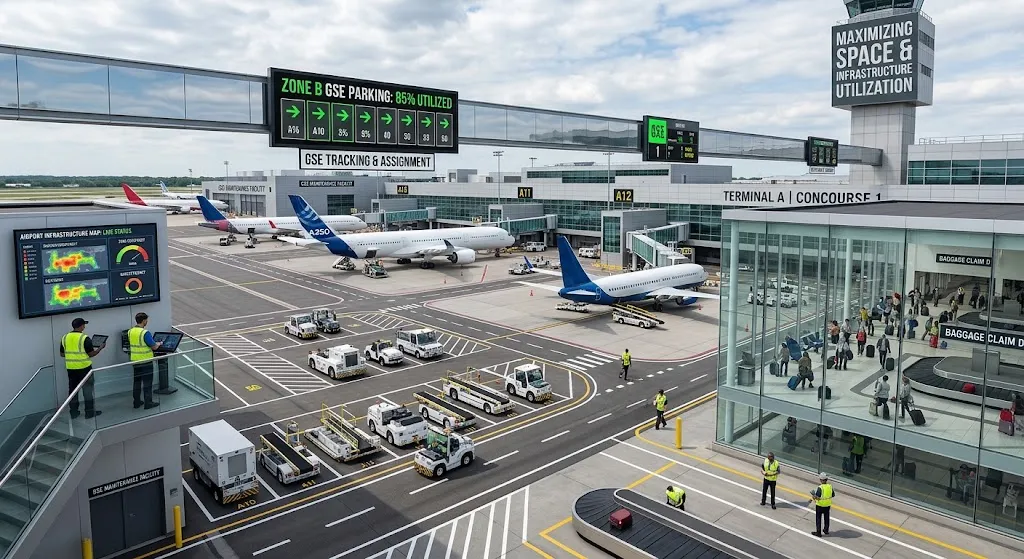
Your airport’s physical layout and infrastructure significantly influence how efficiently ground operations can function. Gate availability, parking areas for ground support equipment, baggage claim areas, and ramp space all affect how quickly aircraft can be serviced and passengers can move through the terminal. When planning ground operations, your management team must consider how to use available space most effectively, sometimes requiring decisions about which activities take priority in congested areas. Implementing zone-based systems where specific areas are designated for certain types of equipment or activities can reduce congestion and confusion on the ramp. Digital parking systems that direct GSE operators to available spaces reduce the time spent searching for parking, keeping equipment ready for service tasks rather than tied up in circulation. For further reading on how airports are approaching operational improvements, the Airports Council International North America publishes research and resources relevant to airport management and ground operations planning.
Conclusion
Improving ground efficiency at your airport requires attention to multiple interconnected areas, from aircraft turnaround procedures to baggage handling systems to communication protocols between departments. No single change will transform your operations overnight, but thoughtful implementation of improvements across these areas produces measurable gains in passenger satisfaction, reduced flight delays, and better utilization of staff and equipment resources. Your airport team should regularly evaluate operational performance through key metrics such as turnaround times, baggage handling accuracy, and ground equipment availability to identify areas needing improvement. Investing in staff training, modern technology systems, and clear communication structures creates a foundation for sustainable efficiency gains that benefit everyone involved in airport operations. By prioritizing these operational improvements, your airport can maintain competitiveness while delivering better experiences for the millions of passengers who pass through your gates each year.



Leave a Reply