
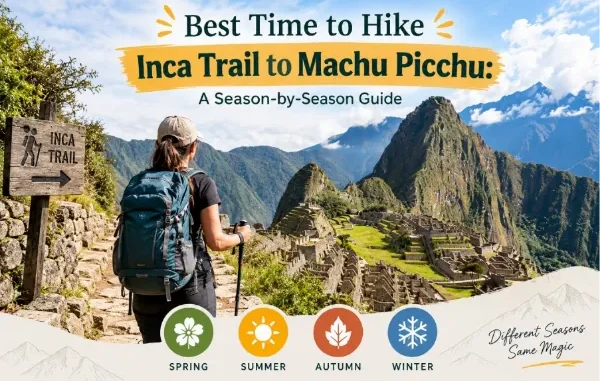
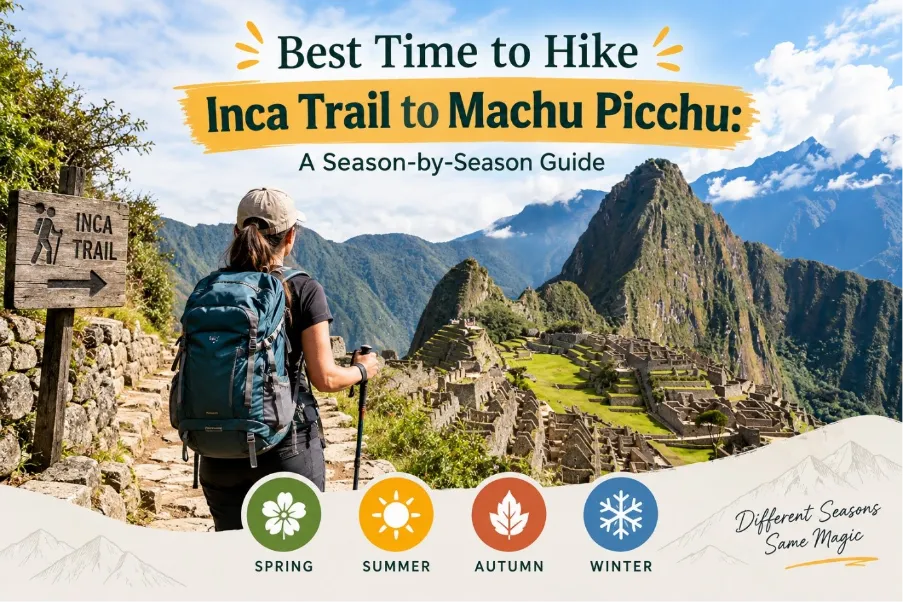
There’s a particular kind of quiet that settles over the trail before sunrise on Day 4 — mist clinging to the cloud forest, your breath visible in the cold air, and somewhere ahead, the Sun Gate. That moment is the same no matter when you go. But everything leading up to it — the mud on your boots, the clouds rolling over Dead Woman’s Pass, whether you can actually see the mountains around you — depends almost entirely on the month you choose to hike.
If you’re planning one of the Machu Picchu hiking tours that follow the classic route, timing isn’t just a scheduling detail. It shapes how hard the trek feels, how many people you share the trail with, and whether your photos come out looking like a postcard or a rainstorm. So let’s get into it properly, month by month, and figure out when you should actually go.
The Short Answer
The best time to hike the Inca Trail is during the dry season, from May through September, with June and July offering the most reliable weather. If you’d rather skip the biggest crowds while still getting decent conditions, April and October are worth serious consideration. That’s the quick version. The longer version has a few wrinkles worth knowing before you book.
Why the Dry Season Gets All the Credit
Peru’s Andes run on two seasons, not four — dry and wet — and the difference between them is bigger than most first-time trekkers expect. From roughly May to September, the trail sees very little rain. Mornings start cold, sometimes bitterly so at the higher campsites, but by midday the sun is strong enough that hikers are usually down to a base layer.
This is the window when the classic postcard shots happen — sharp mountain outlines, that specific blue-green of the Urubamba Valley, and clear views from Dead Woman’s Pass that make the climb feel worth every gasping breath. It’s also, unsurprisingly, when the trail is at its busiest.
June, July, and August line up with North American and European summer holidays, so these three months carry the heaviest foot traffic. Permits for a 4-day classic route during this stretch tend to disappear five or six months out, sometimes earlier for specific departure dates. If your travel dates are fixed and fall in this window, book early — this isn’t exaggerated marketing advice, it’s just how the permit system works. The Peruvian government caps the number of people allowed on the trail each day, and popular dates in peak season fill fast.
Shoulder Season: The Sweet Spot Most People Miss
April and October sit right on the edges of the dry season, and honestly, they’re a bit underrated. The rains are winding down (April) or haven’t fully started (October), so you still get a good number of clear days, but the trail isn’t nearly as packed.
I’d point anyone who hates crowds but still wants dependable weather toward these months. You’ll likely still hit a light shower on the trail — pack a rain cover for your daypack regardless — but the trade-off in smaller groups at the campsites and shorter waits at checkpoints is worth it for a lot of travelers. Wildflowers are also more visible in April, and the valleys tend to look greener than in the driest months of July and August.
What Rainy Season Actually Looks Like
November through March is Peru’s wet season, and it gets an unfairly bad reputation. Yes, it rains — often in the afternoons, sometimes overnight, occasionally in a way that turns stone steps slick and muddy. But it’s rarely a constant downpour for four straight days. Mornings are frequently clear, and afternoon storms tend to roll through and pass.
What you get in exchange is a trail that’s dramatically quieter and a landscape that’s genuinely lush — thick green terraces, waterfalls that barely exist in the dry months, and mist drifting through the cloud forest sections in a way that honestly looks more atmospheric in photos than a cloudless sky ever does. Some experienced guides will tell you the rainy season delivers some of the best Inca Trail tours for travelers who don’t mind packing a good rain jacket and accepting that a few views might be obscured.
There’s one exception you need to know about: the trail closes entirely every February for maintenance and conservation work. No exceptions, no special permits. If your trip lands in February, you’ll need to look at alternatives — the Salkantay trek, the Lares route, or a train-based visit to Machu Picchu are the usual substitutes.
A Quick Month-by-Month Snapshot
- May – Transitioning into dry season. Green landscapes still linger from the rains, skies are clearing up, crowds are moderate.
- June – Peak dry season, peak crowds. Cold mornings, clear days, book far ahead.
- July – The busiest month of the year, coinciding with Peruvian Independence Day (July 28). Gorgeous weather, but permits vanish fast.
- August – Similar to July: dry, clear, and heavily booked.
- September – Still dry season conditions but crowds ease off slightly as the peak international travel window closes.
- October – Shoulder season. Good weather odds, noticeably fewer hikers on the trail.
- November – Early rainy season. Occasional afternoon showers, still very hikeable.
- December–January – Wetter, warmer nights, greener scenery, thinner crowds. Some rain is likely most days.
- February – Trail closed. Plan an alternative route or a train-based Machu Picchu visit.
- March – Trail reopens March 1st. Still fairly wet early in the month, drying out by late March.
Beyond Weather: Other Things That Shape “Best Time”
Weather isn’t the only factor worth weighing when you’re comparing Inca Trail tours and trying to pick dates.
Altitude sickness risk doesn’t change by season — it’s tied to elevation, not weather. Whatever month you go, plan two to three days in Cusco (3,399 m) beforehand to let your body adjust before you start climbing toward Dead Woman’s Pass at 4,215 m. Skipping this step is one of the most common regrets among first-time trekkers, dry season or not.
Permit availability matters more than the calendar suggests. Peru issues a fixed daily number of Inca Trail permits, shared between hikers, guides, porters, and cooks. Once a date sells out, it’s gone — there’s no waitlist that reliably works. Permits for the following year are typically released around October or November, and dates in the June-to-August window can sell out within weeks of release.
Photography preferences play a role too. If dramatic, moody, cloud-wrapped shots of Machu Picchu appeal to you more than crisp blue-sky panoramas, the shoulder or rainy months might actually suit your trip better than peak season does.
Physical difficulty stays roughly the same year-round. Dead Woman’s Pass is tough in June and tough in December. What changes is how the ground feels underfoot — dry and dusty in August, occasionally slick in a January downpour. Trekking poles help either way, but they earn their keep more obviously in wet conditions.
How to Decide What’s Right for You
If your priority is predictable, sunny weather and you don’t mind sharing the trail with more people, aim for June through August and book your Machu Picchu trekking experience as early as six to eight months out. If you’d rather thread the needle between good weather and smaller groups, April or October usually deliver the best balance. And if budget flexibility and quieter trails matter more to you than guaranteed sunshine, the rainy season — outside of February — is a genuinely viable option, not just a fallback.
There’s no universally “wrong” month here, except February, when the choice is made for you. Every season on this trail has trade-offs, and knowing them in advance means you show up prepared instead of surprised.
Frequently Asked Questions
The best time to hike the Inca Trail is during the dry season, from May to September, when rainfall is minimal and mountain views are at their clearest. June through August are the busiest months, so April and October are strong alternatives if you want similar weather with fewer crowds.
No. The trail operates from March through January but closes completely every February for trail maintenance and conservation work. If your travel dates fall in February, alternative routes like the Salkantay trek or a train-based Machu Picchu visit are the standard workaround.
Yes, hiking is possible from November to March, though afternoon rain is common and trail conditions can get muddy in sections. Many travelers who hike during this period appreciate the lush scenery and significantly smaller crowds, as long as they pack proper rain gear.
For dry season dates (May–September), booking five to eight months ahead is strongly recommended, since permits often sell out that early. For shoulder or rainy season months, three to four months’ notice is usually sufficient, though earlier is always safer.
June and July generally offer the most consistent dry, clear weather, though nighttime temperatures at high-altitude campsites can drop close to freezing. August follows closely behind, with slightly warmer conditions but similarly dry skies.
No, altitude sickness risk depends on elevation, not season. Whether you hike in July or December, spending two to three days acclimatizing in Cusco before starting any Machu Picchu hikes is the most effective way to reduce your risk.
Yes. April and October see noticeably fewer hikers than the June-to-August peak, while still offering reasonably dry and stable weather. They’re often recommended for travelers who want a quieter trekking experience without the higher rainfall of the true wet season.
Dry season packing should prioritize sun protection, warm layers for cold mornings, and dust-resistant gear. Rainy season packing needs a solid rain jacket, a waterproof daypack cover, and trekking poles for extra stability on wet stone steps, along with quick-dry clothing that won’t stay damp overnight.



Leave a Reply