
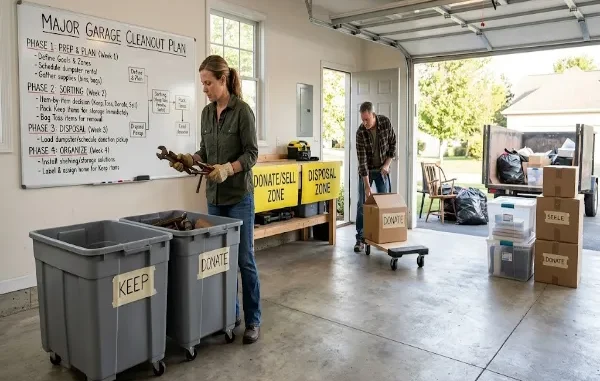
Garages tend to collect belongings gradually, which makes a major cleanout different from an ordinary weekend tidying session. Seasonal decorations, broken furniture, old tools, empty boxes, unused equipment, and forgotten household items can accumulate for years. Removing everything without a clear plan can simply transfer the disorder from the garage to the driveway, basement, or another storage area.
A successful cleanout begins by deciding what should remain before large amounts of material start moving. Homeowners need space for sorting, safe walking routes, and separate destinations for items being kept, donated, recycled, or discarded. Establishing those categories early prevents every object from becoming a new decision somewhere else on the property.
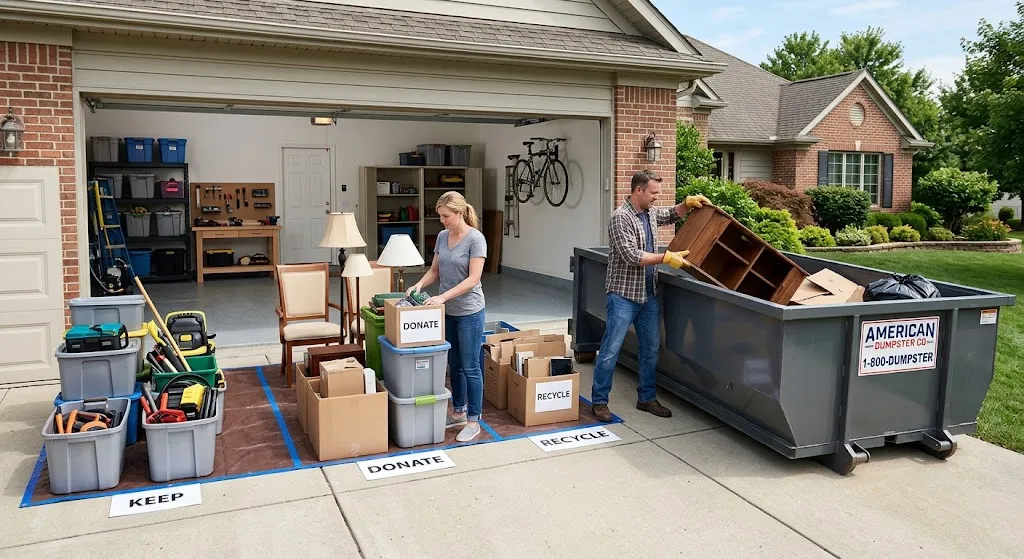
For larger projects, a Dumpster Rental can become part of the overall workflow rather than a last-minute response to growing piles. Homeowners considering American Dumpster Co can first evaluate how much material has accumulated and which items are actually ready for disposal. That preparation creates a cleaner path from an overcrowded garage toward usable space.
Define the Purpose of the Garage Before Emptying It
A cleanout is easier when homeowners know how they want the garage to function afterward. Some households need dependable vehicle parking, while others want room for tools, bicycles, lawn equipment, or a small workshop. The intended use should guide decisions about what deserves to stay.
Without a clear goal, useful space can quickly be filled again with objects that have no permanent location. Decide which activities and storage needs have priority before sorting begins. This gives each questionable item a practical standard against which it can be evaluated.
Measure or identify areas needed for vehicles, shelving, workbenches, and frequently used equipment. These zones should remain protected as the cleanout progresses. Planning the finished layout before removal helps prevent old clutter from returning to newly cleared areas.
Create Sorting Zones Outside the Main Work Path
Trying to make every decision while standing beside a crowded shelf can slow the entire project. Establish separate areas for belongings being kept, donated, recycled, or discarded. Each item can then move directly toward its next destination.
Sorting zones should not block doors, sidewalks, vehicles, or the primary route between the garage and disposal area. A poorly placed donation pile can become just as disruptive as the clutter being removed. Keep temporary categories organized and clearly separated.
A residential dumpster rental can provide a defined destination for appropriate discarded materials once sorting begins. American Dumpster Co can be considered after homeowners identify the types of waste involved and confirm relevant disposal requirements. Knowing the destination reduces repeated handling during a large cleanout.
Start With Large Items That Consume Floor Space
Bulky objects often make a garage feel more crowded than the actual number of belongings suggests. Broken furniture, damaged shelving, large containers, and unused equipment can occupy valuable floor space while smaller items accumulate around them. Addressing confirmed large waste early can create a working room.
Do not remove bulky objects randomly if smaller belongings are stacked around or on top of them. Clear accessible material first and establish a safe route toward the exit. This reduces unnecessary lifting and prevents workers or family members from repeatedly rearranging the same objects.
Avoid Moving Unwanted Items to Another Storage Area
An item does not become useful simply because it has been moved from the garage into a basement or shed. Before relocating anything, decide why it is being kept and where it will permanently belong. This simple question can prevent clutter from migrating around the home.
Sort Shelves and Cabinets One Section at a Time
Once major floor areas are accessible, work through shelves, cabinets, and storage racks systematically. Emptying every storage unit simultaneously creates dozens of loose objects without providing enough room to organize them. Completing one section before opening another keeps decisions manageable.
Group similar belongings together whenever practical. Seeing several duplicate tools, containers, sports items, or household supplies in one place makes it easier to decide what is genuinely needed. Items that seemed important individually may appear unnecessary once duplicates become visible.
Return kept belongings only after the storage area has been cleaned and assigned a purpose. This prevents shelves from immediately returning to their previous condition. Organized replacement is as important as removal during a lasting cleanout.
Keep the Driveway Functional Throughout the Project
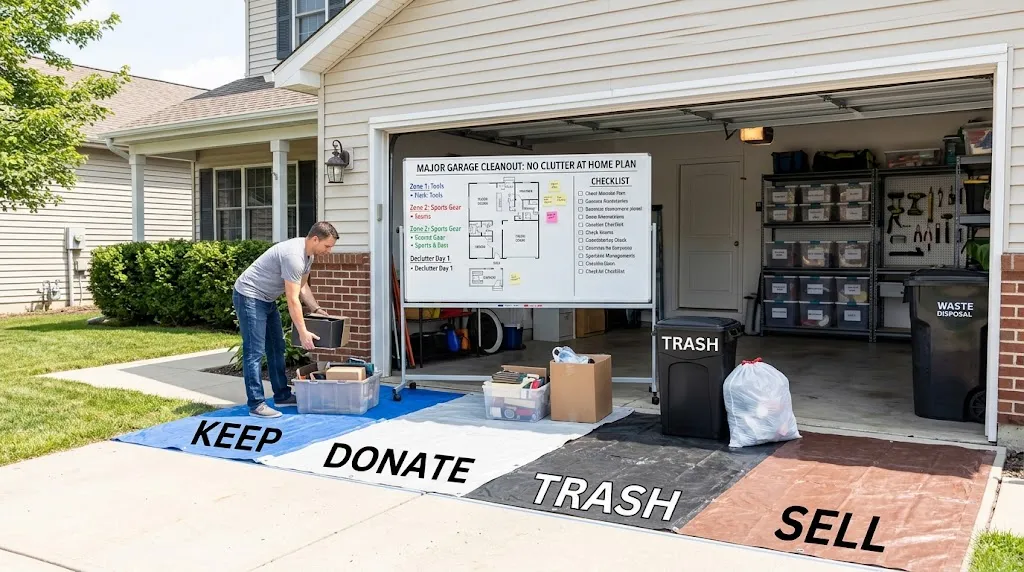
The driveway often becomes the natural staging area during garage work, but allowing every category to spread across it can create another problem. Vehicles, household members, and waste removal activities may still require predictable access. Define how much driveway space the project can reasonably occupy.
A Dumpster Rental should be planned with those everyday access needs in mind. Consider vehicle movement, garage doors, gates, and the route used to carry material outside. Convenient placement supports the cleanout without unnecessarily consuming every usable exterior space.
Homeowners should also consider scheduled deliveries or other property activity. A driveway filled with temporary piles can interfere with normal routines and create additional handling later. Keeping one dependable route open makes the project easier to manage.
Handle Uncertain Materials Separately From General Waste
Garages can contain products that should not automatically be placed with ordinary household debris. Paint, automotive fluids, batteries, chemicals, electronics, and unidentified containers may require different handling. These materials should be separated until their appropriate disposal method is confirmed.
Create a small, controlled holding area for questionable items rather than mixing them into general waste. Keep labels visible and containers closed when possible. Avoid combining unknown liquids or transferring products simply to reduce the number of containers.
American Dumpster Co can provide relevant information about materials intended for its containers before loading begins. Confirming requirements early prevents unsuitable items from becoming buried beneath other debris. A little sorting at the beginning can prevent considerable work later.
Schedule Donation and Recycling Removal Promptly
Donation piles frequently become permanent garage residents because homeowners postpone the trip needed to remove them. Set a specific destination and timeframe for usable items as part of the cleanout plan. Anything being donated should actually leave the property rather than becoming another storage category.
Recyclable materials deserve similar planning. Determine where accepted items will go before creating a large pile. Clear destinations keep the project moving and prevent temporary sorting areas from remaining after the main cleanup is finished.
A residential dumpster rental works best when it supports a broader sorting strategy instead of receiving everything indiscriminately. Keeping reusable and separately handled materials out of the general waste stream creates a more deliberate cleanout. The goal is organized removal, not merely rapid emptying.
Finish With a Second Review of What Remains
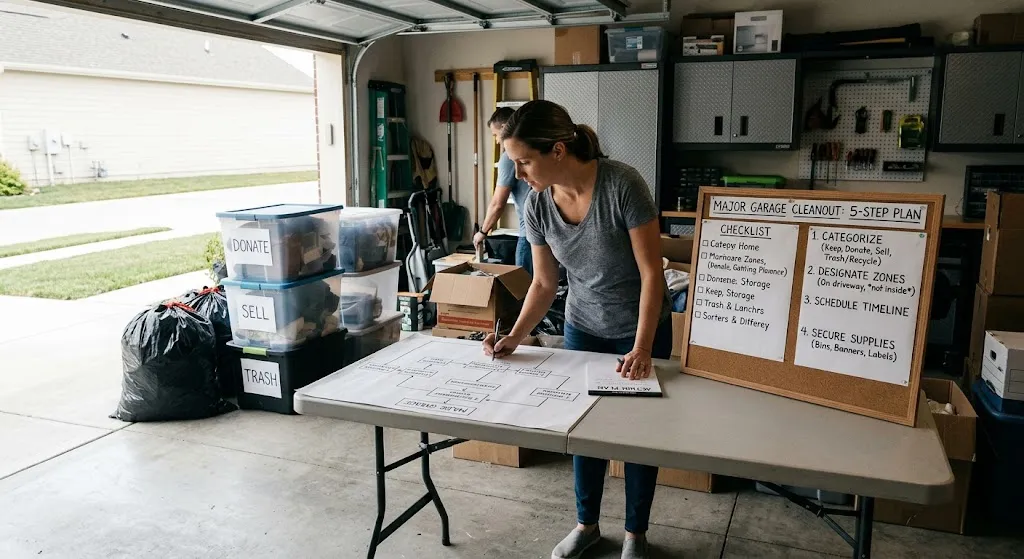
After major disposal and sorting are complete, walk through the garage again before reorganizing everything permanently. Open cabinets, check corners, look behind equipment, and review items that were initially placed in the keep category. More space often makes unnecessary belongings easier to recognize.
This second review is also an opportunity to clean exposed surfaces and inspect storage equipment. Damaged shelving or unstable containers can undermine an otherwise successful organization plan. Addressing these issues before restocking creates a stronger foundation for future use.
Place frequently used belongings where they are easy to reach and move occasional items into clearly defined storage areas. Leave important walking and vehicle zones open. Empty floor space should be treated as functional space rather than an invitation to begin accumulating again.
Build Habits That Keep the Garage Usable
A major garage cleanout succeeds when the space remains functional after the last unwanted item leaves. Assigning permanent locations to tools, seasonal belongings, sports equipment, and household supplies reduces the temptation to place new items wherever space happens to exist. Clear categories make future decisions faster.
Review the garage periodically instead of waiting for another large accumulation. A short seasonal check can identify broken items, unused belongings, and empty packaging before they consume significant space. Smaller maintenance sessions are easier than repeating a complete cleanout.
The most effective strategy combines thoughtful sorting with an organized removal process. By defining the garage’s purpose, controlling temporary piles, maintaining access, and giving every retained item a destination, homeowners can reclaim useful space without relocating the original problem. The result is a garage that supports everyday needs instead of gradually becoming another crowded storage room.





Leave a Reply