
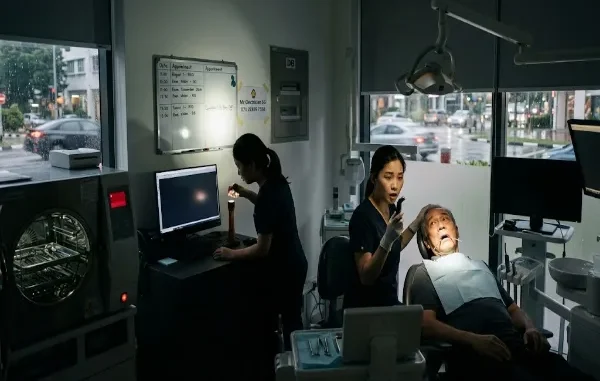
It is a Tuesday afternoon in a busy dental clinic. Three patients are in chairs, one mid-procedure with an active handpiece. The sterilisation unit is mid-cycle. The digital imaging system just captured an X-ray that has not saved yet. Then the lights go out.
This is not a hypothetical designed to scare you. Power outages happen – grid faults, building-level trips, planned maintenance that someone forgot to tell you about. For most offices, a blackout means a few minutes of inconvenience. For a medical or dental clinic, it means interrupted procedures, compromised infection control, anxious patients, and equipment that may not restart cleanly. The question is not whether you will ever lose power. The question is what happens to your clinic when you do.
The Problem Is Not Darkness
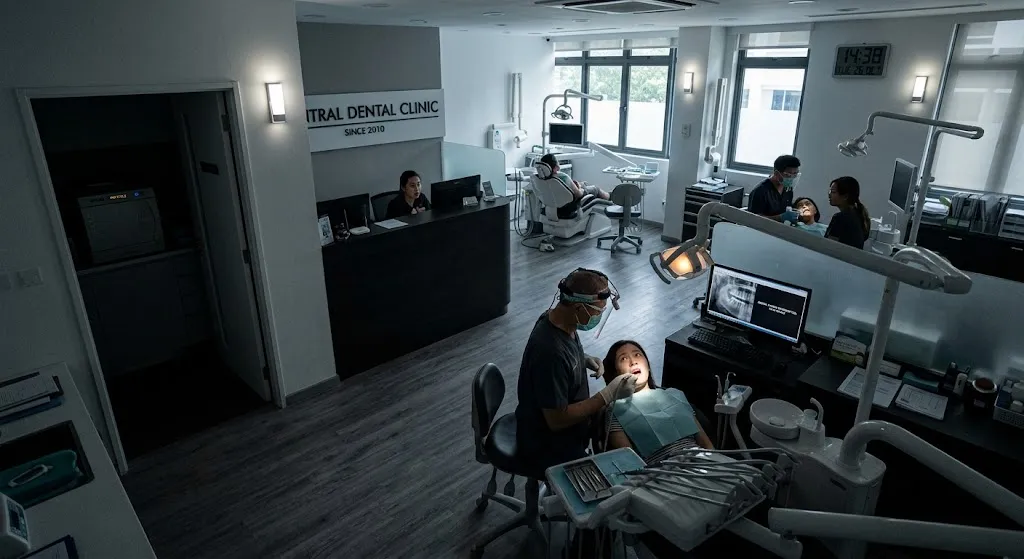
When people think about power outages, they think about the lights going off. But in a clinical environment, losing lighting is actually the least of your problems.
Your real exposure is the equipment that cannot tolerate a sudden loss of power. Autoclaves mid-cycle have to restart the entire sterilisation process – and depending on what is inside, you may have to assume the load is no longer sterile. Digital records systems that lose power without a clean shutdown risk data corruption. Imaging equipment, particularly units that use motorised positioning, can be damaged by abrupt shutoffs. Suction units stop immediately, which during certain procedures is more than just inconvenient.
Then there is the cold chain. If your clinic stores medications, vaccines, or biological materials that require refrigeration, every minute without power is a minute those storage temperatures are drifting. Most medical-grade refrigerators will hold temperature for a while with the door closed, but nobody knows exactly how long “a while” is until they are standing there with a thermometer hoping for the best.
Honestly, the cascade of problems from even a brief outage in a clinical space is something most clinic owners do not fully appreciate until they have lived through one. And by then, the damage – to equipment, to consumables, to patient trust – is already done.
Critical Versus Non-Critical – the Distinction That Matters
The foundation of any backup power strategy for a clinic is understanding which circuits are critical and which are not. This sounds obvious, but the way most clinics are wired, everything is treated the same. Your treatment room lights are on the same distribution board as your waiting room feature wall. Your sterilisation equipment shares circuits with your break room microwave. When power drops, everything goes down together.
A properly designed clinical electrical system separates these into distinct categories. Your critical circuits – the ones that absolutely must keep running during an outage – get connected to backup power. Your non-critical circuits do not. This means your treatment room lighting, your suction, your patient monitoring equipment, and your data systems stay on, while your waiting room television and decorative lighting do not.
The exercise of deciding what is critical and what is not is worth doing carefully, because it directly affects how much backup power capacity you need. The more circuits you designate as critical, the larger and more expensive your backup system needs to be. There is a temptation to put everything on backup because it feels safer, but that approach often leads to an oversized system that costs more than it should, both to install and to maintain.
Where most clinics run into trouble is that this categorisation never happened during their original fitout. Everything was wired as a single system because nobody was thinking about backup power at the time. Commercial electrical contractors like Mr Electrician SG regularly help clinics map out this critical versus non-critical split as part of their fitout planning, because retrofitting circuit separation later on involves opening up walls and ceilings to run new cable – exactly the kind of disruption a busy clinic does not want.
Uninterruptible Power Supply Systems and What They Actually Do
An Uninterruptible Power Supply (UPS) is the first line of defence in a power outage. It is essentially a battery system that sits between the mains supply and your equipment, providing instant switchover when power drops. The key word is instant – there is no gap, no flicker, no interruption. The equipment connected to the UPS does not even know that mains power has been lost.
This matters for anything that is sensitive to power interruption. Computers, servers, and networking equipment should always be on a UPS. So should any clinical equipment that has an active process you cannot afford to interrupt – imaging systems during capture, monitors during procedures, suction units.
But here is where expectations and reality sometimes diverge. A UPS is not designed to run your clinic for hours. Most UPS systems provide minutes of runtime, not hours. Their purpose is twofold: to bridge the gap until a generator kicks in, or to give you enough time to safely shut down equipment and conclude procedures if no generator is available.
So what happens when you need more than a few minutes?
That is where you start looking at generator backup or extended-runtime UPS configurations with additional battery banks. For clinics that perform procedures lasting more than a few minutes – which is most dental and many medical clinics – relying on a standard UPS alone is not a complete strategy. You need either a generator that starts automatically when mains power is lost, or a UPS system sized for enough runtime to cover your longest likely procedure plus a safety margin.
The choice between these options depends on your space, your budget, and your risk tolerance. Generators need space, ventilation, and fuel management. Extended UPS systems need battery storage space and regular battery maintenance. Neither is maintenance-free, and both require periodic testing to make sure they will actually work when you need them. A backup power system that has never been tested is not a backup power system. It is an expensive assumption.
Designing It In From the Start
If you are planning a new clinic fitout or a major renovation, this is the time to get backup power right. Retrofitting is always more expensive and more disruptive than designing it in from the beginning.
The electrical design for a clinic with proper backup power planning looks different from a standard commercial fit-out. Your distribution board (DB) layout needs to separate critical and non-critical circuits from the start. Your UPS and any generator systems need to be specified as part of the electrical design, not added as an afterthought. Cable routing needs to account for the additional circuits, and your DB needs enough capacity and physical space to handle the split.
An experienced commercial electrical contractor will work with your design team to map out which systems need protected power, size the backup infrastructure accordingly, and integrate it into the broader electrical design so that it works as a coherent system rather than a bolt-on. This is the kind of project where getting the design right upfront saves significant cost and complexity compared to trying to add it later.
Your architect or interior designer also needs to know about backup power requirements early, because UPS systems and generators need physical space. A floor-standing UPS unit takes up real square footage. A generator needs to be located somewhere with proper ventilation and exhaust management, which in a clinic setting also means thinking about noise during operating hours. These space requirements need to be factored into the layout before walls go up, not after.
What About Existing Clinics?
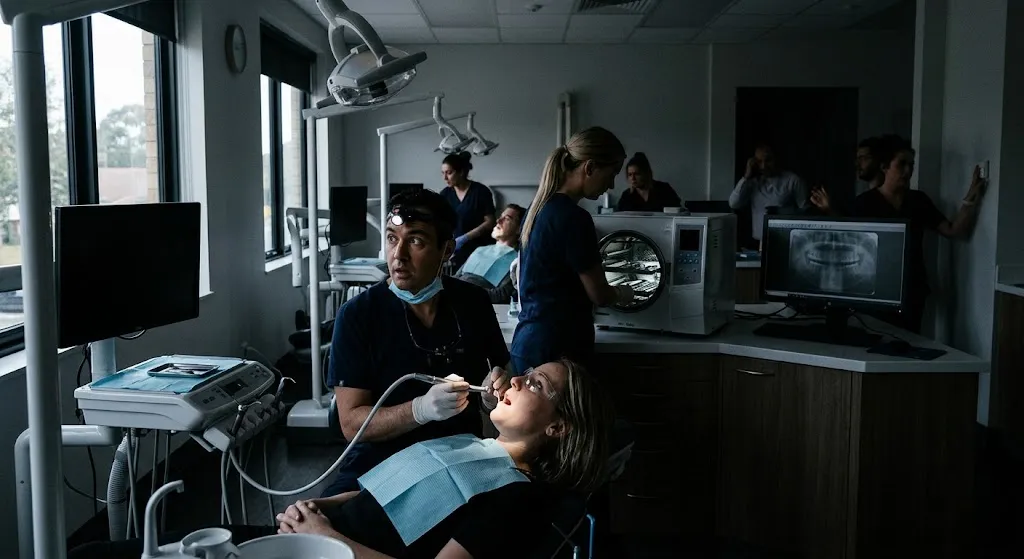
Not everyone has the luxury of designing from scratch. If your clinic is already operating and you are realising that your power resilience is inadequate, you still have options – they just require more careful planning.
The first step is an audit of your current electrical setup. What circuits serve what equipment? How is your distribution board configured? Is there any existing separation between critical and non-critical loads? Sometimes there is more existing infrastructure to work with than you expect. Other times, the wiring is so intermingled that meaningful separation requires significant rework.
For existing clinics, a phased approach often makes sense. Start with UPS protection for your most critical systems – your practice management server, your imaging workstation, your primary treatment room. This can usually be done with standalone UPS units that do not require any rewiring. Then, when you next have a planned closure or renovation opportunity, tackle the broader circuit separation and consider a more integrated backup solution.
The worst approach is to do nothing and hope for the best. Even if a full backup power system is not in your budget right now, having licensed electrical workers from Mr Electrician in Singapore assess your setup and recommend a staged plan gives you something to work from.
Testing, Maintenance, and the Part Everyone Forgets
Installing backup power is not the end of the story. It is the beginning of an ongoing maintenance obligation that many clinic owners overlook.
UPS batteries degrade over time. Depending on the type and quality, you might get a few years of reliable service before battery capacity starts declining noticeably. If you have never tested your UPS under load, you do not actually know whether it will deliver the runtime you are counting on. A quarterly test – switching off mains power intentionally and confirming that the UPS handles the load cleanly – takes minutes and tells you exactly where you stand.
Generators need periodic running, fuel checks, and servicing. A generator that sits idle for months and then fails to start during an actual outage is a painfully common story. If you have a generator, it should be started and run under load on a regular schedule – not just idled, but actually loaded to confirm it can handle the demand.
There is also the human element. Does your staff know what to do during a power outage? Which procedures to pause, which equipment to shut down first if runtime is limited, where the manual overrides are, who to call? A laminated procedure card on the wall near the DB is a simple thing, but in the confusion of an actual outage, it is remarkably useful.
The Calculation You Should Be Making
Think about what a power outage costs your clinic. Cancelled appointments for the rest of the day. Wasted consumables from interrupted sterilisation cycles. Potential data loss. Equipment service calls for units that did not shut down cleanly. And the harder-to-quantify cost of patients who had a bad experience and may not come back.
Now think about what a properly designed backup power system costs. It is not trivial, but it is also not in the same order of magnitude as even a single bad outage event.
The clinics that handle outages well are not lucky. They are prepared. They thought about this during their fitout, or they took the time to retrofit it properly. They test their systems, they train their staff, and when the power drops, their critical systems keep running while they calmly manage the situation. That is the difference between a minor inconvenience and a day you would rather forget.
Related posts:
 Essential Metrics to Evaluate Before Investing in Oil
 How to Maximize Employee Motivation with Branded Reward Cards
 Why Your Business Needs a Strong Mission Statement
 How Verified Consultants Can Help You Close Office Deals Faster in Bangalore
 How Maya Thompson Turned $100 Into a Million-Dollar Empire
Leave a Reply