
Cold weather workouts have a way of making getting dressed feel like a workout in its own right. Wear too little, and you spend the first mile dreaming about your warm couch. Wear too much, and suddenly, you’re carrying three layers around your waist halfway through your run.
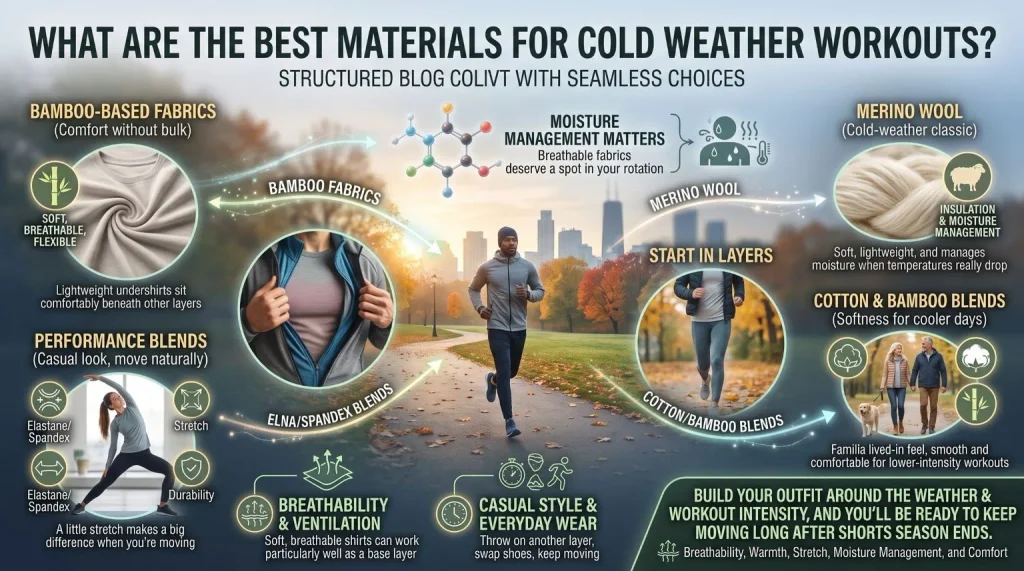
The solution is less about piling on clothes and more about choosing smarter materials for casual clothes. Softness, breathability, stretch, and moisture management can all help you stay comfortable as your body warms up. Starting with soft, breathable undershirts as a base layer is one of the simplest ways to stay comfortable no matter how the temperature shifts throughout your workout.
From bamboo-based fabrics to flexible blends, the materials used in active apparel offer inspiration for building a cold-weather workout wardrobe.
Bamboo-Based Fabrics Bring Warmth Without the Bulk
Bamboo-derived fabrics are a great starting point when you want comfort without feeling bundled up like you’re headed for an Arctic expedition.
Its softness is especially welcome when you’re layering. A lightweight bamboo-based shirt can sit comfortably beneath another layer without adding unnecessary bulk. Its breathable feel also makes it easier to transition from the chilly first few minutes of your workout to the much warmer miles ahead.
Performance Fabrics Can Still Feel Like Your Favorite Casual Clothes
Workout gear doesn’t need to look like you’re permanently preparing for a marathon. Some of the most useful cold-weather pieces can fit naturally alongside your favorite casual clothes, making it easy to go from a morning walk or gym session to the rest of your day.
Soft fabrics and streamlined silhouettes help performance pieces feel approachable enough for everyday wear. Instead of changing your entire outfit after exercising, you can throw on another layer, swap your shoes, and keep moving.
Bamboo and Cotton Blends Offer Softness for Cooler Days
Not every chilly day calls for heavy-duty technical gear. For walks, warmups, easy hikes, or lower-intensity workouts, blends featuring bamboo-derived fibers and cotton can provide an appealing balance of softness and everyday comfort.
Cotton contributes that familiar, lived-in feel, while bamboo-based fibers help create a smooth, comfortable fabric. These blends can be especially useful when you want something cozy enough for crisp weather without reaching for a bulky sweatshirt.
A Little Stretch Makes a Big Difference When You’re Moving
Cold-weather clothing shouldn’t make lunges, stretches, or long strides feel like a battle against your outfit. That’s where fabrics containing elastane or spandex earn their place.
Adding stretch to fabric blends allows garments to move more naturally with the body. Whether you’re running hills, practicing yoga, hiking a trail, or tackling an outdoor circuit, flexible material gives you room to move while helping clothing maintain its shape.
Moisture Management Matters Even When It’s Freezing Outside
It might be near-freezing when you head out the door, but that doesn’t mean you’ll stay cold for long. Once your heart rate climbs, you can work up a surprising amount of sweat. That moisture can become particularly uncomfortable when you slow down, and the cold air hits damp clothing.
This is why breathable, moisture-managing fabrics deserve a spot in your winter workout rotation. A lightweight, breathable shirt can work particularly well as a base layer, allowing you to add insulation on top without trapping too much heat.
Merino Wool Is a Cold-Weather Classic for a Reason
When the temperature really drops, merino wool is another material worth considering. Unlike the thick, scratchy wool sweaters you might picture, merino can be surprisingly soft and lightweight. It’s also popular for outdoor activities because it offers insulation while helping manage moisture.
You don’t necessarily have to choose between merino and your favorite pieces, either. Try using a lightweight top closer to your skin and adding a merino layer when conditions call for extra insulation. The combination can give you more flexibility as the temperature changes throughout your workout.
The Best Cold-Weather Outfit Is Usually a Combination of Materials
There’s no single magical fabric that works for every winter workout. A brisk walk on a brisk afternoon has very different requirements than an early-morning run when temperatures are hovering near freezing.
Instead, think in layers. Start with something soft, breathable, and flexible against your skin, such as bamboo-based undershirts. Add an insulating layer when temperatures require it, and finish with a lightweight shell if you’re dealing with wind, rain, or snow.
Choose Materials That Make Winter Movement Easier
Cold weather may change how you dress for exercise, but it doesn’t have to turn every workout into an expedition. Choosing fabrics based on breathability, warmth, stretch, moisture management, and comfort can make getting outside considerably more appealing.
Bamboo-derived fabrics and flexible blends offer an especially versatile foundation, while materials such as merino wool can provide extra insulation when winter gets serious. Build your outfit around the weather and your workout intensity, and you’ll be ready to keep moving long after shorts season ends.
Related posts:
 Regaining Control on the Road to Recovery: What You Need to Know
 🦷 Emax vs Zirconia: Which Dental Veneer Is Better for Your Smile?
 Medical Malpractice in Florida: What Every Healthcare Provider Should Understand
 Why Migraine and Motion Sickness Often Travel Together
 How PRP Therapy Is Being Used for TMJ and Jaw Pain in Florida Clinics
Leave a Reply