
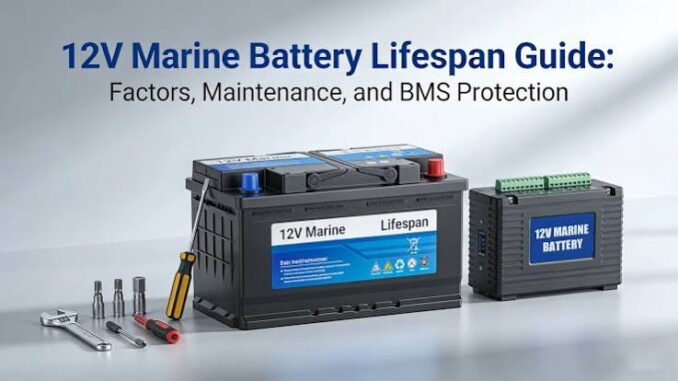
Boat batteries support far more than engine starting. They may run navigation equipment, pumps, lights, refrigeration, communications systems, trolling motors, and other onboard electronics for hours.
Lithium batteries have become a common option because they can reduce weight, provide more usable capacity, and cope well with repeated cycling. However, replacing a lead-acid battery with lithium is not always a direct swap.
Charging equipment, cables, fuses, temperature limits, and onboard loads all need to match the new battery system.
What Benefits Do Lithium Batteries Offer on Boats?
Many marine lithium batteries use lithium iron phosphate, often called LiFePO4 or LFP. Compared with flooded lead-acid or AGM batteries, this chemistry behaves differently during charging and discharge.
Understanding those differences helps boat owners decide whether lithium fits their actual needs.
Lower Weight and More Usable Capacity
Lithium batteries generally weigh less than lead-acid batteries with similar rated capacity. The difference can matter on smaller fishing boats, sailboats, and vessels carrying several batteries.
Another advantage is usable energy. Lead-acid batteries are often operated within a more limited discharge range to protect their lifespan. LFP batteries can typically use a larger share of their rated capacity within manufacturer limits.
For this reason, comparing batteries only by amp-hours can be misleading. Usable watt-hours can give a clearer idea of how much energy is actually available.
Faster Charging
Lithium batteries can accept relatively high charging current during much of their charging cycle. This may shorten the time needed to recharge a heavily used house bank.
That benefit also creates an important consideration. Existing alternators and chargers may not be designed to supply high current for long periods. Compatibility should always be checked before a conversion.
What Makes a Marine Lithium Installation Safe?
Safety depends on the complete electrical system rather than the battery alone. Good installation practices remain essential even when the battery includes built-in protection.
Cables, fuses, charging equipment, mounting, and temperature protection should all match the expected electrical load.
Understand the Battery Management System
A battery management system, or BMS, monitors important conditions inside the battery. Depending on the design, it may respond to excessive voltage, deep discharge, high current, or unsafe temperatures.
Before choosing a marine lithium battery, check its continuous and peak current ratings as well as the limits of its BMS. Large inverters, windlasses, trolling motors, and other high-current equipment may demand more current than the battery can safely provide.
A 100Ah battery, for example, is not automatically suitable for every 12-volt application. Capacity and current capability are separate specifications.
Cable and Fuse Sizing Still Matter
Lithium batteries can deliver high current quickly, which makes correct cable and circuit protection especially important.
When checking cable size, consider:
- Maximum current
- Cable length
- Voltage drop
- Insulation rating
- Installation conditions
Fuses and circuit breakers should also match the circuit they are protecting.
Do Not Copy an Old Lead-Acid Setup Without Checking It
An existing charger, alternator, monitoring system, or cable arrangement may have worked perfectly with lead-acid batteries but may not suit lithium.
Each component should be reviewed before installation rather than assuming the old setup can stay unchanged.
How Does Charging Change With Lithium Batteries?
Charging behavior is one of the biggest differences between lithium and traditional marine batteries. LFP batteries can continue accepting substantial current for longer periods.
That can reduce charging time, but it may also increase stress on charging equipment.
Alternators Need Attention
A large lithium bank can draw heavy current from an alternator for an extended period. An alternator designed around lead-acid charging may therefore run hotter than expected.
Depending on the system, charge control, temperature monitoring, or a DC-to-DC charger may be appropriate. The correct setup depends on the engine, alternator, battery capacity, and electrical design.
Cold-Temperature Charging Can Be a Problem
Many LFP cells should not be charged below their specified minimum temperature.
Some batteries include a BMS that prevents cold charging, while others include internal heating. Owners using boats in colder climates should check:
- Minimum charging temperature
- Minimum discharge temperature
- Storage temperature range
- Whether automatic low-temperature protection is included
Different battery models may have different limits, so the manufacturer’s specifications matter.
How Long Do Marine Lithium Batteries Last?
Battery lifespan depends on more than the chemistry printed on the label. Charging habits, depth of discharge, temperature, storage conditions, and current demand all affect long-term performance.
Published cycle-life figures are useful for comparison, but they should be viewed together with the test conditions used to produce them.
Operating Habits Affect Lifespan
Keeping the battery within recommended voltage, current, and temperature limits can help reduce unnecessary wear.
Repeatedly running the battery until the BMS disconnects the load is generally poor practice. Keeping some reserve is also useful because navigation, communications, pumps, or lighting may still need energy when non-essential loads are turned off.
Storage Matters Too
Boats may sit unused for weeks or months, making storage conditions important.
Owners should follow the battery manufacturer’s recommended storage state of charge. They should also check for parasitic loads from alarms, monitoring equipment, stereo systems, or other electronics that continue drawing current after the main equipment is switched off.
Where Are Lithium Batteries Most Useful?
Lithium batteries can be useful where low weight, repeated cycling, or greater usable capacity solves a genuine onboard problem.
The battery still needs to match its intended job.
House Battery Banks
House banks may operate lights, refrigerators, pumps, electronics, and inverters when shore power or the engine is unavailable.
Lithium suits many of these applications because house banks are frequently discharged and recharged. A proper battery monitor is useful because LFP voltage stays relatively stable during much of the discharge cycle.
Trolling Motors
Fishing boats often use lithium batteries for trolling motors because reducing battery weight can be valuable.
Before installation, check the motor voltage, maximum current, cable size, breaker rating, and battery BMS limit.
For 24-volt or 36-volt setups, confirm that the batteries are approved for series connection. Not every 12-volt lithium model allows this configuration.
Engine Starting
A deep-cycle lithium battery should not automatically be used for engine starting.
Starter motors demand very high current for a short period. The battery should specifically be rated for cranking use. Otherwise, the BMS may disconnect the battery when starting current exceeds its limit.
How Should Boat Owners Compare Battery Options?
Start with the boat’s actual energy use rather than choosing capacity based only on the existing battery label.
List the major electrical loads, estimate how long each operates between charging periods, and calculate the required energy.
Practical Battery Checklist
| Check | Why It Matters |
| Battery voltage | Must match the boat’s electrical system |
| Usable capacity | Shows how much energy is realistically available |
| BMS current rating | Determines whether heavy loads are supported |
| Charging limits | Helps match chargers and alternators |
| Temperature range | Matters in hot and cold conditions |
| Series or parallel approval | Important when building larger banks |
| Cable sizing | Helps control voltage drop and heat |
| Fuse ratings | Protects circuits during faults |
| Intended use | Confirms suitability for house, trolling, or starting duty |
A qualified marine electrician can be useful when converting a large battery bank, changing alternator charging arrangements, or adding high-current equipment.
Conclusion
The best Marine battery can offer lower weight, more usable stored energy, faster charging, and good performance under repeated cycling. These characteristics make them suitable for many house banks, trolling motors, fishing boats, and other marine applications.
Their real value, however, depends on correct system design. Charging equipment, cables, fuses, temperature limits, and BMS ratings must work together. Comparing actual energy needs and electrical requirements before buying is therefore more useful than focusing on amp-hour capacity alone.





Leave a Reply